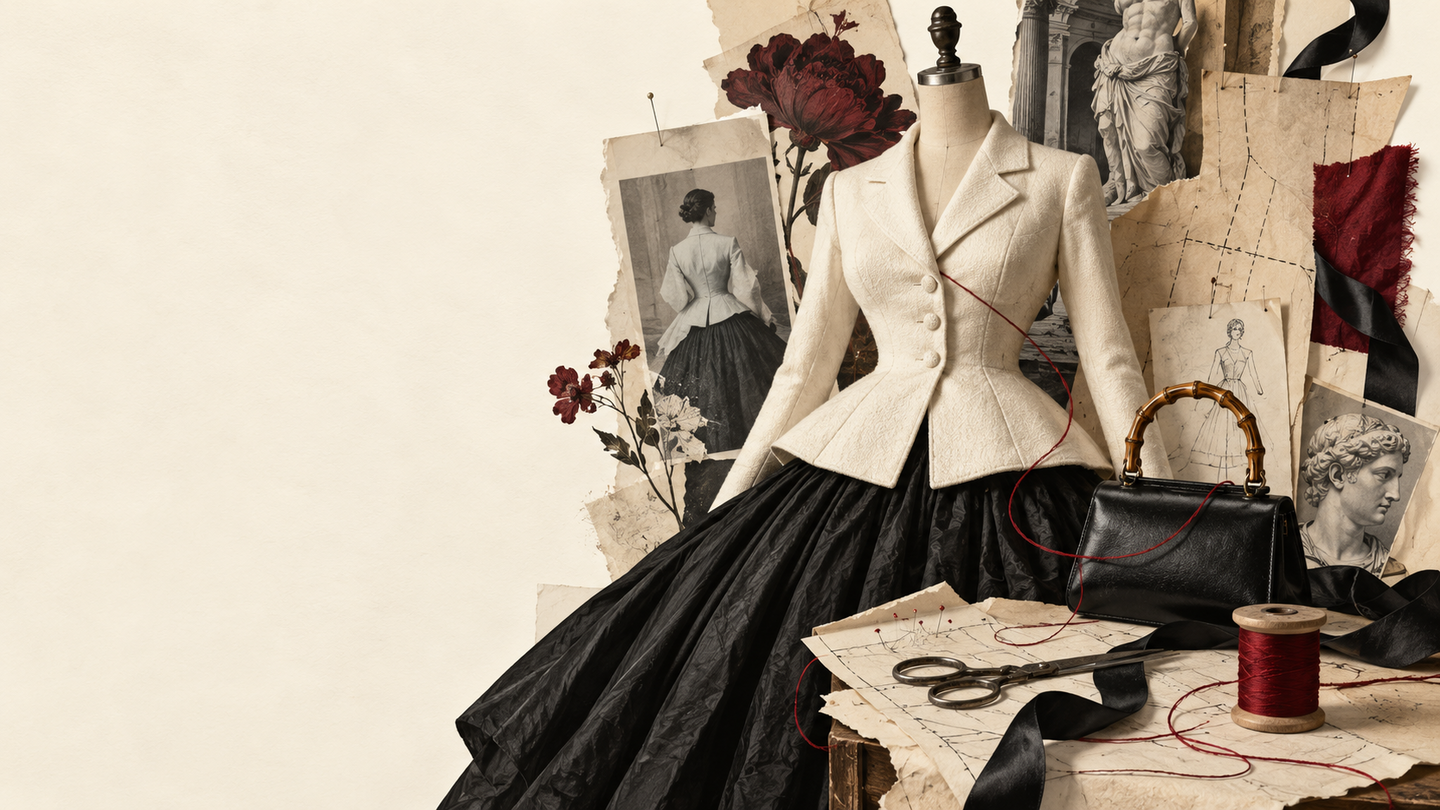
Why is one bag recognized by its handle, yet a fashion house by its jacket’s silhouette? Behind familiar items lie design decisions, the circumstances of the era, and the stories of people.
«At the Seams» is an educational media platform that explores the history of fashion brands through specific items and details. Each episode is dedicated to one piece—how the item came to be, why it looked the way it did, and what significance it gained for the brand.Short texts and illustrations guide the reader into the history of fashion gradually. Readers do not need prior knowledge of designer names or professional terminology; the necessary context is provided within the narrative.
Media Goal
«At the Seams» helps the reader explore the history of fashion through short stories about familiar items and brands.
Media helps students: understand why certain objects have become iconic; notice characteristic silhouettes, materials, and details; connect design decisions to the context of their emergence; find resources for further study; and gradually form their own understanding of fashion history. After reading an issue, a student should be able to identify one characteristic detail and explain its history in their own words.
Need Hypothesis: Readers are interested in understanding fashion, but large volumes of material, unfamiliar terminology, and a lack of a clear entry point are hindering them.
Segment and Niche Topic
Segment: Educational media about fashion and visual culture.
Audience Type: B2C. The project is intended for private readers interested in fashion, who are students, or who are seeking ideas for their own creative projects.
Niche Topic: The history of fashion brands through iconic pieces, materials, and silhouettes of the 20th–21st centuries.
The focus of each issue is a specific design subject or element. Through this element, a brief episode of brand history is unveiled.Examples of starting themes: Dior and the New Look silhouette; Gucci and the bamboo bag handle; Chanel and the jacket’s history.
Principle of Topic Selection
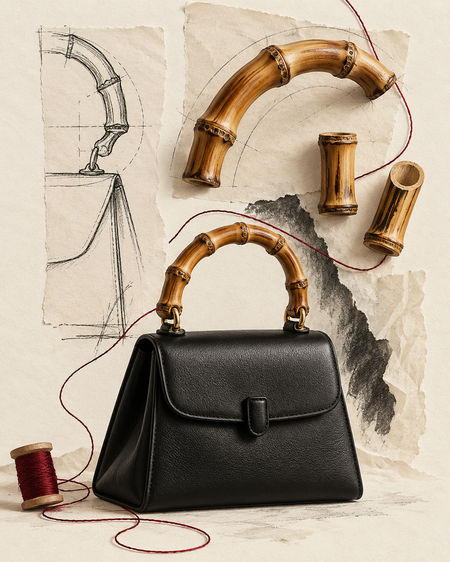
The topic must answer a specific question: why this form was created, why this material was chosen, or how a particular detail became recognizable. For example, a narrative about a bamboo handle allows you to connect the bag’s appearance to a production decision. A discussion of a jacket helps explain how clothing proportions alter the perception of the figure.
Competitive Analysis
Goal and Methodology
The objective of this analysis is to understand where audiences study fashion history, what formats currently exist, and how «At the Seams» can differentiate itself.
Comparison CriteriaTopic and Reader Goal: How well the project aids in studying fashion and brand history. Scope and Accessibility: How understandable the material is to someone without prior knowledge. Formats and Tools: Articles, galleries, videos, timelines, games. Visual Presentation: Archival images, product photography, illustrations. Tone of Voice: The language used and the method for explaining complex concepts. Navigation and Sources: How easy it is to find materials and verify information.
Direct Competitors
- The Blueprint
Analysis Platform: the website, «History» section.
Formats and Tools: illustrated articles, timelines, topical glossaries, and deep dives on individual subjects.
Visual Presentation: imagery of objects, fashion looks, and historical narratives.
Tone of Voice: magazine-style, rich with cultural references and evocative headlines.
Strength: the variety of subjects and the connection between fashion history and contemporary context.
Opportunity for Differentiation: «At the Seams» limits the output to a single episode, explains unfamiliar terminology, and utilizes a consistent short-story structure.
What We Adopt: the skill of launching historical material with a recognizable item or a timely question.
- BRANDSHOP
Analysis Platform: store blog.
Formats and Tools: content about brands, clothing and footwear models, and the history of individual items.
Visual Presentation: images of items within the context of the store’s assortment.
Tone of Voice: specialized, applied, focused on clothing specifics.
Strength: a clear link between the narrative and a specific item.
Differentiation Opportunity: «By the Seam» forms an educational selection of topics across various brands, independent of the store’s current inventory.
What We Adopt: specificity. The item that the reader can examine is at the center of the narrative.
- FIT Fashion History Timeline
Analysis Platform: Fashion Institute of Technology educational project website.
Formats and Tools: historical summaries, thematic materials, and chronological navigation.
Visual Presentation: images of artifacts and historical sources.
Tone of Voice: academic and explanatory.
Strength: systematization of fashion history and research context.
Differentiation Potential: «Po Shvam» offers a brief introduction to the topic in Russian through a dedicated narrative.
What We Borrow: attention to dating, sources, and navigation through historical periods.
FIT is considered an international thematic benchmark and a competitor for educational scope.
Indirect Competitors
Indirect competitors capture the reader’s time and satisfy interests in fashion, visual imagery, or new knowledge.
- Vogue RunwayAnalysis platform: website.Formats and tools: runway collections and show photography, navigation by brands and seasons.Visual presentation: photographs of runway looks.Tone of voice: aimed at a reader interested in the fashion industry.Strength: the ability to study collections and compare looks.What we compete on: attention to designers and the visual language of fashion.What we borrow: focus on silhouette and the ability to examine clothing in detail. Our output adds a brief explanation of the historical motif.
- The Symbol
Analysis Platform: the website, «Selection» section.
Formats and Tools: clothing collections, recommendations, and materials on combining garments.
Visual Presentation: photographs of complete looks and wardrobe items.
Tone of Voice: light and advisory.
Strength: a clear link between fashion and the reader’s daily interests.
What We Compete Against: the time a person dedicates to reading about fashion.
What We Borrow: accessible presentation and recognizable items as a starting point. Our focus is on the origin of details and silhouettes.
- Arzamas
Analysis platform: their website and the fashion section.
Formats and tools: short articles, lectures, games, and themed collections.
Visual presentation: images and illustrations that illuminate the cultural context.
Tone of voice: accessible, explanatory, occasionally playful.
Strength: the ability to engage the reader with a complex cultural topic.
What we compete against: the time people allocate to acquiring new knowledge.
What we borrow: the concise nature of individual content and the clear central question driving it.
Arzamas’s individual publications on fashion can be direct competitors. However, the project is classified as an indirect competitor due to its broader educational mission.
Potential Competitors
- Inside CHANEL
Analysis Platform: The official CHANEL website.
Formats and Tools: House history presented in video vignettes.
Visual Presentation: Staged imagery and materials concerning the brand’s heritage.
Tone of Voice: The brand’s narrative voice telling its own story.
Strength: Access to the house’s legacy and a cohesive visual presentation.
Potential Scenario: Developing short, localized stories for new readers.
Our Differentiation: Comparing different fashion houses and verifying brand narratives through supplementary sources.