Исходный размер 1140x1600

PIMS: Strategic Сommunication Analysis of the brand

Данный проект является учебной работой студента Школы дизайна или исследовательской работой преподавателя Школы дизайна. Данный проект не является коммерческим и служит образовательным целям
Проект принимает участие в конкурсе
Исходный размер 786x342

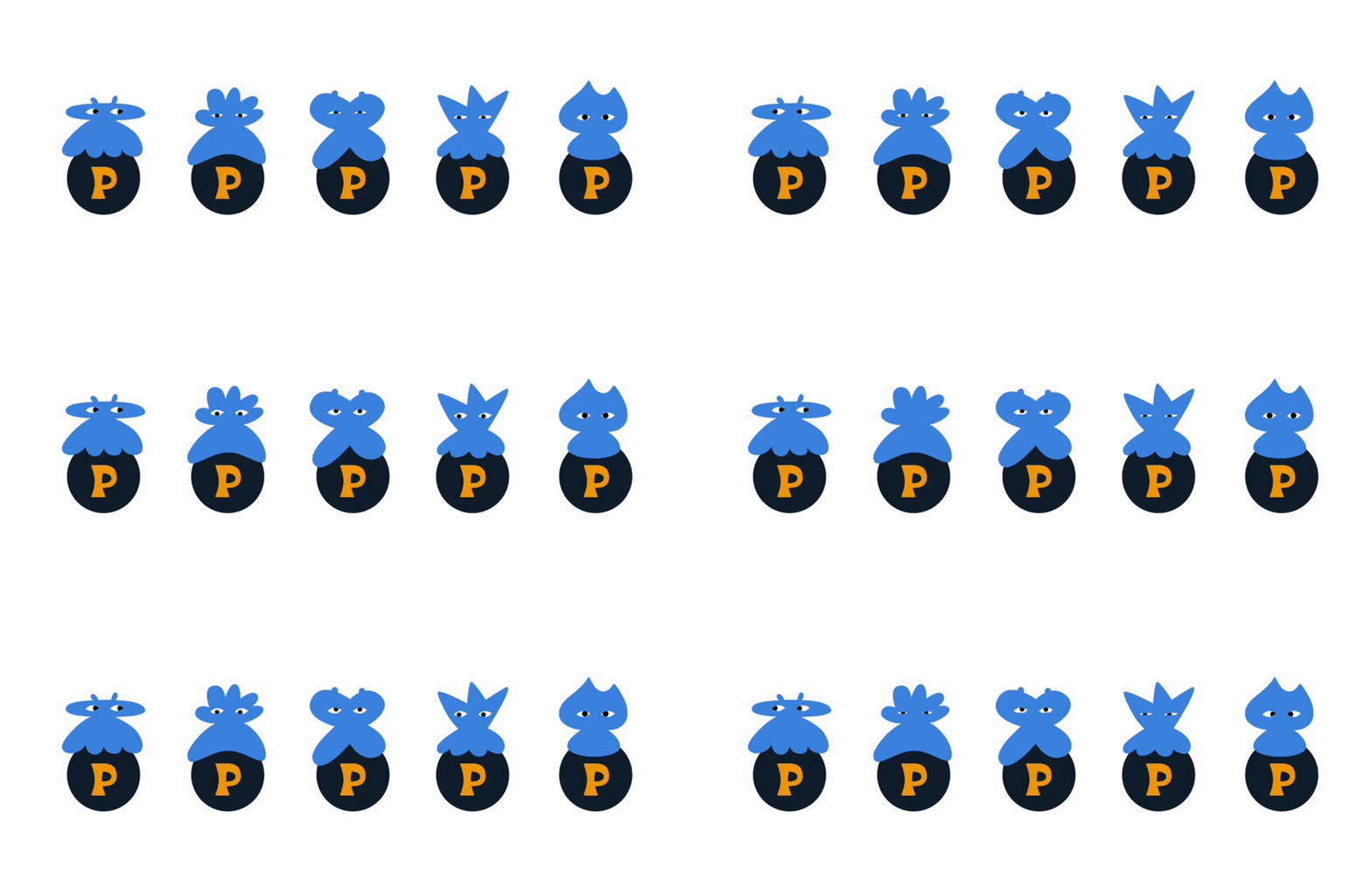
PIMS’s mascots

INTRODUCTION

PIMS is a premium tea brand focused on lifestyle and modern urban culture. It was founded in Moscow, Russia, in 2018 by mixologist Artur Shusteriovas and entrepreneur Gleb Golubev. The concept was developed over two years through experiments with different ingredients. The brand presents tea as a modern and functional alternative to coffee.

PIMS specializes in drinks made from traditional Chinese fermented teas, including Gaba, Da Hong Pao, and Jasmine tea. These teas are cold-brewed and mixed with fresh fruits, berries, and a signature topping called PIMS Cream. The company follows a premium pricing strategy and uses specialized equipment that allows it to produce up to 5,000 highly customized drinks per day in relatively small retail locations.
0

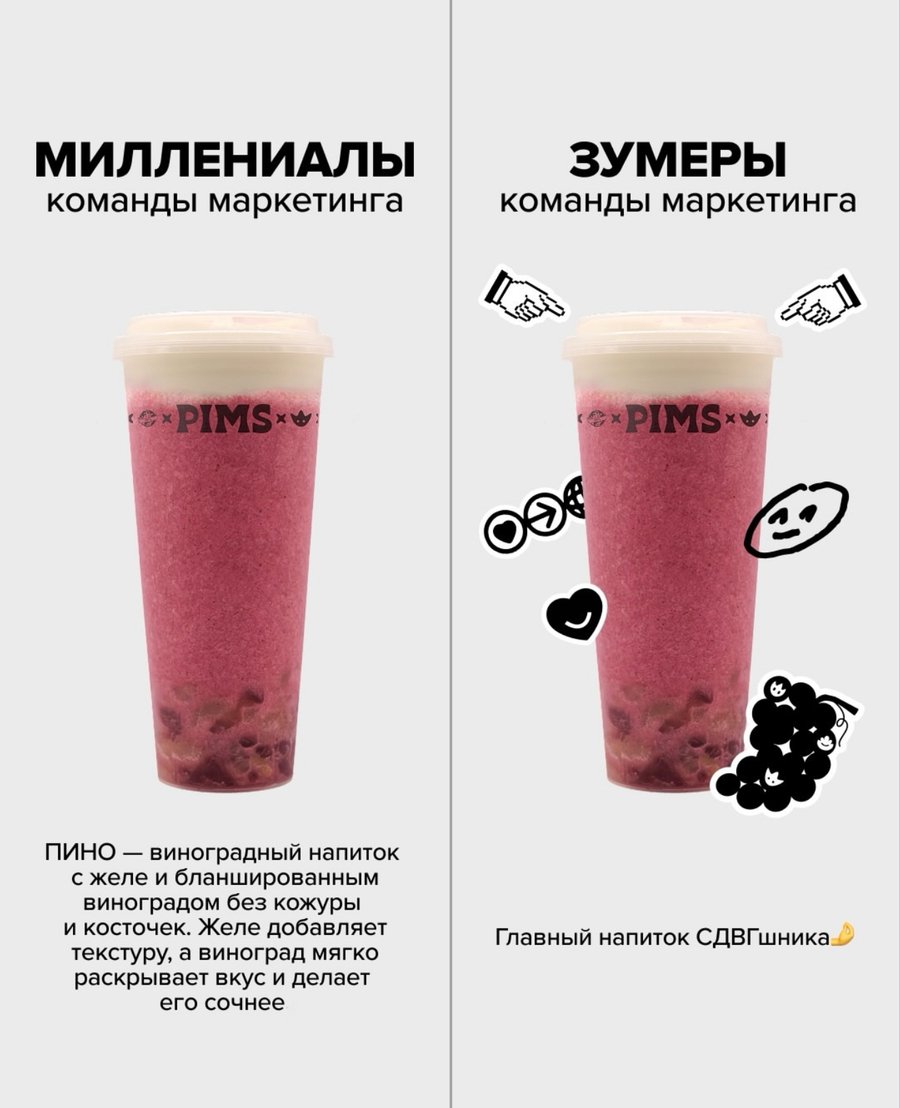
PIMS’s advertisement

The brand positions tea as more than just a beverage. Instead, it is promoted as part of a contemporary urban lifestyle and a form of self-expression. PIMS’s visual identity combines clean minimalism with bright, vibrant colors, helping the brand stand out in busy city environments.

PIMS mainly targets young urban consumers, including students and creative professionals. Its audience is typically design-conscious, independent, and interested in trends, belonging to communities that reflect their lifestyle.

Исходный размер 1366x844

PIMS’s mascots

The company operates through two main digital platforms. The consumer platform provides information about the menu and the design of its locations, while the franchise platform focuses on business operations, logistics, performance metrics, and requirements for potential partners.

After launching its franchise program in 2022, PIMS expanded to around 30 locations across Russia and opened international flagship stores in cities such as Dubai and Bangkok. The franchise model is designed to attract entrepreneurs who share the brand’s culture and values.

COMMUNICATION CHANNELS

PIMS uses a 360-degree marketing approach, focusing mainly on digital communication, influencer partnerships, and public relations rather than traditional advertising channels such as television, radio, or print media. The brand’s goal is to turn customers from simple beverage buyers into active members and supporters of the PIMS community.

Social Media Platforms and SMM

PIMS chooses social media platforms that support visually appealing content and match its premium lifestyle image.

Instagram*

Instagram is the brand’s main platform for communication and customer engagement. PIMS uses: • Feed posts to showcase products, brand values, and marketing campaigns. • Stories to share temporary updates and interact with followers. • Reels to publish short videos featuring drinks and lifestyle content.

The company also uses interactive tools such as polls and question boxes to encourage customer participation and collect feedback. Most content highlights colorful drinks, PIMS Cream, store aesthetics, and lifestyle-focused imagery.

*The organization’s activities are prohibited on the territory of the Russian Federation.

Исходный размер 980x274

TikTok

TikTok is used to reach younger audiences, especially Gen Z and millennials. • Videos often focus on visually satisfying moments, such as: • Preparing drinks. • Pouring cream toppings. • Cutting fresh fruit. • Recording customer reactions.

These sensory-focused videos help attract attention and encourage organic sharing.

Telegram and VKontakte (VK)

Telegram and VK are used to maintain direct communication with local communities. These platforms provide: • Company updates. • Information about new franchise locations. • Menu changes and new products. • Customer service and feedback opportunities.

Main Public Relations (PR) Strategies

PIMS uses several PR strategies to maintain public attention and strengthen brand awareness.

Collaborative Brand Activations

PIMS partners with fashionable and non-competing brands to strengthen its lifestyle image.

Examples include collaborations with: • TopStretchingFirst Padel Club alfa-bank

These partnerships may include joint events, special menu items or even permanent placement of PIMS in the company’s field. The goal is to expose each brand to the other’s audience and increase visibility.
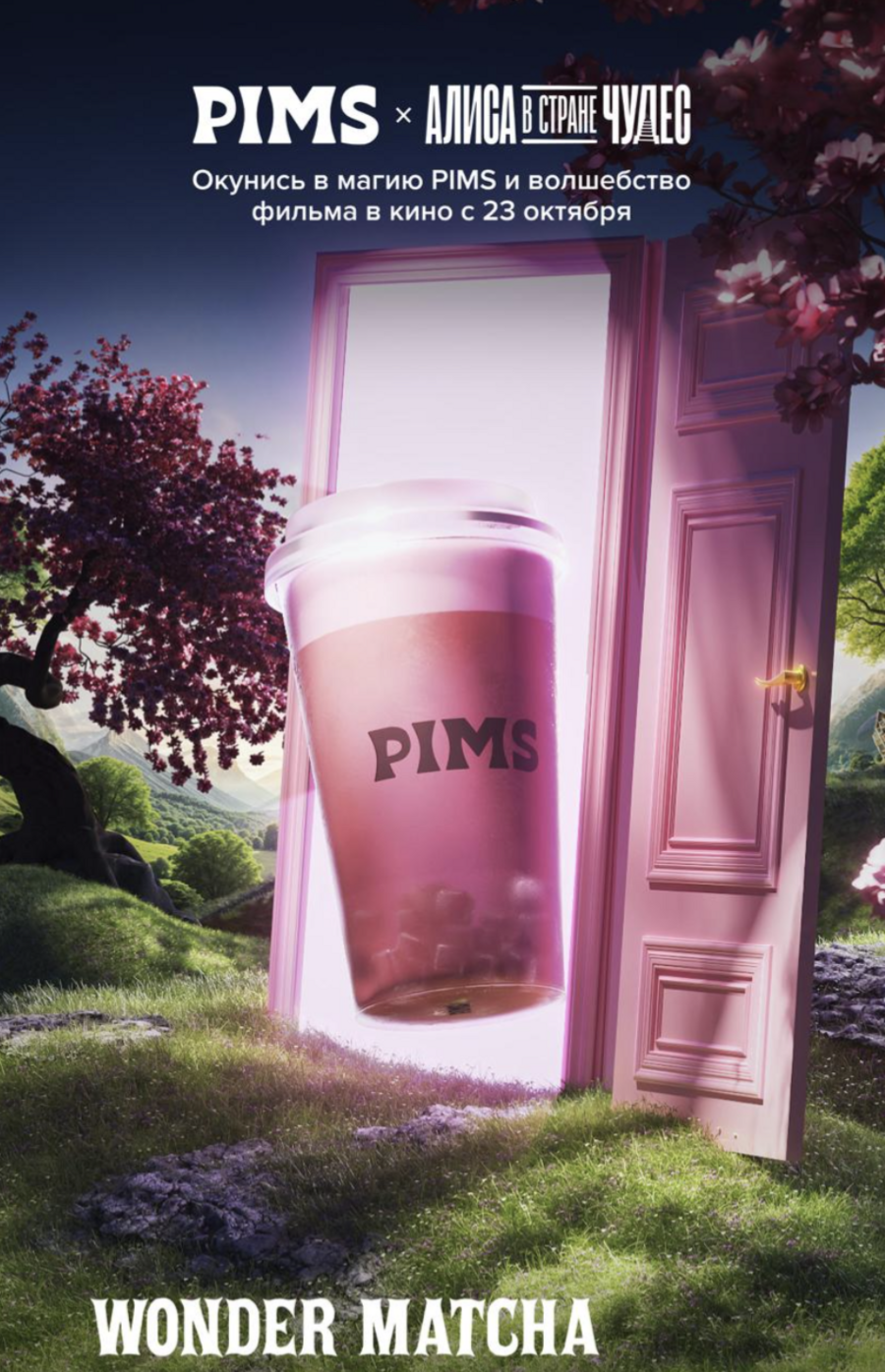
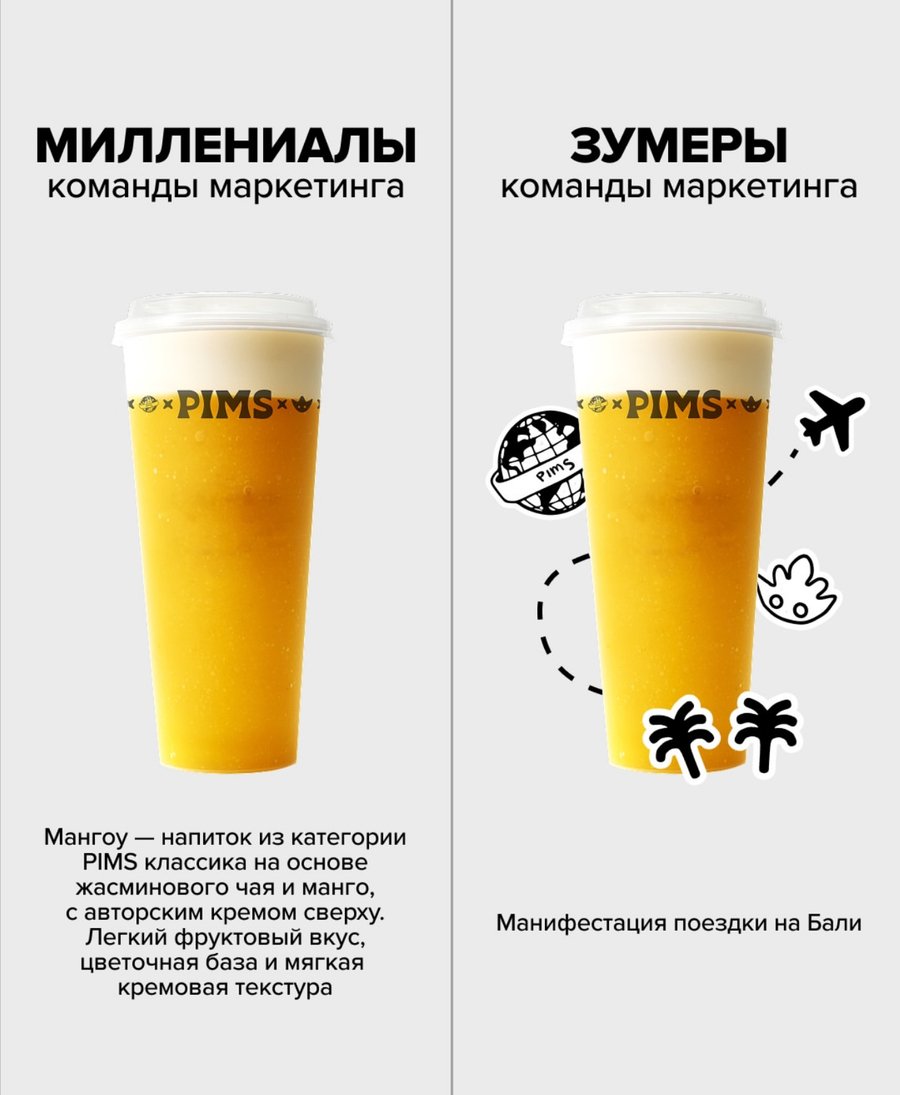
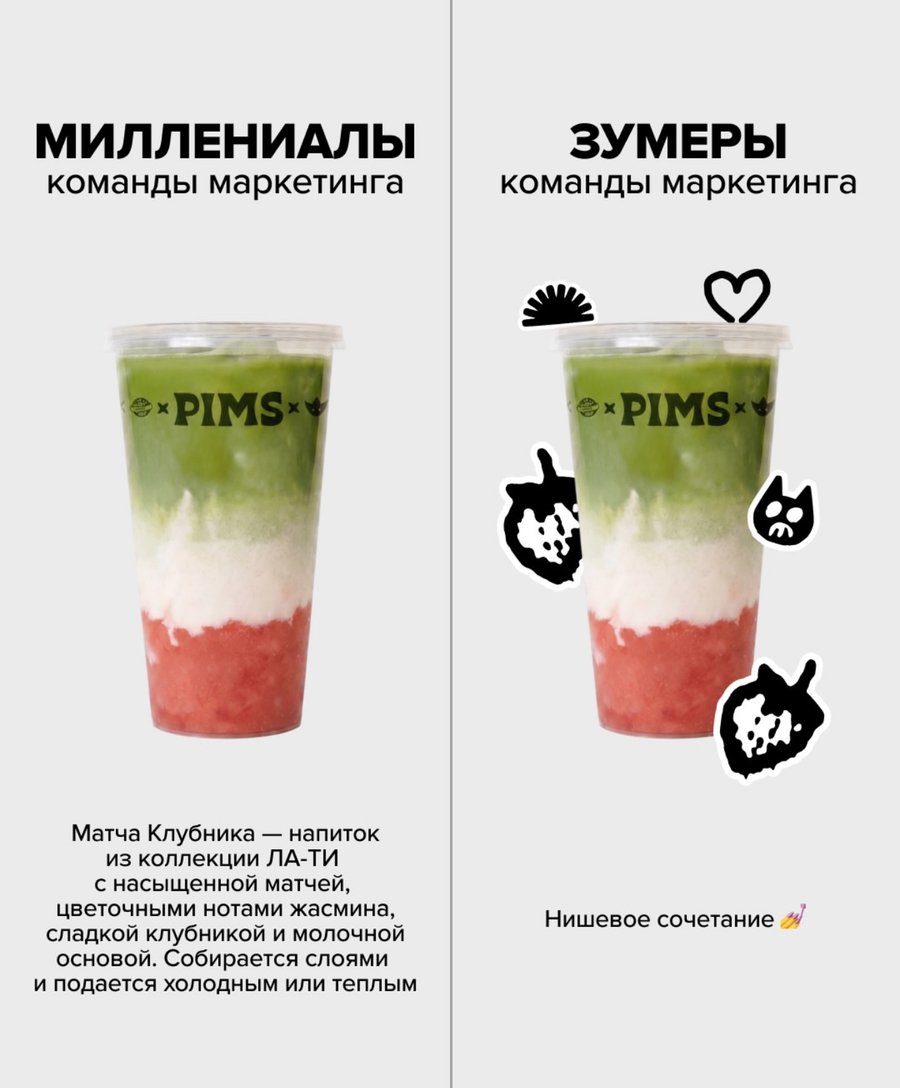
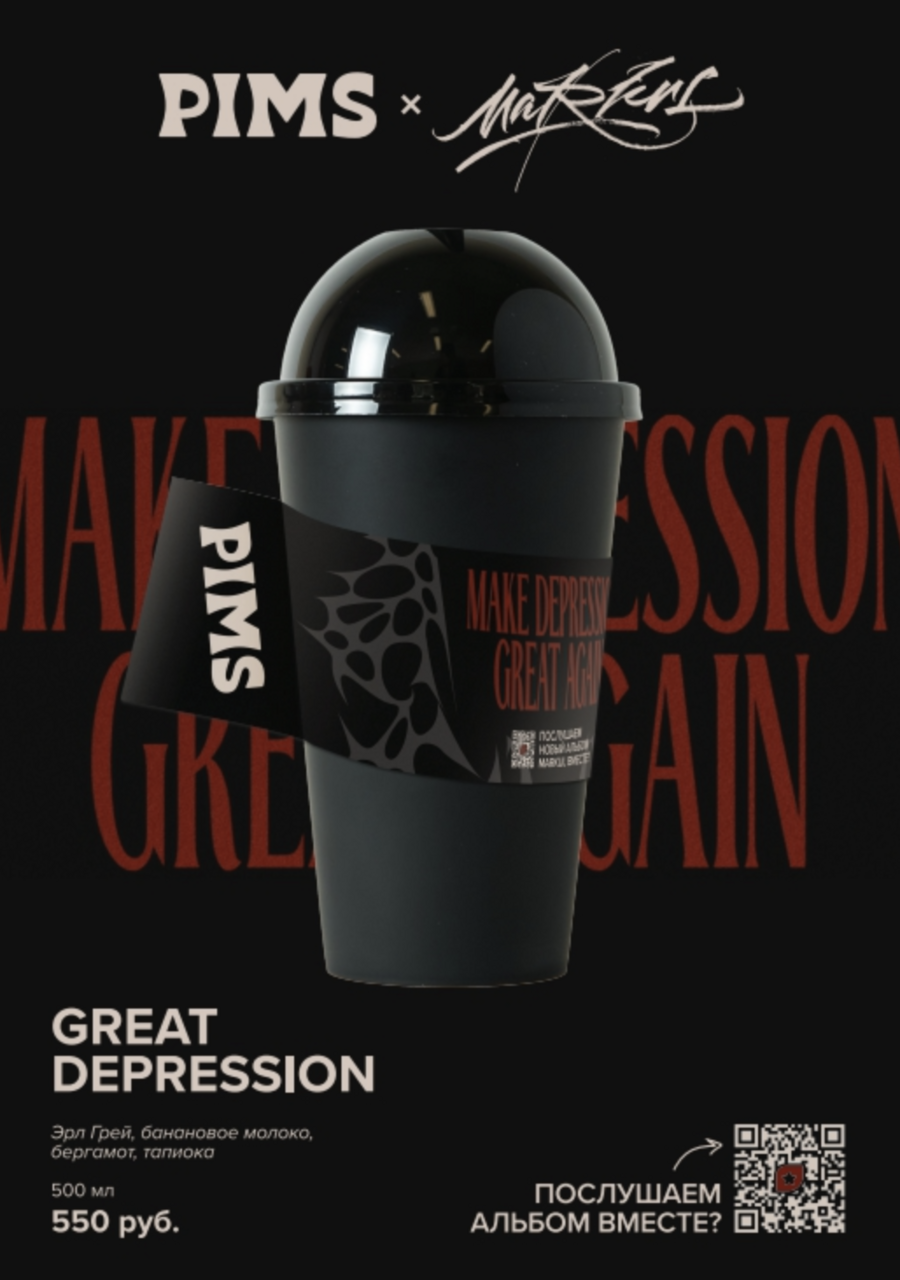
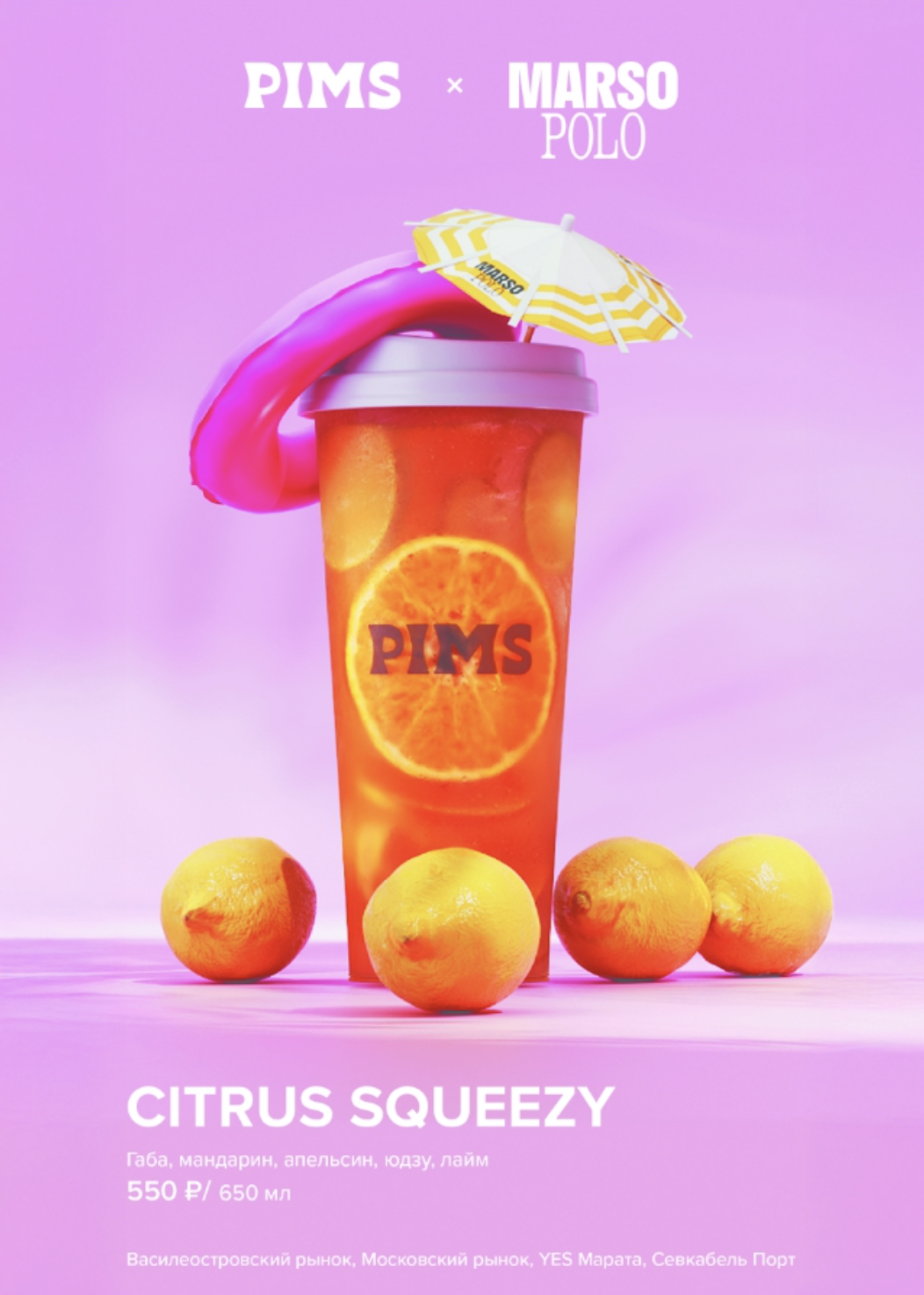
PIMS’s collaborations

Virality-Focused Products and Merchandise

PIMS intentionally designs products, packaging, and seasonal menu items to be visually striking and easily shared online.

The company also sells branded merchandise, including hoodies and phone cases. This turns customers into brand ambassadors, helping promote the brand in everyday urban environments.

Исходный размер 1366x772

PIMS’s merch

Intentionally Provocative Campaigns

An important part of PIMS' PR strategy is creating attention-grabbing campaigns. The brand regularly produces creative and sometimes controversial advertisements designed to stand out on social media. These campaigns aim to generate discussion, attract attention, and increase digital visibility.

This strategy uses controversy and public debate as tools for gaining exposure and expanding the brand’s reach online.

THEORETICAL FRAMEWORK

To evaluate PIMS' communication strategy and public relations practices, especially during reputational crises, two communication theories are used: the Dialogic Theory of Public Relations and the Politeness Theory of Face Management.

Dialogic Theory of Public Relations

The Dialogic Theory argues that public relations should be based on ethical, two-way communication rather than one-way persuasion or information control. Organizations should actively listen to feedback and build mutual understanding.

This theory is particularly relevant to PIMS because the brand promotes itself as a creative community for young, expressive, and socially connected consumers. Since PIMS uses digital platforms such as Instagram* to build and maintain this community, several principles of the theory are important:

Dialogic Loop — the ability of a digital platform to support two-way communication, allowing customers to ask questions and receive meaningful and timely responses from the brand. • Mutuality and Empathy — the recognition that the brand and its audience depend on each other. This requires treating customer concerns with respect, understanding, and genuine consideration rather than ignoring them or viewing them only as marketing feedback. • Risk — the willingness of the organization to be vulnerable in public communication. Genuine dialogue may require the brand to apologize, adjust its actions, or change its behavior in response to public concerns.

Politeness Theory of Face Management

The Politeness Theory explains how individuals and organizations manage and protect social identity, known as face, during communication.

This theory is useful for analyzing PIMS because the brand targets a young, progressive, and design-conscious audience and often uses a provocative communication style to attract attention and increase engagement.

The theory identifies two types of face: • Positive Face — a person’s desire to feel liked, respected, appreciated, and connected to the values of a group or brand. • Negative Face — a person’s desire to maintain freedom, autonomy, and personal space without feeling pressured, offended, or restricted.

When a company publishes controversial content, it may perform a Face-Threatening Act (FTA). An FTA is a communication action that can challenge the audience’s self-image, values, or sense of comfort.

To reduce the negative effects of an FTA, organizations use facework, which includes communication strategies designed to protect relationships and maintain trust. These strategies can range from polite explanations and apologies to more direct and defensive responses, depending on the situation.

ANALYSIS

Loading...

PIMS Advertising Controversy (June 2025)

In late June 2025, PIMS faced significant public criticism after publishing a video advertisement on its Instagram* account. The video showed a male model forcefully frisking a female model wearing a short skirt against the window of a PIMS café. The advertisement included the slogan: «The Pims police are on the hunt for those who choose to make Pims at home.»

According to the brand, the campaign was originally intended as a response to a growing number of social media users who had started recreating PIMS drinks at home and sharing tutorials online. The advertisement was designed to humorously address this trend and encourage consumers to visit PIMS locations rather than make the drinks themselves. However, the campaign was released during a period of growing public concern in Moscow about cases of sexual harassment. Public anxiety had recently increased after a self-proclaimed «pickup coach» encouraged men online to approach and grab women on the street. Because of this context, many viewers interpreted the PIMS advertisement as normalizing or romanticizing harassment.

The campaign was also noted for its stylistic similarity to a prior visual concept used by the clothing brand Cold Culture, leading some observers to suggest that PIMS drew inspiration from or borrowed elements of that brand’s earlier idea.

The campaign was criticized by feminist media outlets and many members of PIMS' target audience. Critics argued that the advertisement promoted inappropriate behavior and ignored concerns about women’s safety.

Loading...

PIMS' Response

Исходный размер 1148x337

PIMS’s response

The company’s response occurred in several stages:

Caption Edit — PIMS changed the Instagram caption and added the phrase «no harassment» in an attempt to clarify the intended meaning of the advertisement. • Second Video — The company released another video showing a female model frisking a male model. This was intended to present the campaign as a gender-neutral and humorous series. • Comments Disabled — As criticism increased, PIMS disabled comments on both Instagram posts, limiting further public discussion.

0

Comments

Analysis Through Dialogic Theory

According to Dialogic Theory of Public Relations, organizations should engage in open, ethical, and two-way communication with their audiences.

One of the theory’s key principles is the dialogic loop, which allows people to ask questions. By disabling comments, PIMS effectively broke the dialogic loop. Instead of encouraging dialogue, the company turned Instagram into a one-way communication channel where customers could no longer participate in the conversation.

The theory also emphasizes mutuality, which requires organizations to respect public opinions and treat them as valuable contributions. PIMS failed to demonstrate mutuality when it dismissed criticism as «opinions that no one asked for.» Rather than acknowledging public concerns about harassment, the company appeared to reject them.

Similarly, PIMS showed little empathy, another key principle of the theory. Empathy requires organizations to create a supportive environment where people feel heard and respected. Instead of validating the concerns of many female consumers, the company prioritized its provocative marketing style.

The principle of risk requires organizations to accept criticism and remain open to changing their behavior based on public feedback. By disabling comments and refusing meaningful engagement, PIMS avoided this risk. The company’s statements suggested that it viewed the controversy primarily as publicity rather than as a serious issue requiring reflection or change.

As a result, PIMS acted more in line with a one-way, organization-centered communication approach than with the ethical, two-way communication promoted by Dialogic Theory.

Analysis Through Politeness Theory

Politeness Theory helps explain why many consumers reacted negatively to the campaign.

The advertisement threatened the audience’s positive face, which is the desire to feel respected, valued, and socially supported. Many of PIMS' customers are young, progressive consumers who expect brands to respect issues such as personal safety and gender equality. By presenting a scene that resembled harassment as a joke, the company appeared to ignore those values.

The advertisement also threatened negative face, which is the desire for personal freedom and comfort. Some consumers felt that the campaign imposed a disturbing or triggering message onto their social media experience without considering their feelings.

Because the advertisement functioned as a major Face-Threatening Act (FTA), the company needed to engage in effective facework to rebuild trust.

However, its response was largely unsuccessful: • The addition of «no harassment» was viewed as a weak attempt to explain the situation rather than a genuine acknowledgment of the problem. • The gender-reversed video was intended as a form of positive politeness, trying to create a shared joke with the audience. However, many consumers felt that it trivialized a serious social issue. • The PR manager’s statement represented a bald-on-record strategy, the most direct form of communication. By dismissing criticism as unwanted opinions, the company further damaged relationships with its audience and threatened consumers' positive face.

Исходный размер 1894x856

Evaluation of PIMS' Actions

RECOMENDATIONS & CONCLUSION

The analysis of PIMS' communication strategy and its response to the June 2025 crisis shows a clear difference between the brand’s stated values and its actual behavior. While PIMS is successful at creating a strong visual identity and generating customer engagement, its response to criticism revealed weaknesses in dialogic communication and empathy.

To build long-term brand trust and reputation, PIMS should move away from a one-way (asymmetrical) communication model and adopt a two-way (symmetrical) and dialogic approach. The following recommendations can help the brand improve its public relations practices.

Re-establishing the Dialogic Loop and Open Communication

Disabling comments during a public relations crisis can damage trust and make consumers feel ignored. Therefore, PIMS should create a policy that prevents comments from being turned off or critical feedback from being deleted during public controversies. Instead, the company should invest in a trained community management team that can engage with customers in a respectful and professional way.

Responding openly to concerns allows the brand to explain its intentions, answer questions, and show that it values public opinion. This helps maintain a healthy dialogic loop, which is a key principle of Dialogic Theory.

Moving from Bald-on-Record Responses to Corrective Facework.

In future crises, PIMS should avoid using bald-on-record communication, which involves direct and dismissive responses to criticism.

Instead, the brand should use positive politeness strategies that respect the audience’s values and self-image. This includes providing clear and sincere public apologies, acknowledging the impact of mistakes, explaining how future problems will be prevented, and validating customer concerns.

By accepting responsibility rather than dismissing criticism as unwanted opinions, the company can protect its positive face and strengthen relationships with its audience.

Moving from Corporatas to Communitas Through CSR.

Although PIMS presents itself as a community-focused brand, its actions during the 2025 controversy reflected corporatas, a self-interested approach focused on the organization’s own goals, rather than communitas, which emphasizes community wellbeing and shared values.

To create a stronger connection with consumers, PIMS should support Corporate Social Responsibility (CSR) initiatives. For example, the company could partner with organizations that promote women’s safety and urban security.

By supporting social causes and encouraging respectful public spaces, PIMS can demonstrate a genuine commitment to its audience and build a stronger, more supportive community.

Implementing Visual Rhetoric Audits and Sensitivity Screening

To reduce the risk of offensive or insensitive campaigns, PIMS should introduce a review process for all marketing materials before publication.

Every advertisement, video, image, or promotional message should be evaluated through an ethical and cultural assessment. This process should examine the campaign’s visual rhetoric—the messages communicated through images and visual elements—and consider how audiences may interpret it within the current social and cultural environment.

Identifying potentially sensitive themes, such as harassment or physical coercion, before a campaign is released allows the brand to remain creative and attention-grabbing without harming its reputation or alienating its audience.

Conclusion

By adopting these recommendations, PIMS can better align its actions with its community-focused brand identity. Strengthening dialogue, empathy, accountability, and ethical decision-making would help the company rebuild trust, improve its public image, and create a more sustainable communication strategy for the future.

Библиография
1.

PIMS URL: https://pimstea.com/ (date of request: 14.06.2026).

2.

Pimstea // Instagram* URL: https://www.instagram.com/pimstea/ (date of request: 14.06.2026).

3.

PIMS // TikTok URL: https://www.tiktok.com/@pims.tea (date of request: 14.06.2026).

4.

PIMS CLUB // Telegram URL: https://t.me/pimstearu (date of request: 14.06.2026).

5.

Russia’s Largest Bubble Tea Chain Accused of Promoting Sexual Harassment in Online Ads // The Moscow Times URL: https://www.themoscowtimes.com/2025/06/26/russias-largest-bubble-tea-chain-accused-of-promoting-sexual-harassment-in-online-ads-a89588 (date of request: 14.06.2026).

6.

«Дизлайк, отписка, отмена»: как один ролик подорвал имидж Pims — разбор скандала // Adindex URL: https://adindex.ru/publication/opinion/creative/2025/06/27/334661.phtml (date of request: 14.06.2026).

7.

Communication Theory: Bridging Academia and Practice [Electronic resource] // 2022, URL: https://edu.hse.ru/course/view.php?id=133853 (date of request: 14.06.2026).

Источники изображений
1.

PIMS — официальный сайт // https://pimstea.com/ (дата обращения: 14.06.2026)

2.

PIMS — бренд, айдентика (case study Dprofile) // https://dprofile.ru/case/165421/pims-naming-brand-identity (дата обращения: 14.06.2026)

3.

PIMS — Instagram-аккаунт // https://www.instagram.com/pimstea/ (дата обращения: 14.06.2026)

4.

PIMS — обзор проекта и визуальная айдентика // https://pllsll.com/p/5972 (дата обращения: 14.06.2026)

5.

Скандал вокруг PIMS и Hello Kitty (Restoclub) // https://www.restoclub.ru/review/industry/skandal-vokrug-pims-i-hello-kitty-vo-vkusno-i-tochka-restoclub-trendy (дата обращения: 14.06.2026)