Introduction
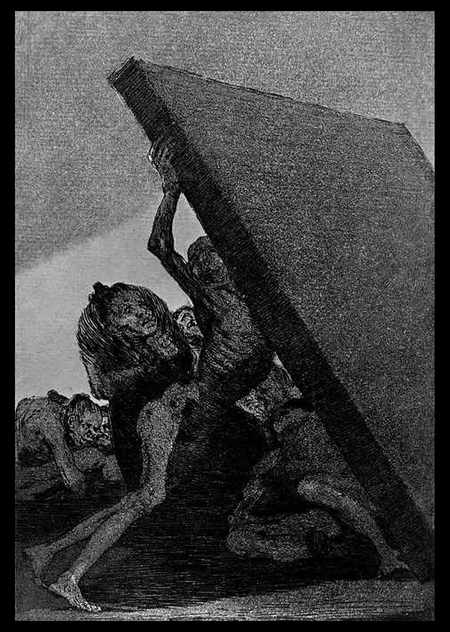
During the Peninsular War (1808–1814), Francisco Goya created the print series, «The Disasters of War.» In contrast to battle painting, which typically celebrates victories and martial valor, this series features almost no heroes. Soldiers kill unarmed civilians, while the populace starves, and the bodies of the fallen remain on the roads. The artist does not construct a cohesive narrative of war. Each print preserves a separate episode of violence, accompanied by a brief—often scathing—caption. The series was not first published until 1863, decades after the artist’s death.
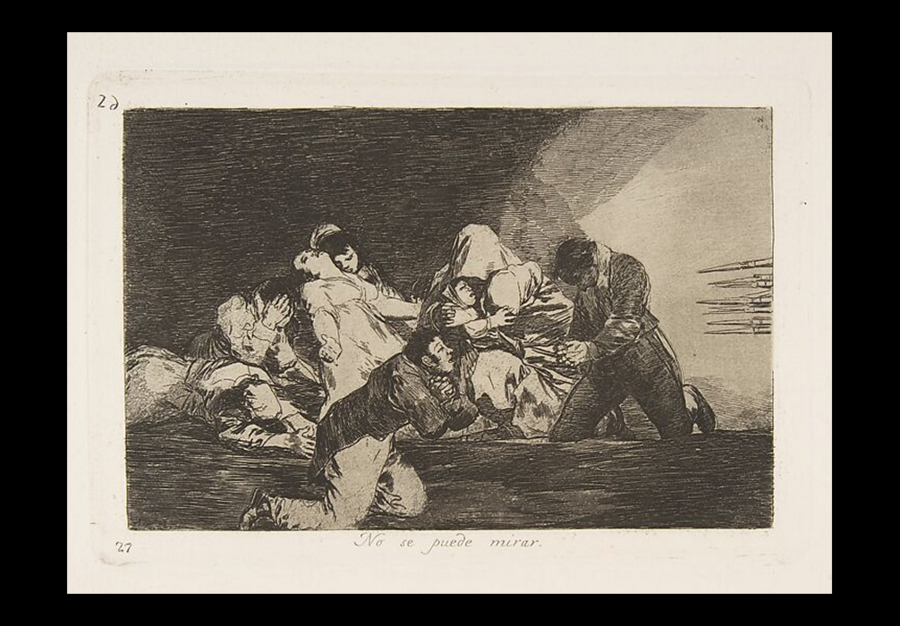
Francisco Goya. «You Can’t Look» 1810. Sheet No. 26 from the series «The Horrors of War.»
One of the sheets is titled «Do Not Look.» Several people are trying to hide from the weapon directed at them. The threat is located outside the main composition; in contrast, the faces of the doomed are open to our gaze.
Images of human suffering held a significant place in art long before Goya. Religious depictions of martyrdom, ancient tragedies, scenes of execution, and historical catastrophes were created for diverse audiences and served different purposes. With the advent of photography, and later mass media, the possibilities for disseminating such images changed. Suffering, once presented in a temple or on a single canvas, became part of the everyday visual experience.
Examining these works requires engaging not only with their historical content but also with the nature of aesthetic perception. Philosophers dedicated their thoughts to this very subject, offering diverse explanations of the pleasure derived from imitation, tragic experience, beauty, artistic truth, and the viewer’s relationship to the work.
Rubricator.
1 // Why can the image of suffering bring pleasure?
2 // What does artistic form do with another’s pain?
3 // Is it possible to avoid spectacle by refusing to depict it?
1 // Why can images of suffering be pleasurable?
Aristotle connects the pleasure of imitation with knowledge. When viewing an image, a person recognizes the subject, relates it to reality, and perceives the artist’s skill. However, recognition does not always equate to understanding. We can recognize another person’s fear without knowing its causes and admire the accuracy of the depiction without sharing the emotions of the portrayed individual.
What we truly look at with disgust, we examine with pleasure in its most precise form.
In this case, the pleasure derived from art has two possible sources: cognitive interest in the represented event and interest in the manner of its depiction. Distinguishing between them is far more difficult when the subject of the work is human suffering.
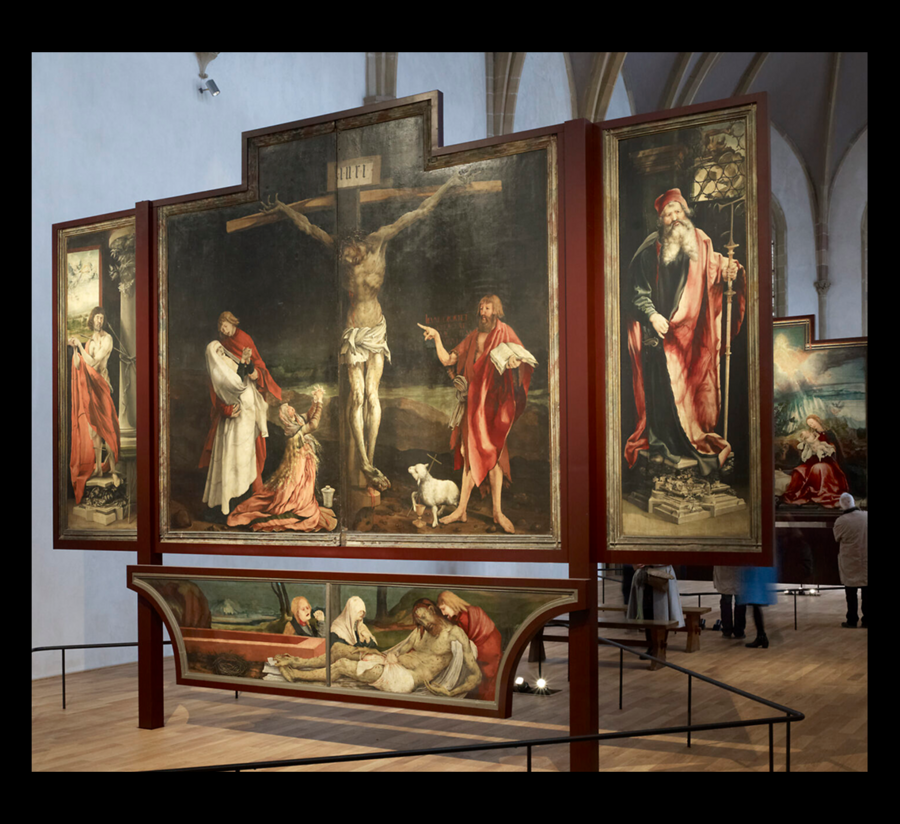
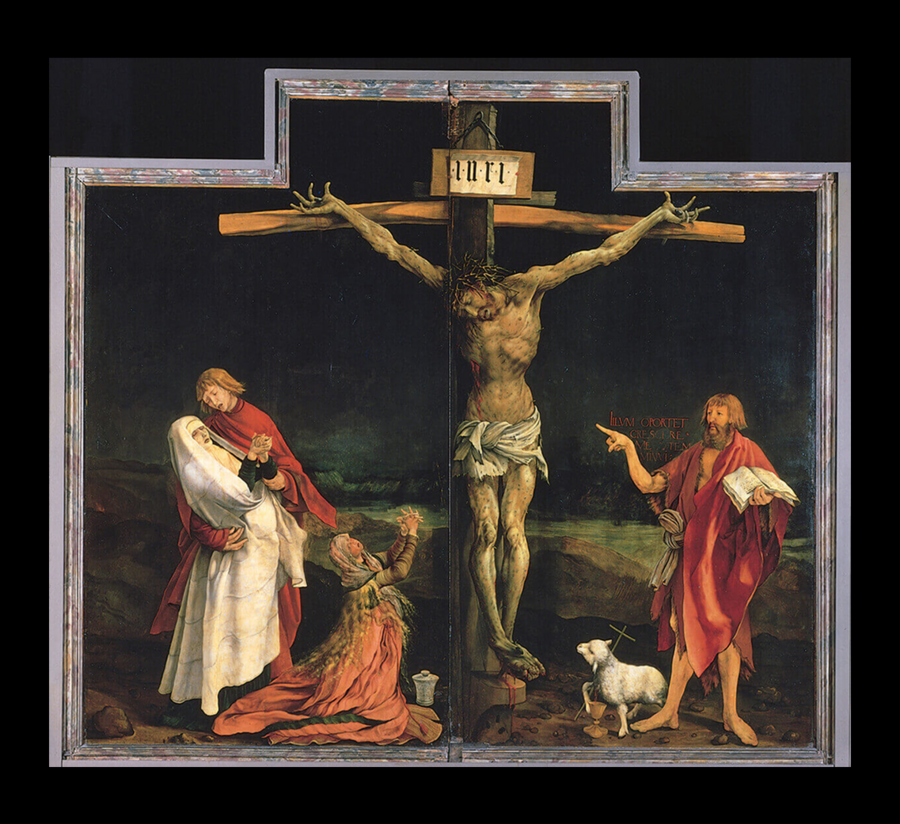
Matthias Grünewald. «Crucifixion, ” Isenheim Altarpiece, 1512–1516.