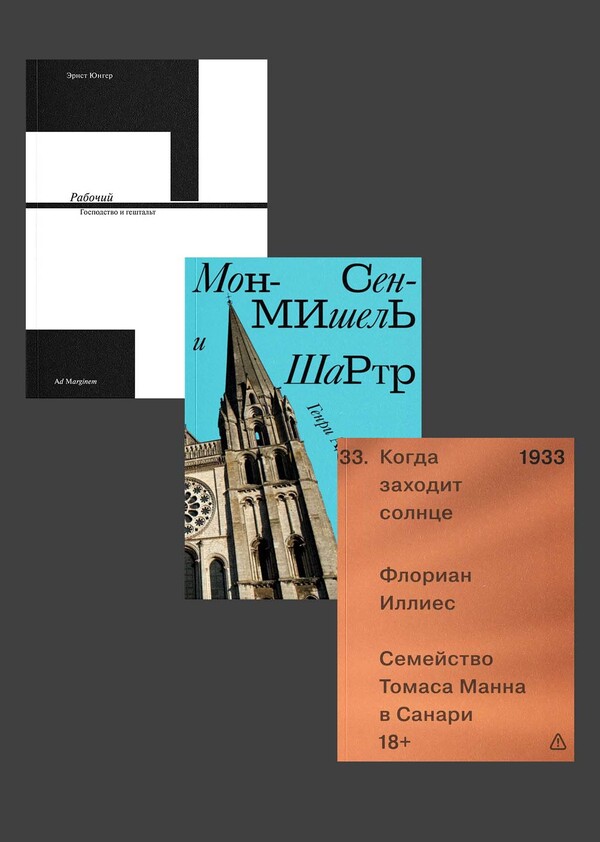
Ad Marginem attended the «Black Market» fair with professionalism, showcasing several summer releases. Our editorial team reviewed the publisher’s recent output and selected three books that make for ideal summer reading.
As the sun sets. The Thomas Mann family in Sanari
Florian Illies
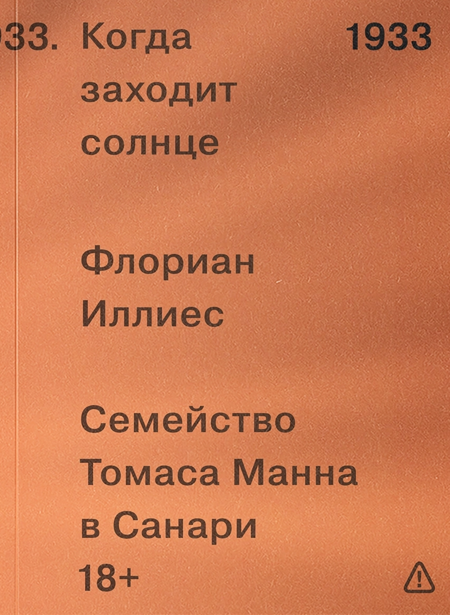
In his new book, German writer Florian Illies explores the history of Thomas Mann’s family, which flees from Germany—where the Nazis are coming to power—to France in the summer of 1933. It is in Sanary, a town in France, that the Manns will spend three scorching summer months. We are presented with an interesting family portrait reflecting all the idiosyncrasies and ambitions of each member. Furthermore, this book features a host of well-known figures—from Arnold Zweig to Aldous Huxley. They all lounge along the French Riviera while brutal fascism develops just across the border.
Illies does astonishing work with diaries and history itself; he deliberately sets aside the chronology of historical events, mentioning few extraneous names or facts. The focus remains on the people and their relationships, while politics recedes to the background. To avoid being overwhelmed by the tragedy unfolding and to preserve the human scale, the author employs signature irony. As a result, the book is so dynamic that the reader is constantly shifting between events and characters, often without a chance to catch their breath.
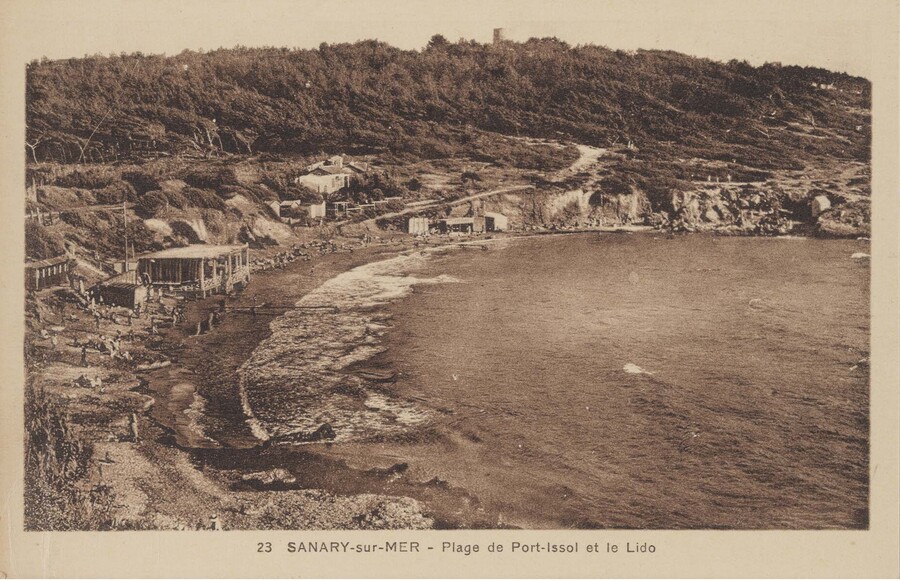
View of Sanari-sur-Mer
Mont Saint-Michel and Chartres
Henry Adams

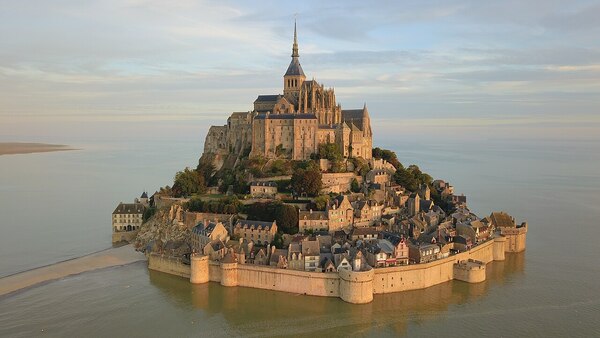
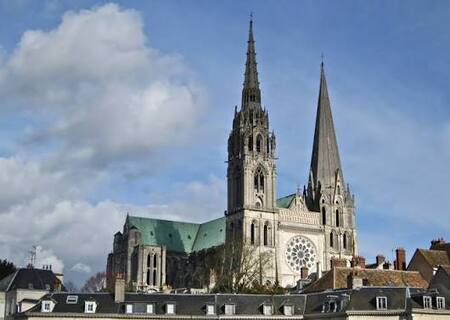
The book by American historian and writer Henry Adams is dedicated to the cultural and spiritual life of the Middle Ages. To explain the spirit of the age and avoid being overwhelmed by the material, the author analyzes two medieval monuments: Mont Saint-Michel and the Cathedral of Chartres. Seemingly just two, yet they are a great deal.
The book is structured around a unique historical dichotomy. The author studies the Norman Middle Ages from the 11th to 13th centuries. The first part dissects the 11th century, recounting the history of the abbey of Mont-Saint-Michel, dedicated to the warlike archangel Michael. The second part covers the 12th and 13th centuries, focusing on the history of the Chartres Cathedral. Here, the author is more interested in the image of the feminine ideal and mercy, embodied in the cult of the Virgin Mary. According to Adams, the Chartres stained-glass windows present a fantastically interesting and unusual account of history: the author posits that this is effectively about the emergence of a religion parallel to Christianity, where the central focus is not on meritocracy, but on the mercy shown to sinners through the Mother’s intercession. Ultimately, we are presented with the author’s remarkable perspective on an entire historical era—one that ceases to be the «Dark Ages» and instead emerges as a time of change and rapid development.
In conclusion, we see the author’s experimental view of an entire historical epoch—one that sheds the label of the «Dark Ages» and becomes an era of transformation and rapid progress, without which the European Renaissance could never have emerged.
Working. Dominance and Gestalt Ernst Jünger
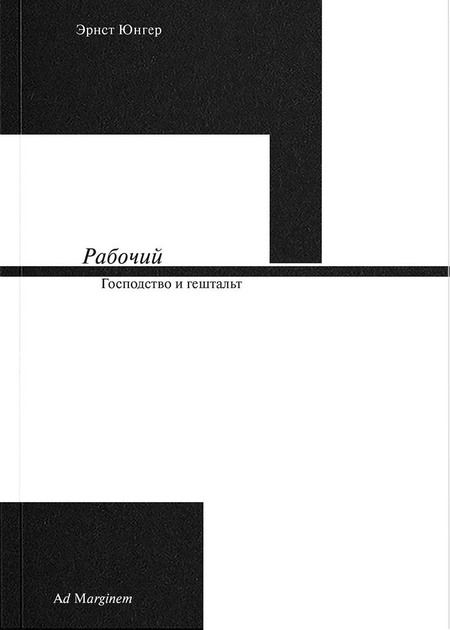
Also, for the first time in Russian, the essay by Ernst Junger, «The Worker. Dominance and Gestalt,» was published. Although the book was released only in 1932, it has not lost its relevance or sharpness to this day. The German thinker here reflects not on politics or parties; he is interested in the emergence of a new person—the «worker.»
The author illustrates how the obsolete bourgeois world is giving way to a new global order where the central objective is «work"—something more profound than labor—and an all-encompassing lifestyle that is reshaping history. The new era demands new protagonists; thus, Junger develops the concept of the «worker”—an individual encased in technology as if it were a uniform. Here, technology is not merely a component of industrial progress but a hidden language of dominance, mobilizing the entire world and fundamentally restructuring it. Despite this, the author maintains an optimistic perspective; for them, the technological boom possesses more positive aspects than negative ones. Ernst Junger’s remarkably clear diagnosis of the twentieth century mirrors the contemporary situation, where skills and competencies have become paramount for society.