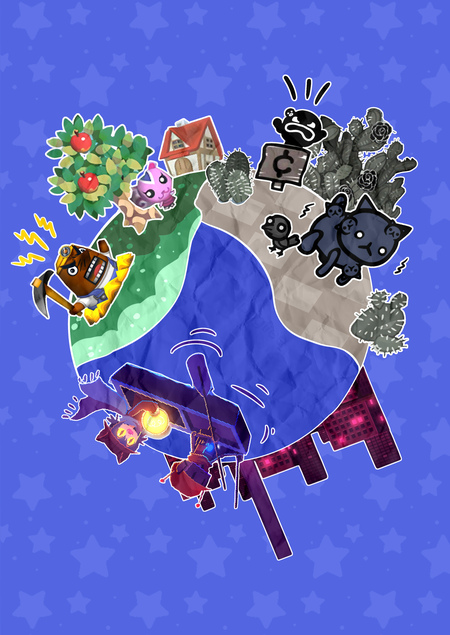
Saving in games is more than just a technical function; it is a point of contact between the player and the world. In this project, using three different games as examples, I will demonstrate how a saving error can evolve into a complete gaming experience.
Feedback regarding a save error can vary. To illustrate this, let’s look at three games: Oneshot, Mewgenics! , and Animal Crossing: City Folk.

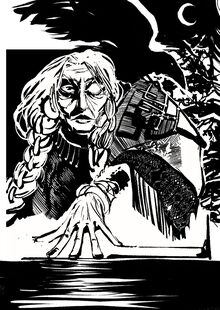
OneShot (Future Cat LLC, Degica, 2016). Adventure, puzzle.
The player controls Nico—a child who must deliver the Sun (which is actually a lightbulb) to the tower to save a dying world. Along the way, the player solves puzzles, interacts with NPCs, and engages with their computer’s file system. The game is built around direct dialogue: Nico addresses the player directly by name, breaking the fourth wall.
Game Goal: Deliver the «Sun» to the tower to save the world, or kill Nico, or smash the «Sun» in the tower to save Nico, or save the world.
Starting Conditions: Nico wakes up in an unknown house with no items.

Game objects: lightbulb, puzzle items, NPCs.
Mechanics: saving via «sleep, ” file system interaction, direct dialogue with the player.
Carrot is the player’s name.
Game space and time: 2D world, camera perspective—top-down view in a ¾ projection. Time progresses linearly, with save points that conclude the game.
Ending Conditions: Upon normal playthrough—there are two endings, each signifying either victory or defeat.
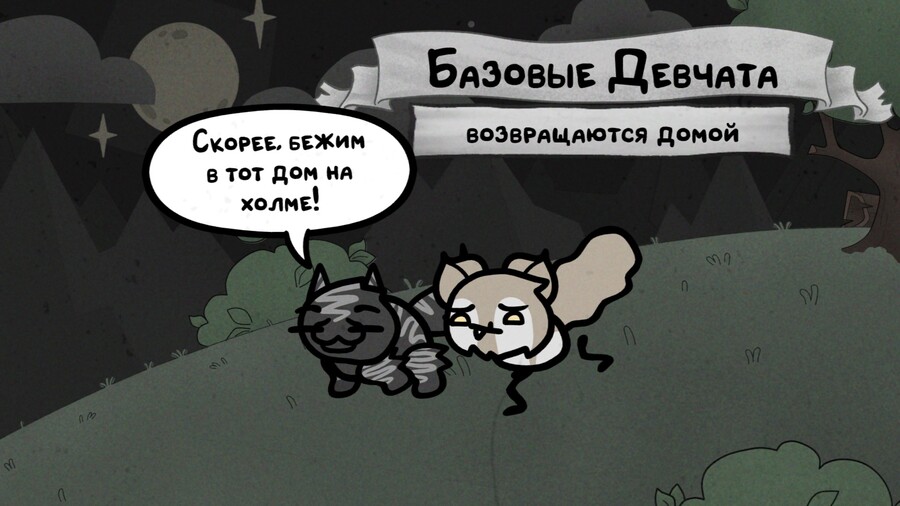
Mewgenics! (Edmund McMillen, Nicalis, 2026). Tactical, roguelike.
The player breeds cats, assembles a squad, and sends them on turn-based expeditions to fight enemies and gather loot. In the game, cats inherit traits from their parents, mutate, and have different voices, names, and personalities. Each run is the story of a unique squad, making the player attach to the cats and fear losing them.
Game objective: Breed cats and send them on hunts for prey.
Starting conditions: The player is given the choice of two cats out of three.
Gameplay space and time: A 2D world with turn-based combat and an isometric camera perspective during battles. Time spent on the journey is limited by movement points.
Between excursions, time passes within the house (preparation, improvements); the camera angle inside the house is a side view.
Game Objects: Cats, items, enemies, chests, food, NPCs.
Mechanics: Autosave, «Déjà vu» effect (10% chance the cat will not execute the command).
End Conditions: The death of cats during the hike is a loss. Returning home from the hike is a victory.

Animal Crossing: City Folk (Nintendo, 2008).
Social simulation.
The player controls their avatar, who furnishes a home, interacts with neighbors, fishes, catches insects, and repays a debt to Tom Nook. The game runs in real-time and syncs with the player’s everyday life: holidays occur on the same calendar dates as in reality, and the seasons change just like in the real world.