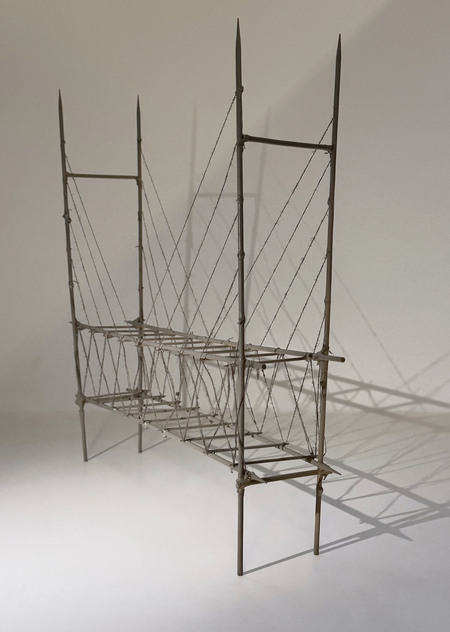
The Yokohama Bay Bridge in Japan was selected for the research and mockup creation.
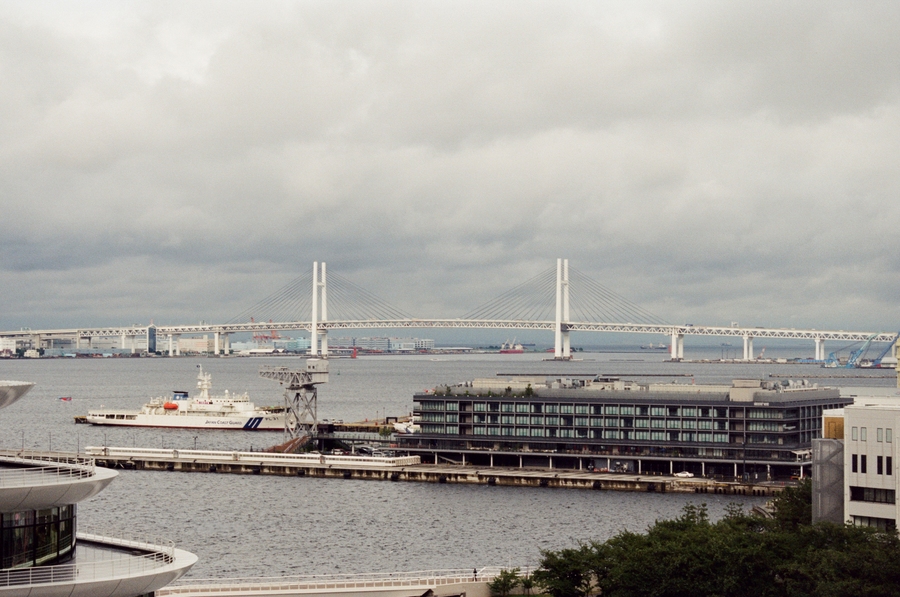
Yokohama Bay Bridge, Japan
Originally, there are two pylons. Each pylon, consisting of a pair of uprights with a crossbeam shaped like an «H,» takes the load from the cables and transfers it to the supports while working in compression. The cables fan out from the top of the pylons to the stiffening girder, working in tension: each one supports a portion of the span’s weight, so the deck is suspended at multiple points. The stiffening girder, a two-level truss with diagonal bracing, resists the horizontal component of the cable forces, preventing the deck from sagging or twisting due to wind and traffic. Because of this, the bridge is self-anchored and does not require massive abutment anchors.In the model, this scheme is represented as follows: the pylons are constructed from pairs of vertical rods with pointed tops and transverse crossbeams that mimic the «H-shaped» frame. The cables are made of fine thread and are tensioned diagonally from the top of the pylons to the edges of the deck. The two levels of the bridge are assembled from «ladders» of longitudinal beams and crossmembers, and the stiffening truss between them is simulated by thread tensioned crisscross.Operating principle: The load on the deck is converted into tension in the cables, which compress the pylons, and the pylons transmit the force to the supports. If any thread is loosened, the model loses its shape, clearly illustrating that the tension is what holds the structure together.
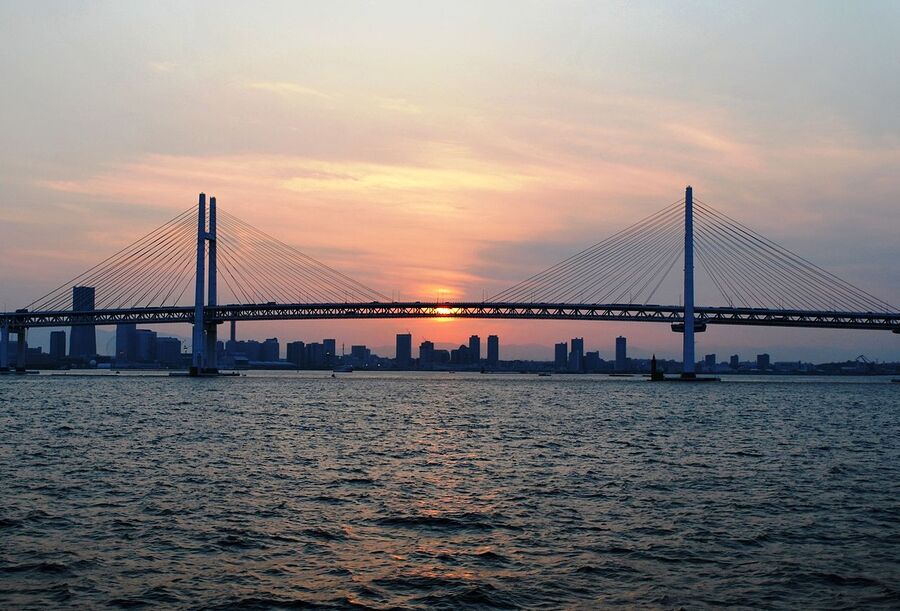
Yokohama Bay Bridge, Japan
Mockup Materials
wooden sticks toothpicks hot glue thread two-part adhesive gray spray paint
Mockup