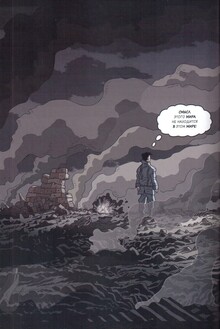
Concept
False Beliefs — Smoke — Fire — Ash
Reality — Ice — Water — Rain
Conclusions
Bibliography Image Sources
Concept

Martin Scorsese’s film, «Shutter Island» (2010)—is a masterclass in using visual narrative to explore the protagonist’s complex internal struggle between reality and self-deception. This study analyzes how the director employs the motifs of water and fire to construct a layered portrayal of the character and convey his turmoil between truth and false beliefs.
Hypothesis: The film’s visual language is built upon the contrast between truth and illusion, expressed through the symbolism of water and fire.
Key questions: How is what is happening visually supported or refuted? What is shown when the character seeks the truth? What is shown when the character questions his memories? How do the character’s memories visually shift?
Visual Accompanying the Search for Truth: As the protagonist, Teddy Daniels, seeks the truth, the visual narrative emphasizes clarity: bright lighting, sharp contrasts, and static shots. Water appears as calm, transparent expanses, symbolizing the purity of thought. Fire acts as a brilliant, focused light illuminating the path. However, even in moments of apparent clarity, the director employs subtle suggestions of impending doubt—faint currents in the water, shadows, blurred contours.
Visualization of Inner Confusion and Loss of Orientation: When the protagonist loses touch with reality, his inner world is reflected in chaos and disorientation. The water transforms into raging storms and murky waters, symbolizing emotional turmoil. Rain serves as a metaphor for despair. Ice represents emotional rigidity. Fire becomes uncontrolled flame, symbolizing internal rage. Smoke and ash embody lost memories. Distorted perspective, shaky camera work, and abrupt editing cuts heighten the sense of disorientation.
The Dynamics of Shifting Memories: The visual representation of the protagonist’s changing memories is a key element. Scorsese utilizes the contrast between bright, sharp images of the past and distorted, fragmented visions. Water symbolizes the fluidity of memory. Calm scenes can transition into dark, stormy landscapes, reflecting traumatic events. Fire symbolizes both brilliant yet dangerous moments and the destructive force of trauma.
The study is divided into two chapters with subchapters, in which two primary, opposing motifs—fire and water—are examined. These motifs themselves appear in their pure form in the film, but they also manifest through transitional, alternative states and components, such as ice, rain, smoke, and ash. The director uses these elements to express the expanded spectrum of the character’s condition. All of this provides the viewer with a visual key to unraveling the mystery.
This research is based exclusively on an analysis of the visual narrative and motifs of the film «Shutter Island.»
False Beliefs
The character constantly deceives himself to escape a cruel reality he has endured, and the trauma has shattered his psyche to the point where he invents an alternative identity and history. Visually, the motif of fire runs through scenes where the character lives in his own world, believing what is happening, even though it is only occurring in his mind.
Smoke
Smoke conveys the character’s psychological instability, their murky thoughts, and their unclear gaze.
An interesting element of the film is the act of smoking. Firstly, when Teddy smokes, his «partner» lights his cigarette. This suggests that he is being watched and cared for, much like in a clinical setting. Secondly, when someone else smokes while talking to the main character, it hints that they are «playing» in his game, entering his imaginary world.
Even the smallest traces (of fire) become a catalyst for the hero to invent their own version of what happened.
Fire


Fire fuels the character’s illusions—the greater the size, the more deceived the character becomes.
Light from a burning fire ignites false self-perceptions