We live in a constant state of «must do.»
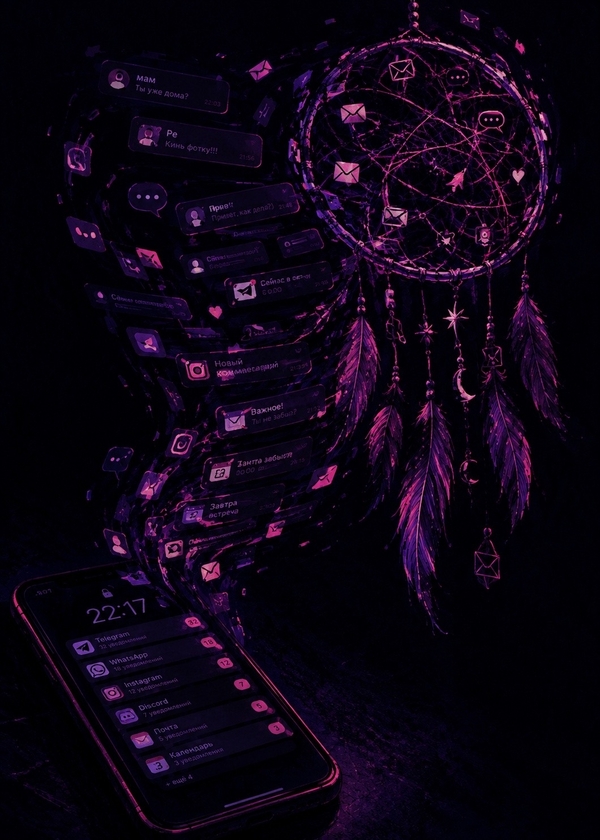
Modern individuals are almost never free from informational noise. The continuous flow of notifications, news, social media, academic and professional obligations, and an endless to-do list create the illusion that constant participation in events is necessary. Even leisure can transform into another task: I need to learn how to rest and manage my time.
This very contradiction became the starting point of the project.
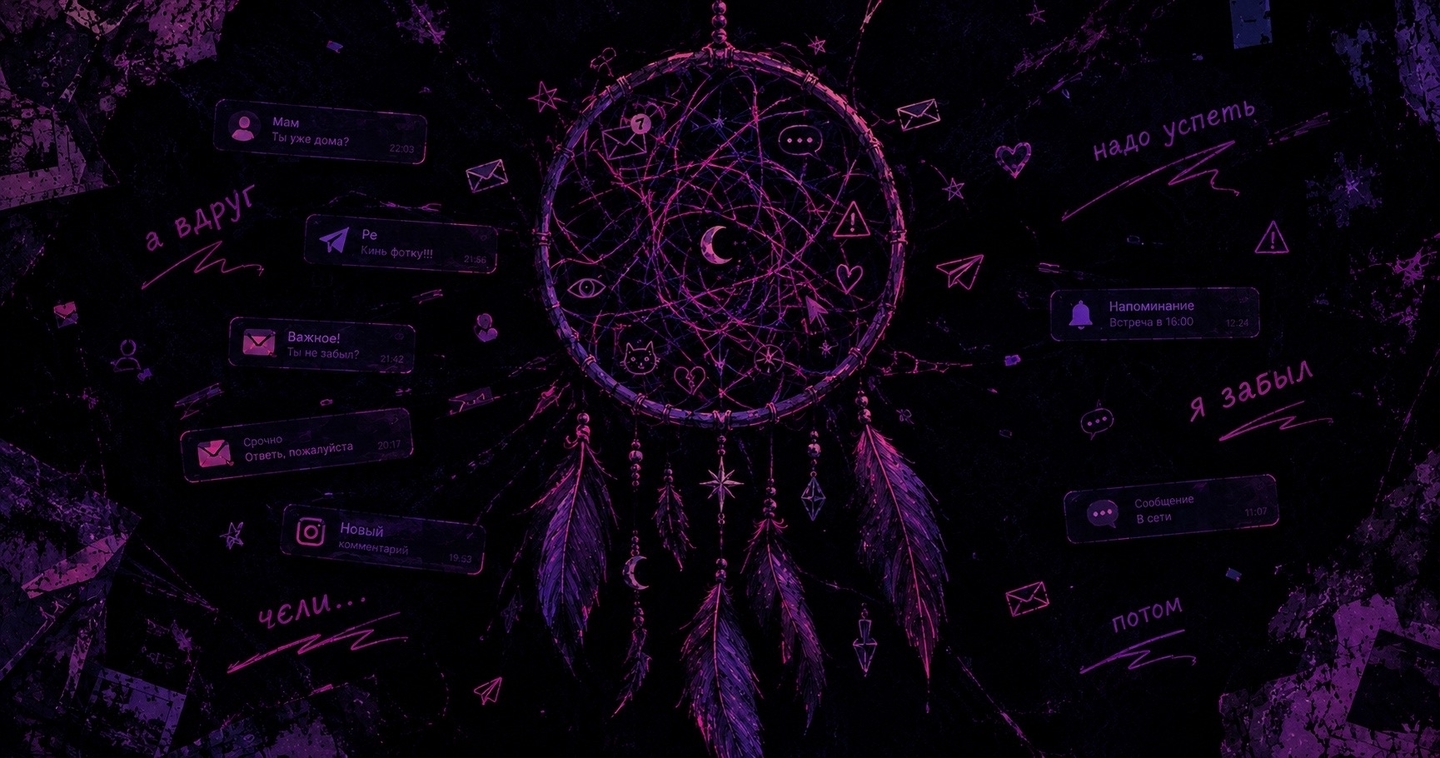
What if a dreamcatcher could become an anxiety catcher?
A traditional dreamcatcher carefully filtered out nightmares, allowing only calm, light imagery to reach the sleeper. It possessed an almost poetic simplicity—a clear division between «unsafe» and «safe, ” a comprehensible ritual of self-care at a moment when one is most vulnerable. If nightmares were once the main threat, today the challenge has shifted to the waking world. The modern individual faces not ghosts from dreams, but a far more tangible storm—an endless stream of information, notifications, news, and the expectations of others. This flow asks no permission: it crashes in throughout the day, multiplies background tension, and subtly erodes the ability to notice one’s own feelings. In such noise, anxiety ceases to be a rare visitor—it becomes a familiar backdrop that we barely distinguish until it swells into deafening volume.
«Alert Catcher» is a unique media space designed to operate in rhythm with contemporary life. It doesn’t promise to eliminate noise forever—instead, it helps you pause for a moment, rise above the flow, and view your own experiences from an external perspective. Here, you can catch a thought, name it, separate what is important from what is imposed, and find small, yet tangible ways to reduce internal noise: a short break, precise articulation, or grounding in a simple action. Thus, the ancient idea of defense finds a new form: instead of filtering dreams, it offers conscious attention management; instead of passive protection, it promotes active care for one’s inner balance.
Not to conquer anxiety. Learning to live with it.
The project’s goal is to create a visual medium that will help a young audience:
- Recognize their own emotional state;
- Identify sources of daily anxiety;
- Find accessible ways to switch gears and recover;
- Discuss complex feelings in simple language;
- View self-care not as another obligation.
Niche Topic
The project does not compete directly with medical or psychological resources. Its concept lies at the intersection of psychology, visual culture, lifestyle, and creativity. «The Anxiety Catcher» addresses anxiety not through the language of a diagnosis, but through the language of imagery, everyday experience, and art.
Distribution Channel
The primary distribution channel is Telegram.
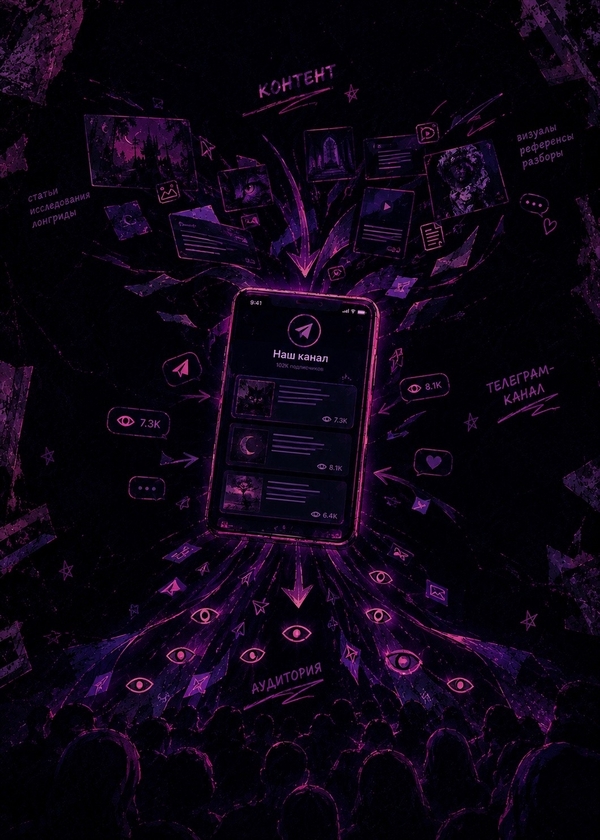
The platform is suitable for the project because of its combination of capabilities: it allows for the simultaneous handling of text, visual content, video, and interactivity without segmenting the audience across different platforms. This is especially important for this project—"Alarm Catcher» is built not around a single format, but around a multimedia experience.
Telegram allows you to integrate:
Text long-form articles, stories, research, and expert materials. Visuals illustrations, cards, photographs, and collages. Video short clips, motion graphics, and visual experiments. Interactivity polls, reactions, questions, and tasks. Community discussion of materials and sharing personal experiences.
Target Audience
What unites this audience is not statistics, but a living, painfully recognizable context—a chain of states that more and more people are experiencing today. First comes overload: too many tasks, too many stimuli, too many demands of «should» and «now.» The brain simply cannot process such a volume of signals. It is precisely these states—overload, anxiety, the inability to disconnect, the need for restoration—that form the audience for «The Anxiety Catcher.» These are people who do not want to «stop feeling, ” but want to learn how to notice their reactions, treat them with care, and find small islands of calm in their daily lives.
Overloaded Student
Context: University life, deadlines, exams, part-time work.
Need: To quickly switch gears and regain a sense of control over one’s state.
Job to Be Done (JTBD): «When I have too many academic tasks, I want to take a short break and recharge.»
What the project offers: Short practices, visual materials, interactive content, and resources that can be consumed in between tasks.
Digital Overload
Context: Constantly online.
Need: To step out of the information stream.
Jobs to Be Done (JTBD): «When I have been online for too long, I want to switch my focus and regain a sense of quiet.»
Content Digital fatigue, FOMO, doomscrolling, social media, digital habits.
Seeking emotional comfort
Context: Interested in psychology, self-care, aesthetics, and creativity.
Need: To find a beautiful and understandable way to take care of myself.
Jobs to Be Done (JTBD): «When I am emotionally overwhelmed, I want to find a small way to make myself feel better.»
Visual Culture Enthusiast
Context: Interested in art, design, film, and games.
Need: A better way to understand my emotions through cultural imagery.
Job to Be Done (JTBD): «When I want to figure out my own emotions, I look for stories and images where I can see myself.»
Competitive Landscape
The competition isn’t limited to anxiety projects.Direct Psychology, emotional state, self-care. Psychologies · Reminder · KnifeIndirect Lifestyle and media about daily life. Wonderzine · Burning Hut · The Path to SelfPotential Cultural and visual media. The Blueprint · Arzamas
6 Competitive Criteria
- Platforms
- Content Formats
- Visual Style
- Tone of Voice
- Thematic Overlaps
- Audience Engagement
Competitor Studio Size. Telegram Channel Subscribers at the Time of the Study
The attention economy exists: projects at the intersection of psychology, lifestyle, and culture are already gathering tens of thousands of subscribers.