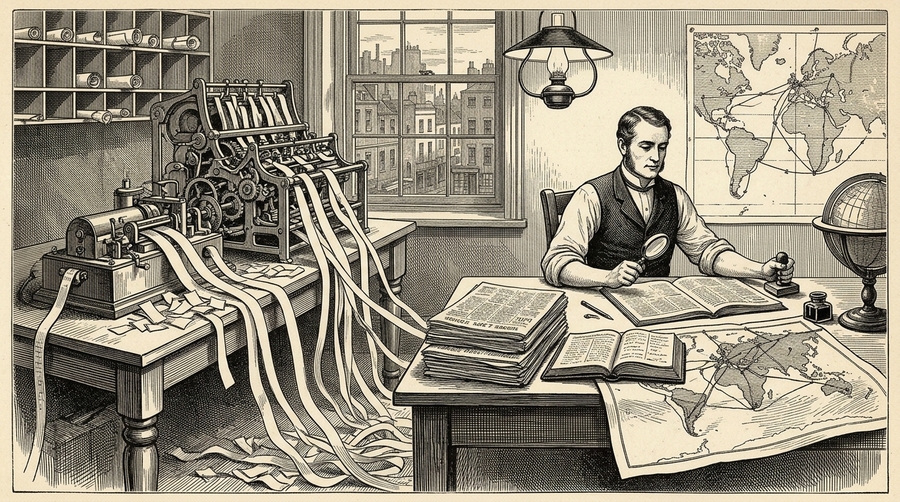
Media Concept
The concept has not changed since Homework #1 and Homework #2. Livingstone Press—a newspaper from the 1870s shared on Telegram and VKontakte—is interactive; the reader decides what happens next. Each series recounts a real expedition from 1850–1914, unfolding chapter by chapter as if it were happening in real-time.
Goal. To captivate the audience with the era of grand expeditions and 19th-century newspaper sensations, encouraging them to become knowledgeable about it and to create their own stories within it. Theme. Popular science history in an entertainment format: interactive series about real expeditions featuring branching scenarios such as «what actually happened» versus «what would you do?» Channels. Telegram — primary; the quiz immediately reveals the correct answer. VKontakte — secondary; the resolution is released in a separate post. Audience, B2C. USP. «Decide for Stanley—and see if you’re right.» «Follow the expedition on a map, like tracking a package.» «Each episode ends with hooks for your own story.» Series Cycle. Setup + quiz $\to$ «What if…» based on the majority choice (fiction, blue banner) $\to$ «And this is what happened» (fact, sepia tone) and a new branching point. Pacing. Mondays, Wednesdays, Fridays at 7:00 PM MSK; anniversaries shift the schedule. Each episode under 1,600 characters.
What Assignment #3 adds to the concept. In Assignment #1, we identified production as the bottleneck: channels with the «expedition as news» idea would stall after the first post. The rhythm of three releases per week is sustainable only if fact gathering, mapping, publication, and vote counting are automated, allowing the author’s time to be spent on review and writing. The sections below describe this.
Data Sources
Across 18 sources across six roles: participant writings, era newspapers, reference and dates, geospatial data, images, and audience data. The machine reads 12 sources via API or files; the remaining six require human input. Reliability Levels. Each source has an associated level. A date, figure, or quote is included in the post only if it is corroborated by a Source of Level A or B.
A — Primary sources. Diaries, letters, and personal accounts of participants, and contemporary newspapers. Posts include authorial interpretations, such as «according to Stanley’s book» or «reported by the Herald.» Periodical journalism proves how things were written, not necessarily what actually happened. B — Verified secondary sources. Museums, scientific institutions, and scholarly biographies. These are used in posts to resolve contradictions when primary sources conflict. C — Navigation. Wikipedia, Wikidata, and AI summaries. These are only used to locate a topic, date, or name. They are not cited in posts unless the information is found in A or B. Source map by role. For each category: what we use, how we obtain it, who processes it, level of reliability, and limitations.
Participant Books
• Project Gutenberg + Gutendex, Level A. Books published before 1929: Stanley, Nansen, Amundsen, Scott, Peary, Cook. Access: Gutendex provides a JSON catalog with text links, without keys. The machine downloads and splits the text into chapters; the user selects what they need. Limitation: For regular operation, Gutendex authors recommend using a dedicated server. • Internet Archive, Level A. Content not available in Gutenberg: De Long’s diaries and other 19th-century scans. Access: Search API and OCR text. The machine searches and downloads; the user cross-references the OCR output with the original scan. Rights are verified for every book. • Livingstone Online, Level A. Diaries and letters of Livingstone, the debate over the meeting date. Requires manual interaction exclusively through the website. Usage terms are provided on each document.
Newspaper of the Era
• Chronicling America (Library of Congress), Level A. The New York Herald 1840–1920 — Bennett’s newspaper (Stanley, «Janetta, ” Cook) and other US newspapers. Access: loc.gov API, JSON, and OCR strips. The machine searches by keyword and dates; the person reads the scan strip. The old API will close in 2025; only the loc.gov API will remain operational. • Trove (National Library of Australia), Level A. Australian press on Antarctica: how Amundsen’s news arrived. Access: Trove API v3, free key after application verification — must be requested in advance. The machine searches; the person reads. • Papers Past via DigitalNZ, Level A. New Zealand press 1839–1945: Scott’s expedition, „Terra Nova.“ Access: DigitalNZ API, free key. The machine searches; the person reads. Non-commercial use only; some data is available via the API. • Yandex search of archives and NEB, Level A. Russian press and reference books: „Janetta“ in the Lena Delta, Nansen, Girev. No public API available; only human interaction works. Dates prior to 1918 are in the old style; the Yandex service operates intermittently. • Museum of Hoaxes, Level B. Newspaper hoaxes for „Truth or Hoaxes.“ Human operation is required; each hoax is verified against a newspaper strip in Chronicling America.
Information and Dates
• Wikidata, Level C. Dates, coordinates, participants, relationships between people and expeditions. Access: SPARQL, no key required, machine-readable. The service is relocating in 2026–2027, and query addresses will change. • Wikipedia, «On This Day» feed, Level C. Candidates for anniversaries up to a week in advance. Access: REST API /feed/onthisday/{type}/{mm}/{dd}, no key required, machine-readable. CC BY-SA license; for plan use only, not for factual data. • Museums: Fram Museum, Canterbury Museum, Norwegian Polar Institute, Smithsonian; Level B. Disputed dates, team compositions, minor biographies. Human operated, via websites. • Academic Biographies (Tim Gill O’Stanley and others), Level B. Analysis of disputed points. Human operated. Summarization only: texts from after 1929 are not quoted.
Geodata
• Natural Earth. Coastlines, rivers, lakes, and glaciers for maps. Files from GitHub, running machine. Public domain. • Route points (custom GeoJSON), Level A. Campsites and coordinates from participant logs, current locations—from Wikidata. A person sets the points, the machine draws. The map is marked «schematic route.»
Images
• Wikimedia Commons and the Library of Congress Print Collection, Level A. Era engravings: style reference and authenticated prints with source citation. Access: Commons API and loc.gov API. The machine searches, the human curates. License is checked for every file. • Nano Banana 2 (Gemini 3.1 Flash Image). New «engravings» generated via prompt through the Gemini application or API. The machine generates, the human writes the prompt and curates. The image contains an invisible SynthID watermark; the caption always states «AI-generated.»
Classroom Data
• Telegram Bot API and channel statistics. Votes in quizzes, views, reposts, and «Reader Dispatches» in the bot’s private messages. Access: channel bot administrator. The machine collects the data; the human draws the conclusions. The bot only sees votes from polls it created itself.
• VK API. Votes in VK polls, views, and reposts. Access: reading the community wall. The human creates the poll; the machine aggregates the results: permission for polls.create is required, which VK grants in exceptional cases.
Sources in the «Epoch Newspapers» group provide media not only with facts but also with a voice. Herald—the season’s hero—pays for Stanley and «Janetta, ” and buys Cook’s story. The authentic headlines reveal how the story was perceived at the time.What is not in the list. The language model is not a source: it only operates with excerpts from the table above. Forums, „interesting facts“ aggregators, and posts from other channels can be read for inspiration, but they cannot be cited.
Data Schema
The data flows through a 12-step conveyor in two phases: series preparation for two weeks before launch and a release cycle every 2–3 days. At each step, the machine prepares, and a person decides. Four steps—the gate—require an editor’s sign-off before the data can proceed.
Pipeline Steps
Preparation Cycle — Two Weeks Before Launch
- Calendar. Machine: Once a week, it collects anniversaries from Wikidata and the «On This Day» feed eight weeks in advance, mapping them onto a Monday/Wednesday/Friday grid. Human: Selects the expedition and release dates. Database: Series and release dates.
- Corpus. Machine: Based on a list of queries (names, vessels, locations, and date ranges), it downloads chapters from books and newspaper articles, saving snippets along with metadata. Human: Creates the queries, researches the Russian press, museums, and biographies independently. Database: Sources and snippets.
- Fact Sheet — Gateway 1. Machine: A language model extracts potential facts (who, where, when, how much) from the snippets, linking them to the source snippet and marking where sources conflict. Human: Verifies each fact against Source A or B, assigns a status, and for disputed facts, writes a qualifying phrase like «according to…» Database: Facts.
- Divergences. Machine: Proposes plausible but incorrect options, checks lengths against quiz limits, and verifies that the correct answer is unambiguous according to the Fact Sheet. Human: Selects 5–8 moments of decision, writes the question and the correct answer, and selects the incorrect options. Database: Divergences.
- Texts — Gateway 2. Machine: Calculates the length (release up to 1,600 characters, explanation up to 200), finds all dates, numbers, and names within the text, cross-references them with the Fact Sheet, and passes an editorial checklist. Human: Writes the releases and approves each one. Database: Releases, with status «Draft → Approved.»
- Maps. Machine: Generates a map using Natural Earth in a newspaper style; the route is drawn out based on the specific release frame. Human: Places route points based on diaries and verifies the finished map. Database: Map.
- Illustrations — Gateway 3. Machine: Nano Banana 2 generates several options based on a prompt; a script assembles the cover: header, «ears, ” title, and caption. Human: Writes the scene prompt, selects the option, and checks for anachronisms and how people are depicted. Database: Illustration.
Release Cycle — Every 2–3 Days, for Each Divergence
- Publication. Machine: The bot publishes the approved post and quiz on Telegram according to schedule, and sets a scheduled post on VK. Human: Within 24 hours, the user clicks «Approve» in the bot and creates a poll on VK. Database: Status «published» and message IDs.
- Voting. Machine: After 48 hours, it records the results of the Telegram quiz and the VK poll, and calculates the proportions. Human: Views the results; if there is a tie, they make the final decision and write about it in the issue. Database: Votes.
- «What If…» — Gate 4. Machine: Suggests three branching paths based on the majority outcome, checking that the branch does not contradict facts preceding the divergence point and the era. Human: Writes the branch within 1–2 days, applies a stamp, and adds the line «⚠ This is fiction.» Database: Branches.
- Analytics. Machine: Weekly, it compiles a summary—the percentage of voters (goal: 20%), the return rate for «What If…» (goal: 70%), reposts, and a comparison between Telegram and VK. Human: Makes decisions regarding the content plan. Database: Metrics.
- Archive for the Game. Machine: Exports reader choices into the Livingstone Found dataset. Human: Selects the «Reader Dispatches» and obtains author consent. Database: Game dataset.
Editorial Base
Database — a single table with a separate sheet for each entity and a folder for files. Python scripts run on a schedule, and the bot operates via the Telegram Bot API. One author is sufficient; once the facts exceed a few thousand, the database will migrate to SQLite without changing fields.Source. Fields: title, type, level A/B/C, link, license, publication year (for the «quotes before 1929» rule). The machine populates this from the API, and a person assigns the level.Snippet. Fields: source, chapter or column, exact text, language, date style (new or old). The machine populates this.Fact. Fields: assertion, date, location, participants, supporting snippets, status (candidate, verified, disputed, rejected), post formulation. The machine creates candidates; only a person can change the status.Branch. Fields: year, question, options, correct answer, explanation, supporting fact. A person writes this; the machine suggests incorrect options.Issue. Fields: series, date, category (fact, fiction, interjection), text, status (draft, under review, approved, published), Telegram and VK message IDs. A person handles the text and «approved» status; the bot handles the IDs.Media. Fields: type (illustration, map, archive), origin (AI image and prompt, archive with link, custom map), caption, status. The machine creates it; a person approves it.Voting. Fields: branch, platform, votes per option, total votes, views, closing time. The machine populates this.«What If…» Thread. Fields: voting, selected option, text, contradiction check result. A person writes this; the machine performs the check.Reader Dispatch. Fields: text, correspondent number, consent for publication and game usage, moderation status. The bot receives it; a person decides.Interlinks: A fact references snippets, and a snippet references a source. Therefore, any date in a published post can be traced back to the specific page of a book or newspaper column in a minute, and the list of sources for the series is compiled automatically.
Guidelines for Automated Services
In the diagram, there are nine automated services. All of them adhere to eight general rules, and each has a card detailing: what it does, which rules it follows, what it never does, what a human needs to verify, and what action to take in case of a failure.