Куратор Екатерина Новокшонова: от первого лица
Выставка Вадима Сидура и Анастасии Рыбаковой «Цветочек в полуденной истоме»
Exposition of Vadim Sidur and Anastasia Rybakova «The Flower in the Midday Stomach» by Vadim Sidura Museum, 11.06.25-17.08.25 curator: Catherine Novokshonov
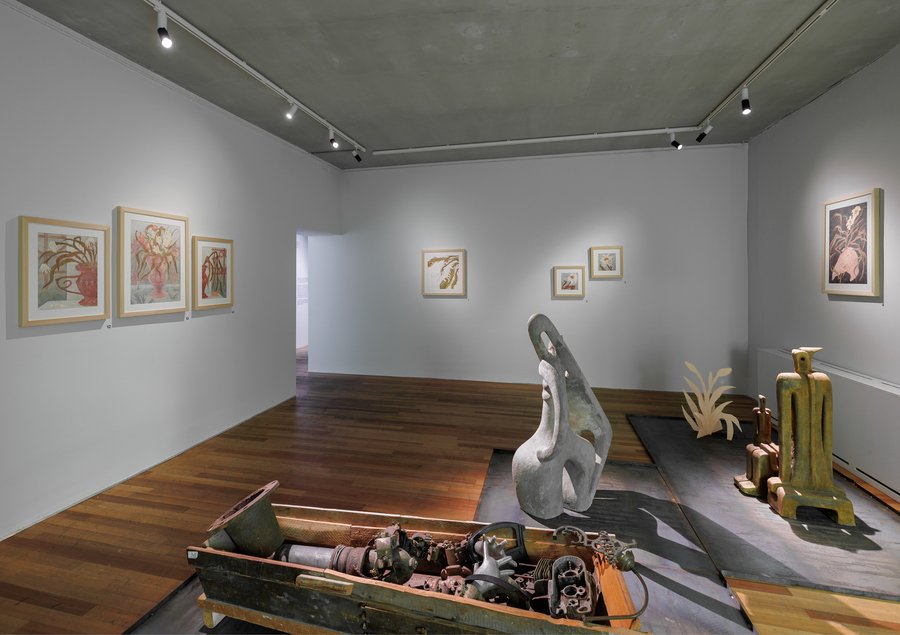
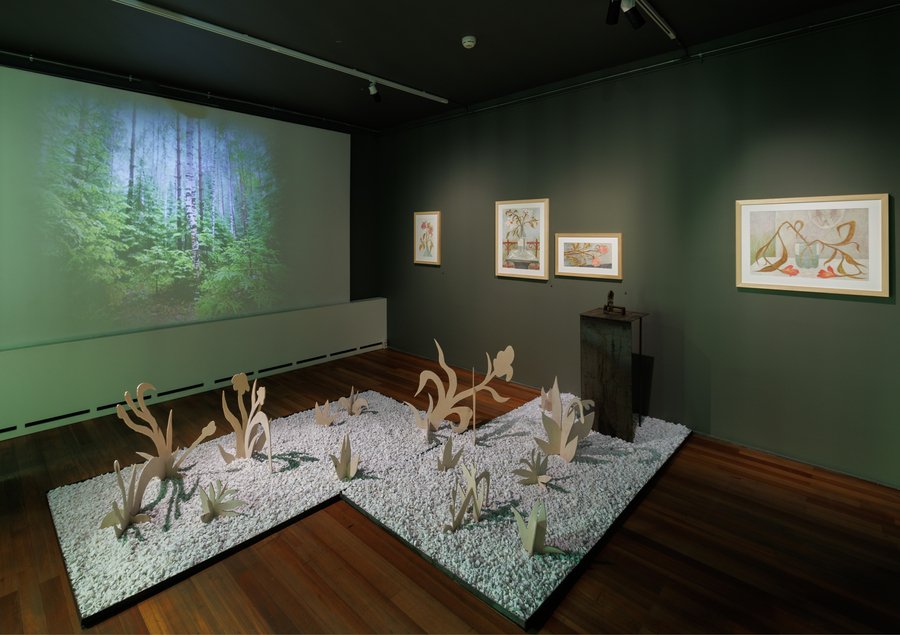
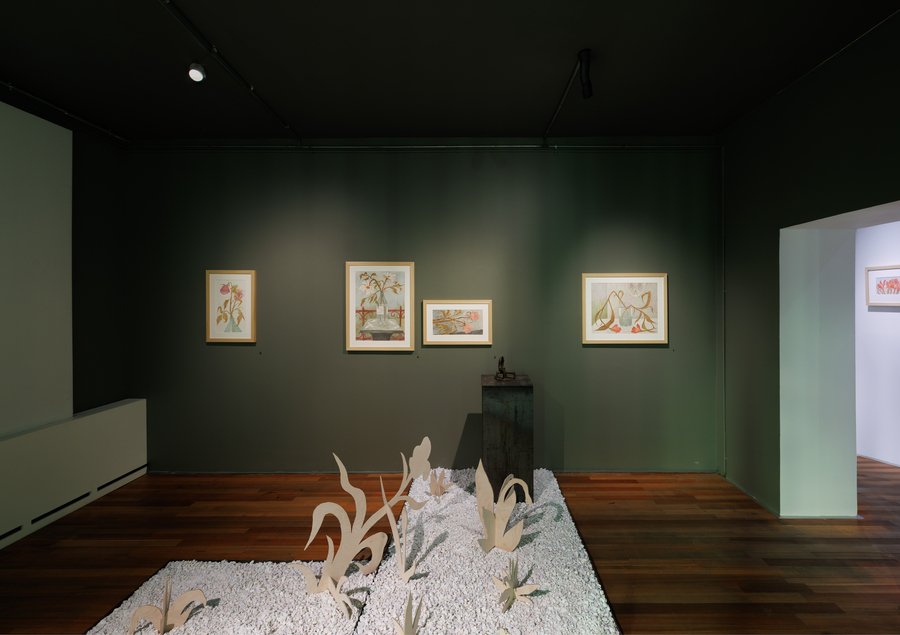
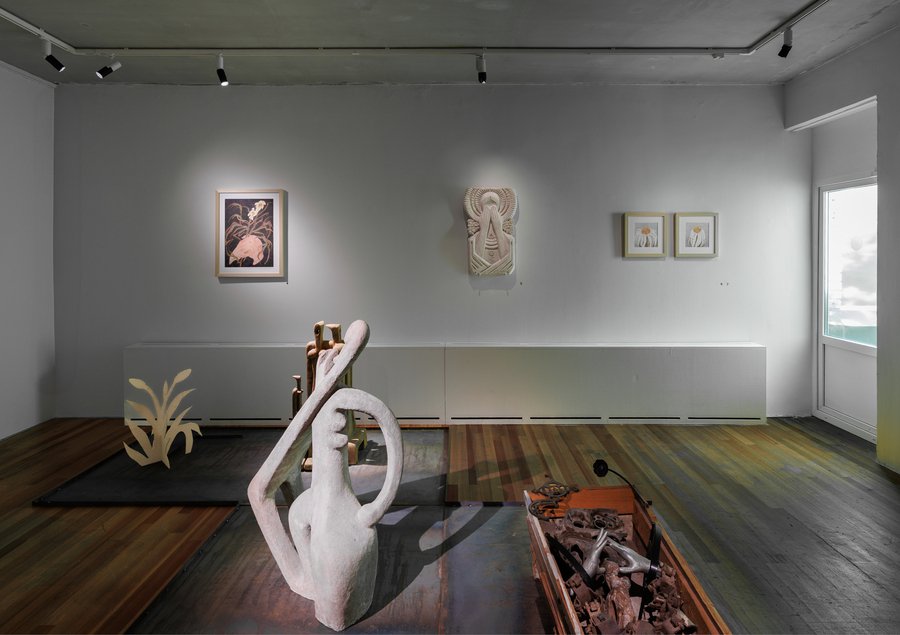
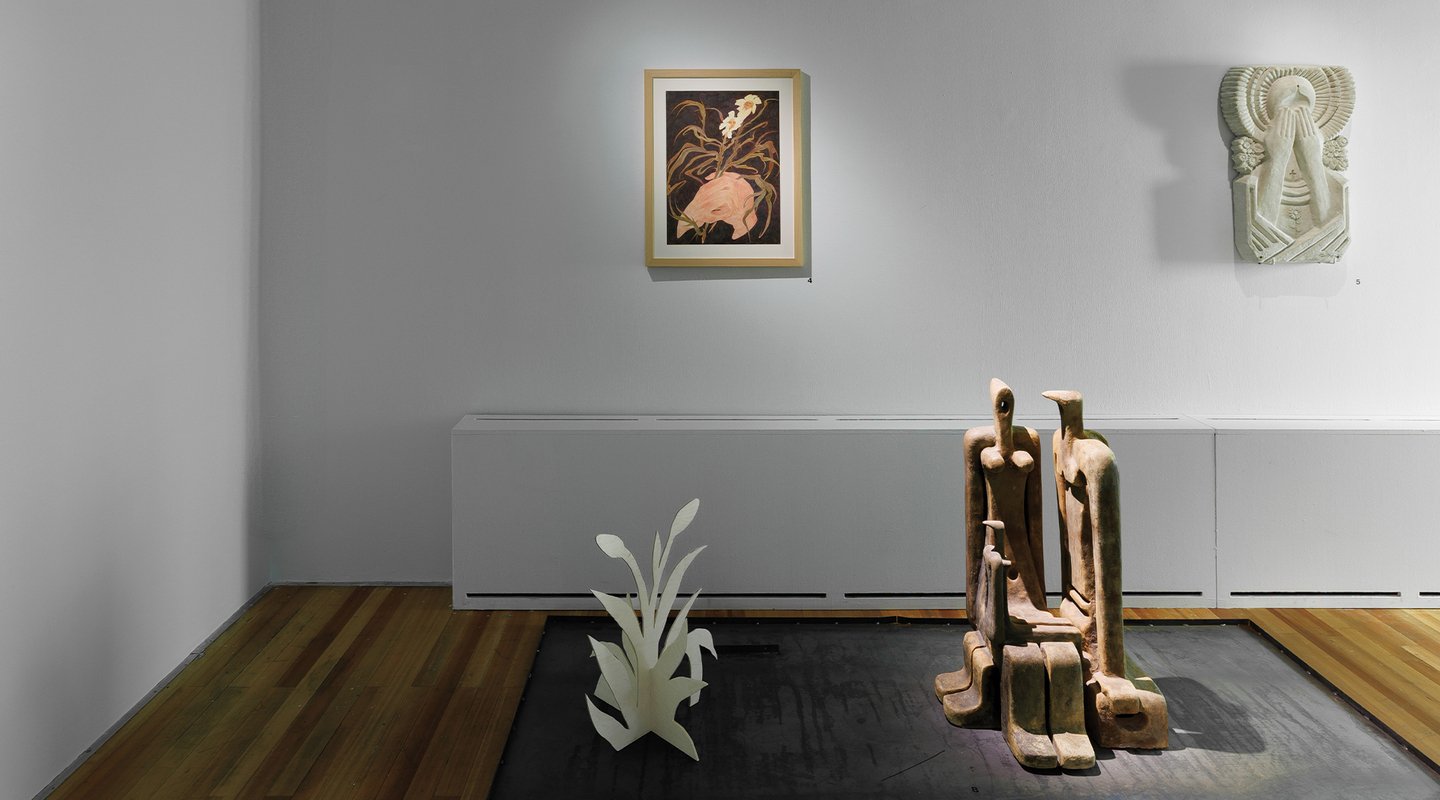
Types of exhibition · Press Service MOMMA; Photographer: Denis Lapshin
«It’s my personal conviction: it’s our job to develop the sensitivity of people, to awaken them both to each other and to the surrounding space.»
BACKGROUND OF THE PROJECT
All the projects at the Vadim Sidura Museum are the result of my curatorial approach as the programme director of the exhibition plan. Each year we carry out six to seven very different projects, which can be combined by a common metaphor or cross-cutting theme, always based on images related to the myth of Wadim Sidura. Myth. M., 2015.] A myth of modernistic, surrealistic, biographical. That makes me, as a sponsor, feel certain freedom in the interpretation of his creative heritage.
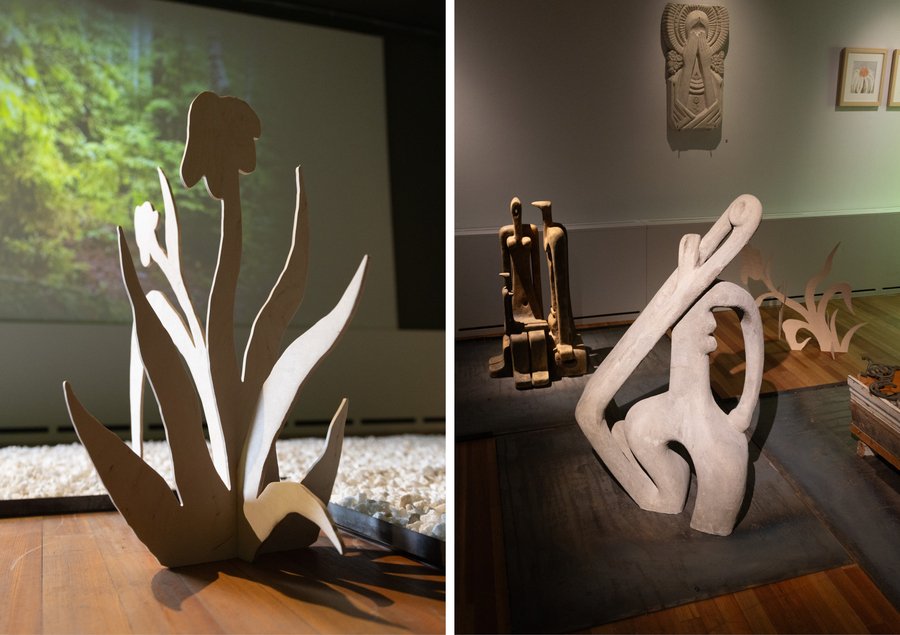
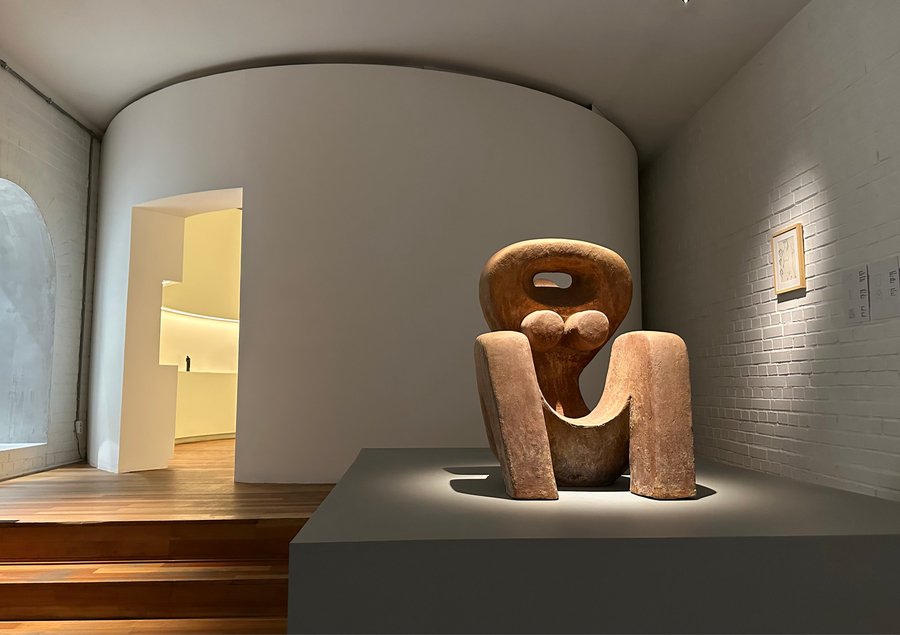
On the left: View of exposure / Right in front: Vadim Sidur. «A monument to the modern state,» 1962. Cement, metal frame, lipstick, tone of MOMMA Press Service
The permanent display on the ground floor of the museum addresses the subject of the traumatic experience of war as a global phenomenon, using the Sidur sculptures. It is important to me that this be resonated in today’s reality. On the second floor, where the temporary projects of modern artists entering into dialogue with Sidur are presented, I wanted to give the audience the opportunity to turn attention to other important aspects of life — love and hope. I deliberately avoid the words «happiness» or «happiness» because they do not fully correspond to the spirit of his creativity and heritage.
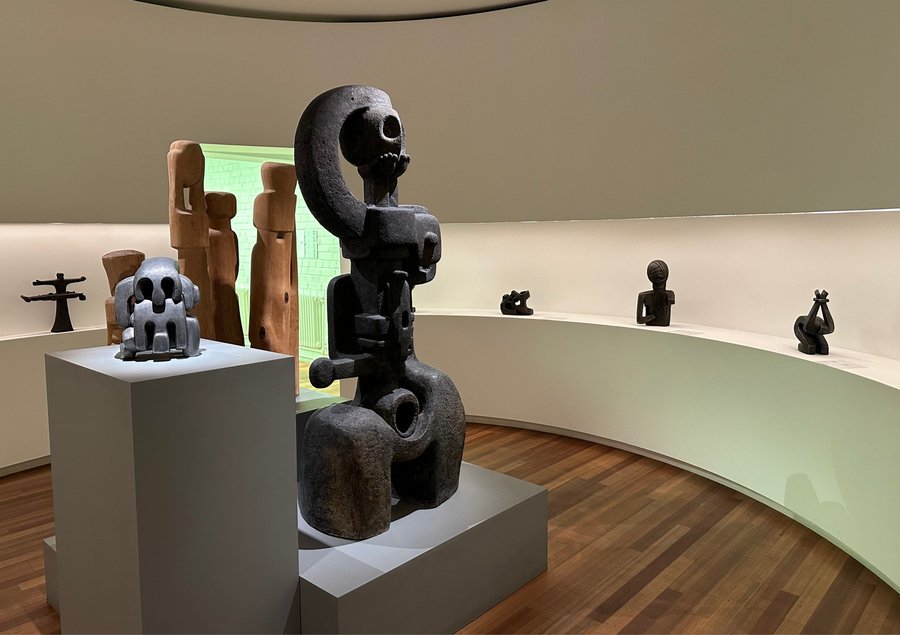
Type of permanent display on the ground floor
Over the past five years, working with Vadim Sidura’s archives, I have been particularly interested in the individual images that he has returned to his creation over and over again. One of them is a flower. First of all, I referred to the author’s only poetic collection, which was created in the last years of life and is called «The happiest autumn». The happiest autumn ever. — M., 1990]. The collection contains a collection of poems beginning with the words «I am a flower…». Every time I read them, I notice that even if the poem begins with hope, it always makes sense of the inevitability of death. Vadim Sidur is skilled at keeping a delicate balance between life and death, and the image of the flower becomes a metaphor for both vulnerability and a striking will to live. My thoughts gradually led to the image of the garden, including the Paradise. As I discussed the garden as a metaphor — an attempt to grow something of my own, to cope with pain and loss through nature — I came to the conclusion that this image has many connotations in art and culture. Therefore, all the 2025 projects are combined as a «sidurian flower», and the titles for all the projects are quoted as referring to the artist.
I, the flower of the autumn, I’ve spent my whole life wondering about the Lepests. Yes, no, no, no, no, no, no, no, no, no, no, no, no, no, no, no, no, no, no, no, no, no, no, no, no, no, no, no, no, no, no, no, no, no, no, no, no, no, no, no, no, no, no, no, no, no, no, no, no, no, no, no, no, no, no, no, no, no, no, no, no, no, no, no, no, no, no, no, no, no, no, no, no, no, no, no, no, no, no, no, no, no, no, no, no, no, no, no, no, no, no, no, no, no, no, no, no, no, no, no, no, no, no, no, no, no, no, no, no, no, no. Book of poems «The happiest Autumn»
The only exception is Anastasia Rybakov. It is surprisingly subtle and poetic to give the names of each of its graphical works — rare among modern artists as well as among graphic artists in general. The series usually goes unnamed, and its poetic name becomes an additional key to the image. «The flower in the midday stomping» is the name of the made-up Fisherman, and it rhymes organically with the peace of Vadim Sidur.
Anastasia Rybakova: «Sleeping Sad Astra», 2025; «Par of Pink and Disgruntled Flower of Unknown Origin», 2025. All: Paper, coloured pencils — Photo: Denis Lapshin
ON THE DIALOGUE OF SIDURA AND FISH
I try to visit the workshops of young artists, and we met Anastasia Rybakova when she was a resident of the workshops of the modern art museum Garage. When I saw her work, I was interested in a fine image that went through all of her graphics. Nastya’s trying to keep a balance between beauty, fairy tale, metaphorically, and utilitarian object. Her graphics are primarily coloured. Working with color is much more imagining than, for example, monotype. There are no direct intersections with Sidur’s creation in the fisheries, but rather a thin line between wilting and flowering.
Anastasia Rybakova: «The Stradal Face of a Suffocating Margarita», 2025; «Excessive Pain of Deterioration of a Margarita’s Face», 2025. All: Paper, coloured pencils — Photo: Denis Lapshin
From the moment we met, the workshops began to communicate and discuss Nasty’s personal project in a dialogue with Sidur. For me as a curator, it is my main task to find out what topics are relevant to the artist I invite to the exhibition plan of the museum, where the main figure is Vadim Sidur. Every artist realizes that Sidur is a monumental figure of modernism in the second half of the 20th century and that it becomes a common field of reasoning in the preparation of the exhibition.
ON EXPRESSION
The exhibition project «The Flower in the Midday Stomach», built on a dialogue between two artists, Vadim Sidur and Anastasia Rybakova, represents the nature of memory as a polyphonic structure — a dynamic landscape of meaning that grows from the conflicting unity of fragile and stable, personal and collective, oblivion and preservation.
The entrance point of the MOMMA Press Service
In today ' s sociocultural context, especially in the practice of memorialization, flowers have traditionally been an important symbolic element: they are not just adornment, but a language that speaks of fleetingness and eternity. The Graphic Sheets of Rybakova capture flowers on the edge of bloom and extinction. The petals opened under the blazing light of time are already marked with a wilting seal — a moment when the event was not yet history but no longer living experience. They become a powerful and subtle symbol of memories that change, disappear, or acquire new meanings over time, as if to remind us: we can’t keep even what we remember. In contrast to the ephemerality of these images, the sculptures of Vadim Sidura are a material and plastic anchor of memory. His work is not merely about events, but about the scars on the body of human history that shape public consciousness.
Type of exhibition · Press Service MOMMA
ON THE COURTING PRINCIPLES OF WORK WITH DIFFERENT TIMES AND EXPRESSIONS
The special feature of Vadim Sidur is that in Soviet times he was already a multi-channel artist: sculpture, graphics, painting, poetry, copyright film, experiments with materiality (hyps, wood, bronze, copper, hamot, granite) all form a unique set of factors. He is one of the first artists in the USSR to start an installation, now one of the basic forms of modern art. In the format of working with a young artist and a figure in the annals of art history, one should listen to one’s own professional and creative interests. In my view, the most interesting and successful interaction can take place in the form of a site-species work — when there is a curator as a repeater of Sidur’s art and archival materials and an artist who sincerely thinks about the biography of the sculptor, the themes of his works, new meanings are born and complementary cooperation is taking place.
The kind of exposure. Lower right corner: Vadim Sidur. «The family. Gothic Cathedral, 1964. Cement, metal frame, butter paint, shape cream, photo tone: Denise Lapshin
There wasn’t a single artist in my practice who said it was hard for him to work with Sidur’s legacy. In the circumstances, it is important to build a dialogue with the young author, to hear what the current artist is concerned about in order to find a response in the myth of Sidura. The focus on project ideas, the search for crossing points and the freedom of expression are the basic principles of my curatorial approach in working with young authors. Some artists may be lost in concepts, but it doesn’t matter to me: words and concepts are only aids. Art resonates through sensations, is perceived by all senses, not just through direct verbal explanations. It’s only when the exhibition is ready and the artist and I stand inside of it that it’s all worked out: the works begin to «talk» among themselves, creating a new space — some of their amazing world. A modern handler needs more sensitivity. I’m sometimes called a «metacurator»: I’m not just an administrative decision maker. I’m more of a mantor, a friend, an associate, and the support of an artist in a process of hard work that can last from six months to two years.
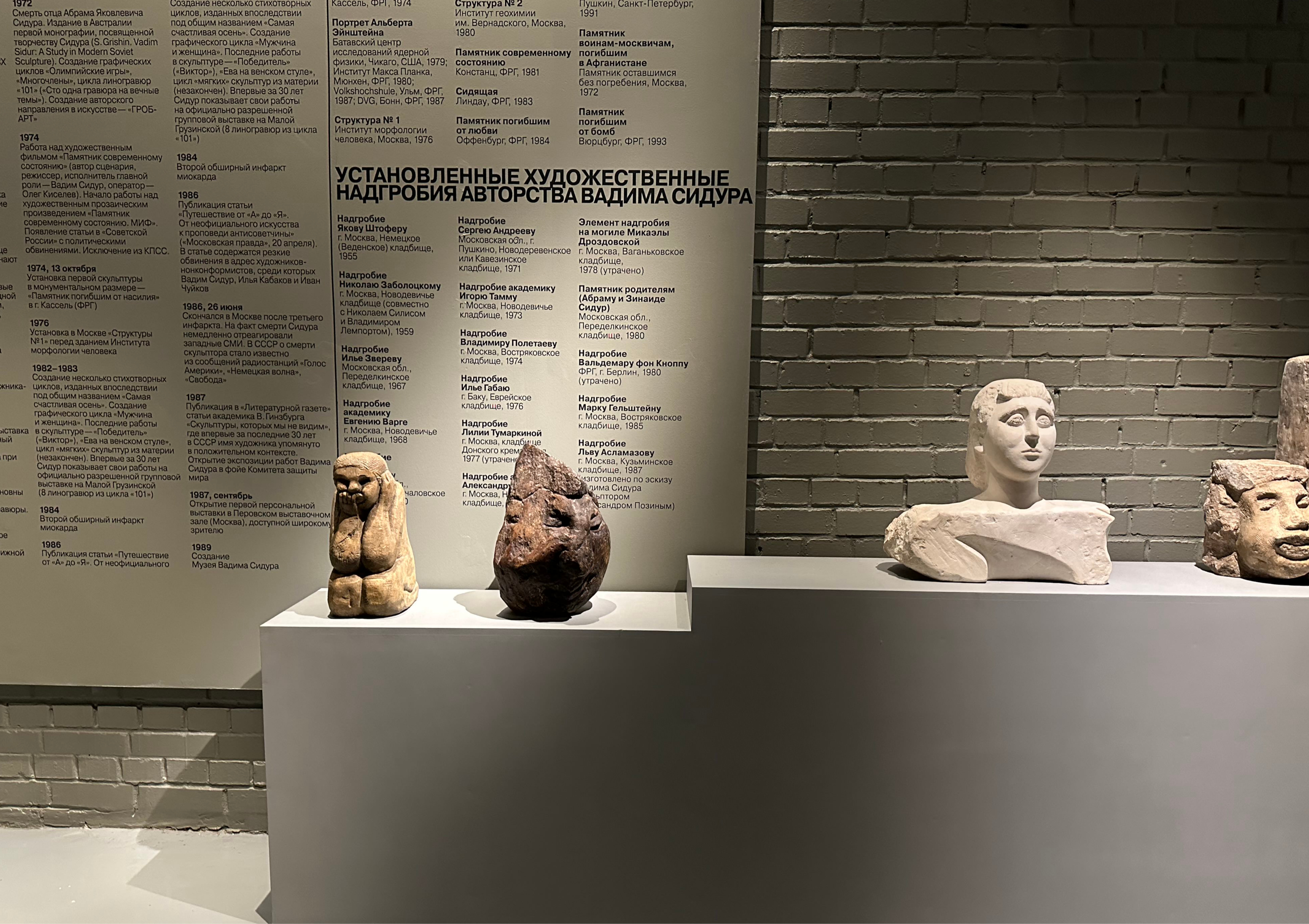
Vadim Sidur. Nadgrobie Waldemaru von Knoopu, 1980. The cast, the cream of the MOMMA Press Service.
ON FUTURE PLANS AS THE TRAINING STAFF OF THE DIZAIN STUDY PROGRAMME «COURATOR PRACTICES IN COMMUNITY»
Rybakov’s anastasia. «The light blue guys haven’t figured out what they’re waiting for,» 2025. Paper, coloured pencils — Photo: Denis Lapshin