Rubricator
Introduction
Communication Channels
Theoretical Framework
Analysis
Conclusion & Recommendations
List of literature and sources of images
Introduction
A niche business is not built on random customers — it is built on a community. The store «28oi» sells comics, figures, and collectible cards — products that people will not buy without interest and trust. For such a store to survive for 17 years and become the oldest in Russia, its audience must keep coming back and feeling that they are part of something of their own.
In this project, we analyze how «28oi» uses communication to create that sense of belonging.
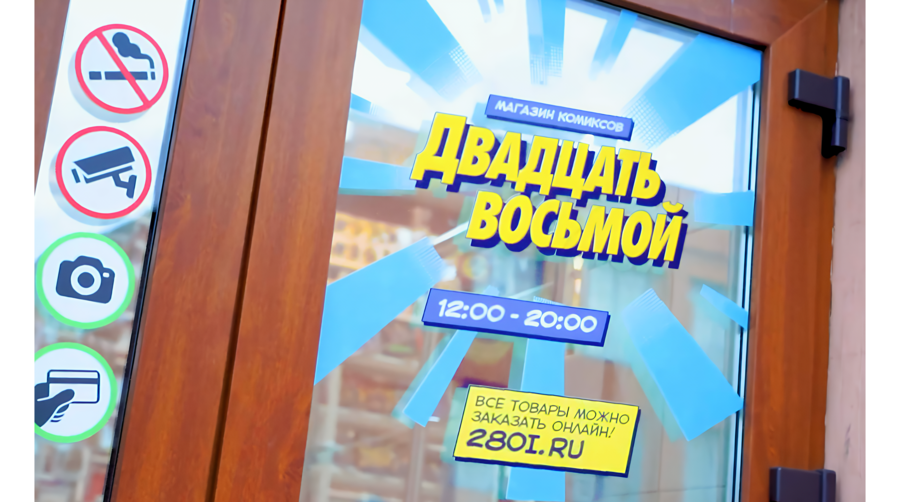
Store on Borovaya Street, 52B, Saint Petersburg

The store was founded by Mikhail Bogdanov in 2009. It started with the publishing house «Komilfo» and a small outlet at the Krupskaya House of Culture. Then, due to requests from customers from other regions, an online store appeared. Only after that came the full offline store on Borovaya Street, 52B in Saint Petersburg.
In other words, «28oi» did not enter a ready-made market — it grew together with its audience.
The positioning of «28oi» rests on three elements:
- The status of the oldest store — trust and a sense of reliability.
- Staff knowledge — the employees understand comics and are ready to help those who know nothing about them.
- Atmosphere — the store is designed as a geek space: graffiti, display cases with figures, bright colours.
Together, these create the image not simply of a retail outlet, but of a place that people want to return to.
Logo of «28oi»
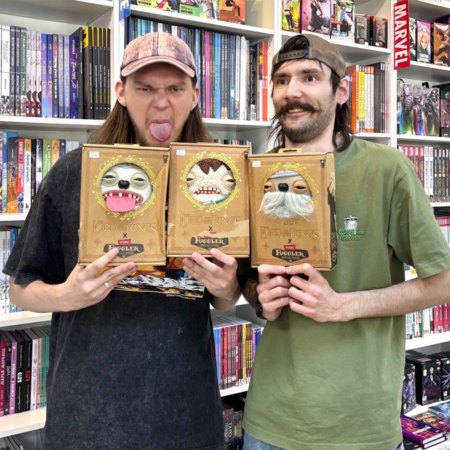
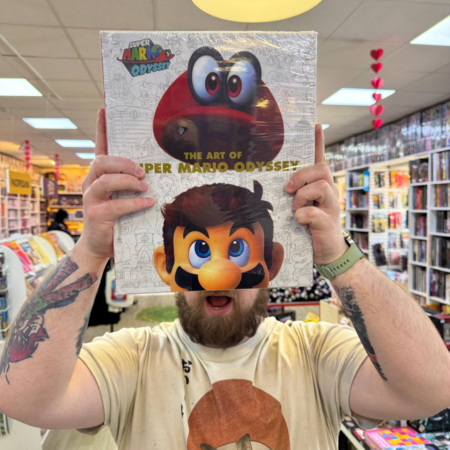
Store staff
The audience of «28oi» is the geek community. Collectors, regular customers, regional clients, people looking for unusual gifts, teenagers and adults — they are united not by age or income, but by an interest in geek culture that becomes part of their identity.
One can buy a comic anywhere. But through its communication, «28oi» offers a sense of belonging.
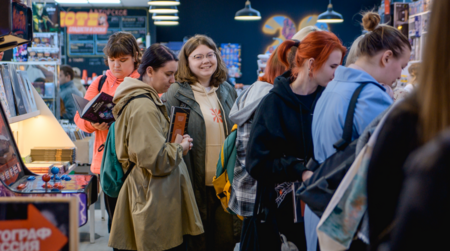

Customers in the store
Communication Channels
To understand how «28oi» communicates with its audience, one must first look at the tools it uses.
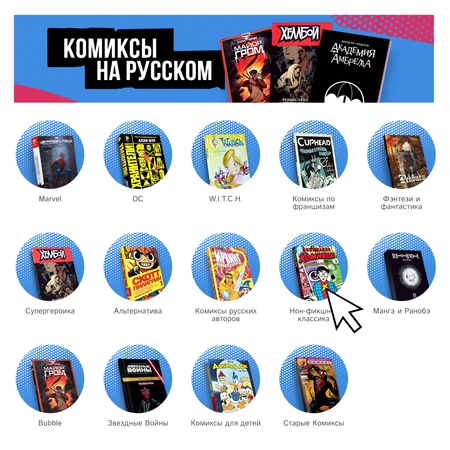
The website is a convenient catalogue that lays out the entire assortment: comics, figures, collectible cards, branded merch, clothing, books, board games. The customer does not need to call or travel across the city — just open the site, find what they need, and place an order. Loyalty points, pre-orders, delivery — everything works to make the purchase as simple as possible for someone who has already decided to buy. This matters because a frictionless website removes barriers between intention and action, turning interest into sales.
Screenshot of the website catalogue

On social media, posts go out several times a day: announcements of new arrivals, pre-orders, promotions, important store news. This keeps the audience informed and ensures they do not miss anything important. In addition, the store replies to questions in direct messages — quickly, to the point, but also lively and human. This removes uncertainty and helps customers decide to buy. From a communication perspective, this builds trust and shortens the distance between the brand and its audience.

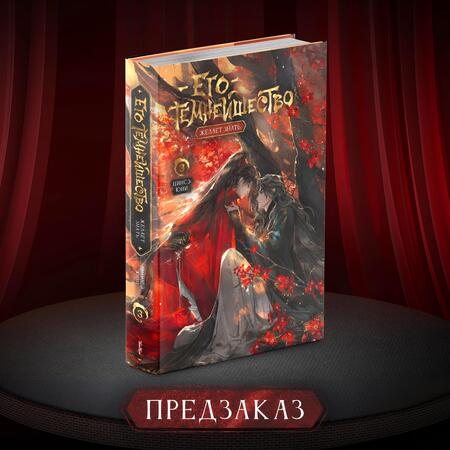
Pre-order announcement

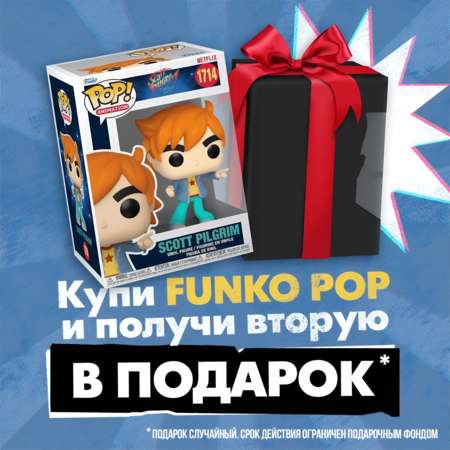
Promotion and discount announcement
Three customer dialogues The store replies warmly, with humour, and honestly — building trust and shortening the distance between the brand and its audience
(«Hello, my beloved customer!»)
The store responds sensitively to trends. The popularity of anime brings manga and figures into the assortment. Blind boxes are trending — «28oi» offers them. Customers ask about something new — the store tries to bring it in. This is not just about following trends, but about listening to demand and adapting quickly. Responding to trends signals that the brand is part of the same cultural moment as its audience.
Thus, through its website, social media, and responsiveness to trends, «28oi» builds a communication strategy that not only informs and sells but also shortens distance and confirms that the brand lives in the same cultural space as its audience.
Social media posts about trendy new arrivals: manga, «Funko POP!» and blind boxes
Theoretical Framework
Why do people return to «28oi» for years? The answer lies not in prices or assortment, but in identity and needs. Two theories help explain this.
The first framework is Social Identity Theory (Tajfel & Turner, 1979). It explains how belonging to a group becomes part of a person’s identity. People divide the world into «us» and «them». Comic fans, collectors, and geeks want their group to look good, so they choose brands that support their identity. This lens fits «28oi» well because the store does not simply sell comics — it offers a sense of being «among your own».
Individual → Group → Identity
The second framework is Uses and Gratifications Theory (Blumler & McQuail, 1969). It asks not what media do to people, but what people do with media. Applied to a brand, it focuses on the needs that the brand satisfies. For «28oi», these include the need to belong («I am among my own»), the need for uniqueness («I have something others don’t»), and the need for information and entertainment.
Together, these two lenses help us analyze how «28oi» builds a community, not just a customer base.
Needs → Brand choice → Satisfaction
Henri Tajfel, John Turner, Jay Blumler, Denis McQuail
Analysis
Group 1. First contact: visual and verbal signals
The store interior is the first thing a visitor sees: shelves packed with comics and figures, display cases with collectibles, pop culture references in the decoration. It looks like a classic comic shop — the kind fans imagine when they think of such a place. The website and social media follow the same visual style: bright colours, speech bubbles, comic aesthetics, pop‑art references.
The unity of the visual language works as a signal. Seeing this style, a person understands: this is a place for «us». Anyone who loves comics and geek culture feels a sense of belonging here.

Store interior: a classic comic shop space with pop culture references
Visual style: website and social media post in comic aesthetics

The language of the posts is lively, ironic, full of memes and pop‑culture references. The store shares behind‑the‑scenes videos, unboxings, and selections where employees argue about comics. The reader does not get dry information — they see jokes, emotions, live reactions. This creates a sense of shared understanding. The store does not talk down to its audience — it communicates like a friend.
Social Identity Theory explains: a person recognises familiar symbols and identifies with the group. Uses and Gratifications Theory adds: they receive entertainment and a sense of belonging.
A meme post, an unboxing video, a review video from social media — jokes, emotions and live reactions instead of dry announcements.
Group 2. Deeper engagement: events, exclusives, and horizontal connections
Beyond visual style and language, «28oi» builds community through live events and exclusive products.
Autograph sessions are meetings with comic authors, artists, bloggers, voice actors, and game developers. The customer does not just buy a comic or a figure — they meet someone they know from the screen or from pages. This is live contact with «someone from our crowd».
Swap meets for figures and cards are regular gatherings where customers bring their own items and exchange them or simply talk with fellow collectors. The store does not earn money directly from this, but it provides a space where people communicate, get to know each other, and exchange contacts. Here, it is not the store talking to the customer, but customers talking to each other. Friendships form, people arrange new meetings, discuss collections. These are horizontal connections within the community.
Autograph session announcements: Vitaliy Terletsky (comic artist), Saikono (creator of the visual novel «Tiny Bunny»), Islam Gandzhaev (voice actor)
Social media post about a swap meet for figures and cards
Exclusive products such as blank covers by artists and rare merch that is not available anywhere else become markers. Owning such an item means: you are not just a fan, but an insider. You have something that not everyone has.
Autograph sessions, swap meets, and exclusive products transform the audience from passive observers into active community participants. Uses and Gratifications Theory explains: needs for unique experience, live communication, and information are fulfilled. Social Identity Theory adds: meeting an «insider», horizontal connections, and status markers strengthen the sense of belonging.
Exclusives section on the website, an artist’s blank cover, a comic with a signed autograph
Group 3. Culmination: reviews as public declarations of belonging
In their reviews, regular customers do not write about prices or assortment. They write: «8 years with you. Thank you for existing», «If you love comics, this is the first place you should go», «It’s easier to come here than to look for the comic you need in a shop near home». These are not reviews about service quality. They contain no evaluation of delivery, packaging, or value for money. These are public declarations of belonging. The person is not just saying «the store is good» — they are saying «I am one of you, I have been here a long time, I am part of this».
Reviews like these are a public expression of identity, not a report on transaction quality. Social Identity Theory explains this act of self‑presentation: a person openly declares their belonging to a group. Uses and Gratifications Theory adds: they receive validation and satisfy their need for recognition.
Three 5‑star reviews:
«8 years with you…» «If you love comics, this is the first place you should go.» «It’s easier to come here than to look for the comic you need in a shop near home.»
Conclusion & Recommendations

The research set out to understand how «28oi» builds a loyal community around a niche brand. The answer lies not in prices, assortment, or convenience — but in a sense of belonging.
Through visual signals, horizontal communication, events, exclusives, and reviews that become public declarations of identity, the store transforms casual buyers into active participants. «28oi» has become not a point of sale, but a meaningful community space.
The main lesson: a niche business that invests not in advertising but in community identity receives not customers, but loyal participants who return for years.
Three recommendations follow from this research.
First: open outlets in Moscow and other major cities. Regional customers write in their reviews that they travel to St. Petersburg specifically to visit the store. The demand already exists.
Second: bring video quality up to the level of post design. Posts are professionally designed, but videos remain amateurish — this lowers views. Faster editing and more attention to format are needed.
Third: create a mascot. The visual style is already recognisable. A mascot would give the community another clear symbol — for social media, posters, and memes.
These three steps allow growth without losing the brand’s face. «28oi» already has a community. Now it needs more places to meet, more reasons to be proud, and more symbols.
One location in St. Petersburg. ~40 likes on a short video (~67k audience). No mascot — unlike Geek Trip, another geek store (their mascot: an octopus slot machine)
List of literature and sources of images
Official website of the comic book store «28oi» [Electronic resource]. — URL: https://28oi.ru (accessed: 10.06.2026).
Customer reviews of «28oi» on TripAdvisor [Electronic resource]. — URL: https://www.tripadvisor.ru/Attraction_Review-g298507-d16819413-Reviews-28oi-St_Petersburg_Northwestern_District.html (accessed: 10.06.2026).
Interview with the founder: Comic book stores «28oi» [Electronic resource]. — URL: https://geekcity.ru/magaziny-komiksov-dvadcat-vosmoj-sankt-peterburg/ (accessed: 10.06.2026).
Tajfel, H., & Turner, J. C. (1979). An integrative theory of intergroup conflict. In W. G. Austin & S. Worchel (Eds.), The social psychology of intergroup relations. Monterey, CA: Brooks/Cole. (accessed: 10.06.2026)
Blumler, J. G., & McQuail, D. (1969). Television in Politics: Its Uses and Influence. Chicago, IL: University of Chicago Press. (accessed: 10.06.2026)
Official website of «28oi» (28oi.ru) — logo, website design, screenshots [Screenshots]. — URL: https://28oi.ru (accessed: 12.06.2026).
TripAdvisor — photos of the store and customer reviews [Photographs]. — URL: https://www.tripadvisor.ru/Attraction_Review-g298507-d16819413-Reviews-28oi-St_Petersburg_Northwestern_District.html (accessed: 12.06.2026).
Official VK account of «28oi» — visual content (posts, announcements, comments, videos) [Digital images]. — URL: https://vk.ru/shop28oi (accessed: 13.06.2026).
Telegram channel of «28oi» — visual content (posts, announcements, videos) [Digital images]. — URL: https://t.me/shop28oi (accessed: 14.06.2026).
top100person.ru — founder photo [Photograph]. — URL: https://top100person.ru/brands/mikhail-bogdanov/ (accessed: 14.06.2026).
Yandex Maps — map screenshot [Map]. — URL: https://yandex.ru/maps/?ysclid=mqenuhb02l848715008 (accessed: 14.06.2026).
Geek Trip official website (geek-trip.ru) — mascot photo [Photograph]. — URL: https://geek-trip.ru/?ysclid=mqen3iegng18734098 (accessed: 14.06.2026).
Henri Tajfel [Photograph]. — URL: https://www.calendarz.com/ru/on-this-day/june/22/henri-tajfel (accessed: 13.06.2026).
John Turner [Photograph]. — URL: theguardian.com (accessed: 13.06.2026).Jay Blumler [Photograph]. — URL: https://www.theguardian.com/education/2011/sep/06/john-turner-obituary (accessed: 14.06.2026).
Jay Blumler [Photograph]. — URL: https://everloved.com/life-of/professor-jay-blumler/
Denis McQuail [Photograph]. — URL: (accessed: 14.06.2026). https://www.socialsciencespace.com/2017/07/theorist-mass-communication-denis-mcquail-1935-2017/ (accessed: 14.06.2026)