Kinetic art: the art of movement
Kinetic art — from the Greek word kinetikos, meaning «movement» — is a trend in modern and contemporary art that makes movement its fundamental principle. It refers to artwork that either moves physically or gives the illusion of movement. Unlike traditional static art, in which the viewer only observes, kinetic art is making the viewer’s experience a dynamic one.
It originates from earlier trends such as Constructivism, Futurism, Dadaism and Bauhaus, which combined creativity with mechanisms, as well as the rapture of the technological revolution. Although the first works in the field of kinetic art appeared in the 20s and 30s of the 20th century, the peak of its development came in the 50s and 60s.
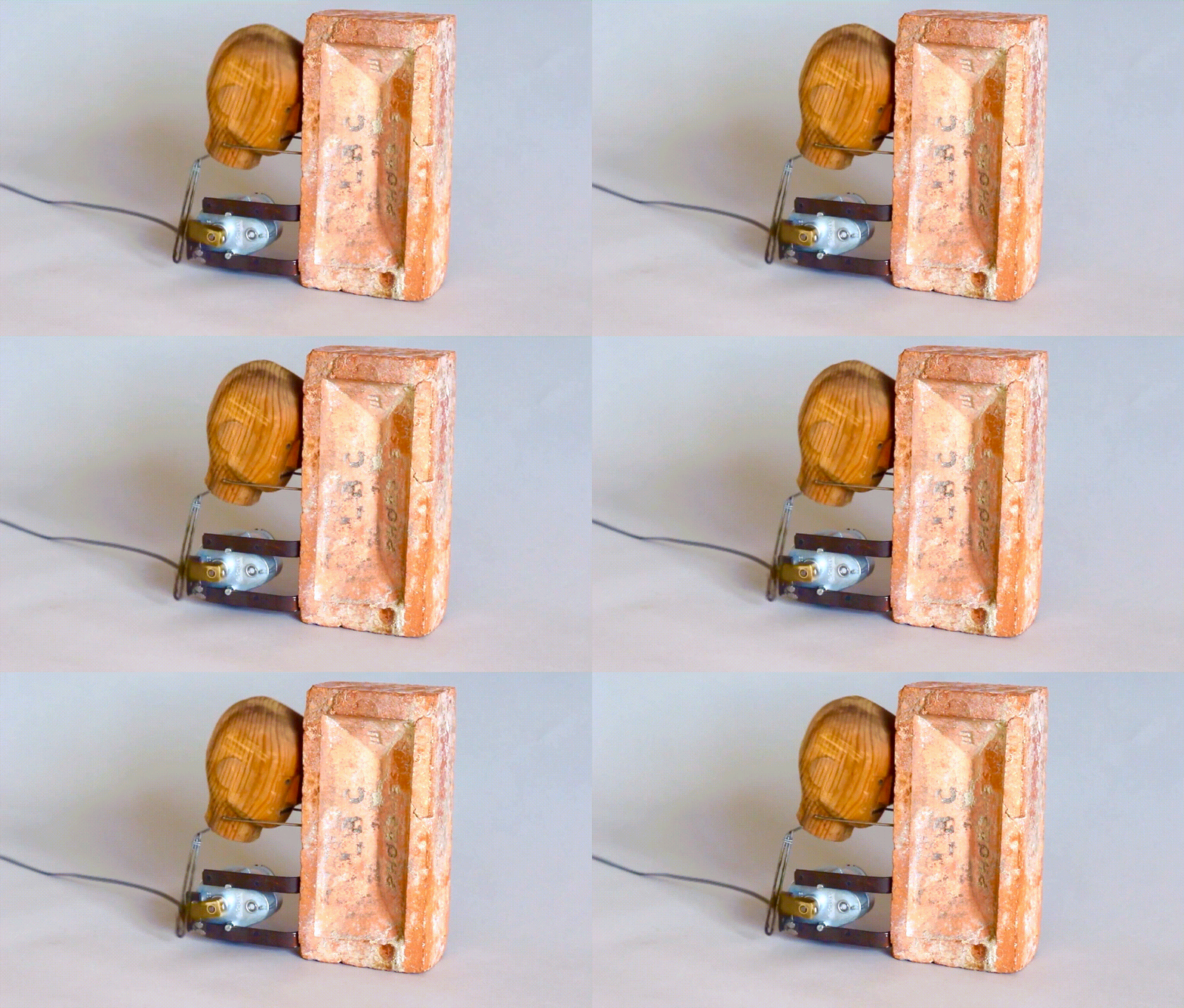
Nik Ramage, Brick, 2018
Many historians of modernist art believe that the first modern kinetic artist was Marcel Duchamp, and his Bicycle Wheel (1913) was the first kinetic work, although at that time there was not even the term «kinetic art», it appeared only in 1915.
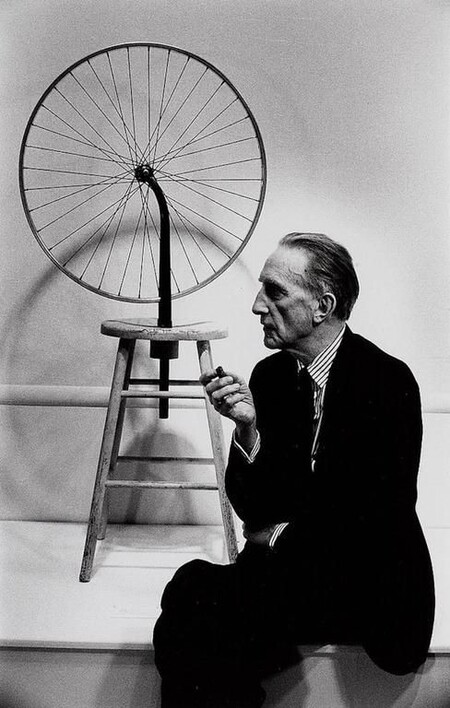
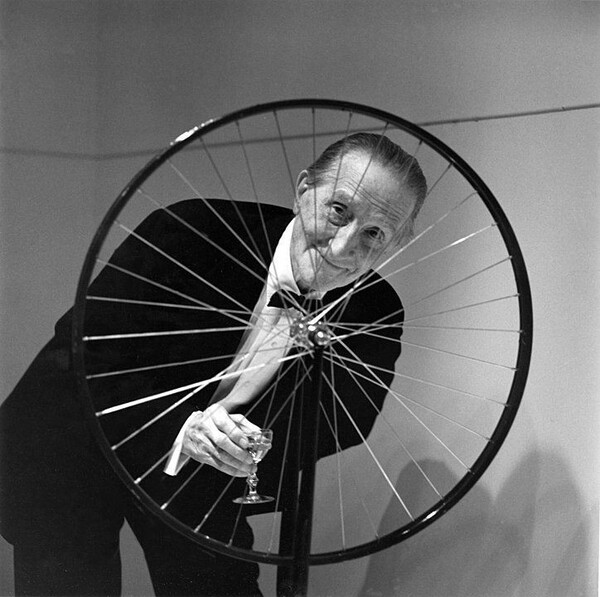
Roue de bicyclette, 1913
The first «official» work in the field of kinetic art is a Kinetic Construction, also called a Standing Wave, which was created by Naum Gabo in 1919. Later, in 1920, he and his brother Antoine Pevsner would write a Realistic Manifesto, one of the main works on kinetic art which itroduced the idea of «kinetic rhythms» as a way to represent real time in art.
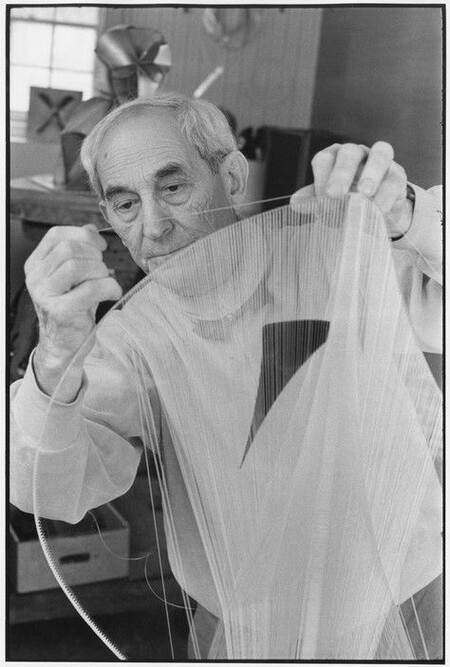
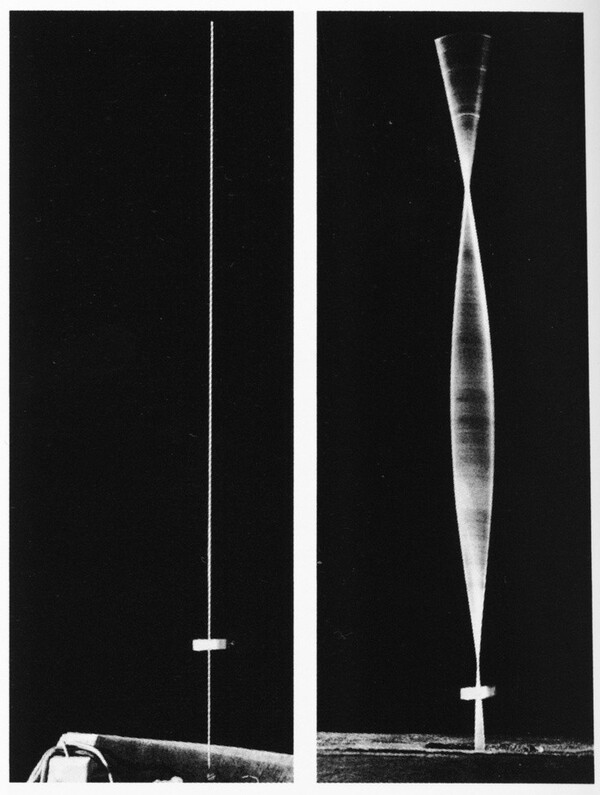
Naum Gabo and his Standing Wave, 1919
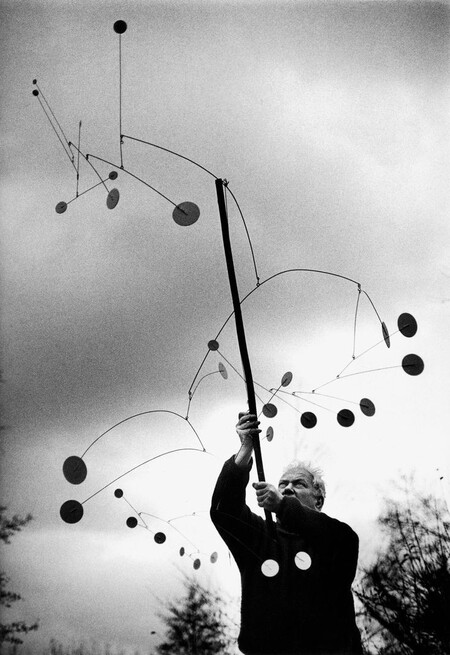
Another famous example is the series of Mobiles by Alexander Calder, which he created from the 1930s until his death in 1976.
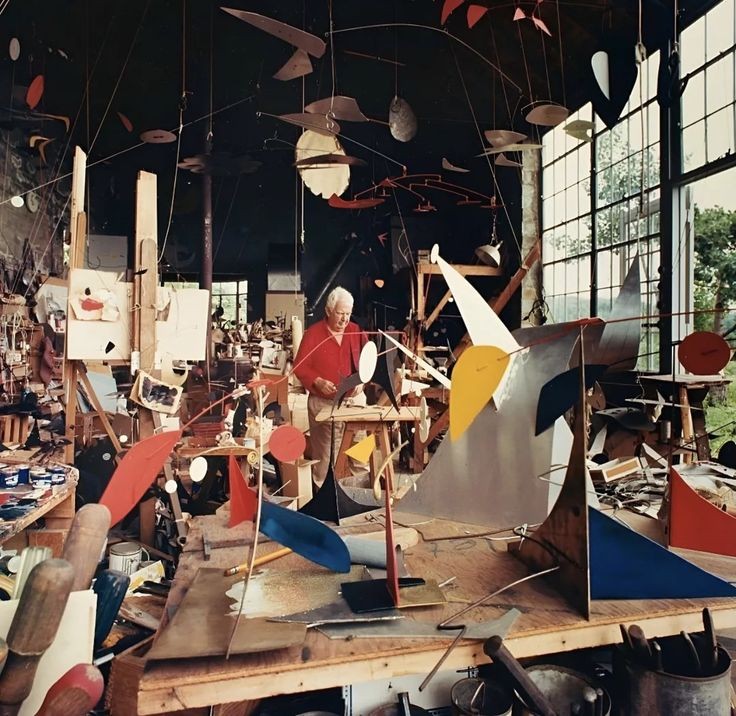
Alexander Calder in his studio
Alexander Calder, Untitled, 1941
Jean Tinguely's Homage to New York from 1960 is another landmark piece — a self-destructing machine-sculpture that turns movement into a performance.
Homage to New York, 1960
Nicolas Schöffer — a pioneer of cybernetic and light-based sculpture. The works of his Chronos (1978-1980) sculpture series are based on the principles of spationdynamism, luminodynamism and chronodynamism — the consideration of time as a measurement in art. The sculptures used light, movement, and temporal changes to create dynamic visual effects.
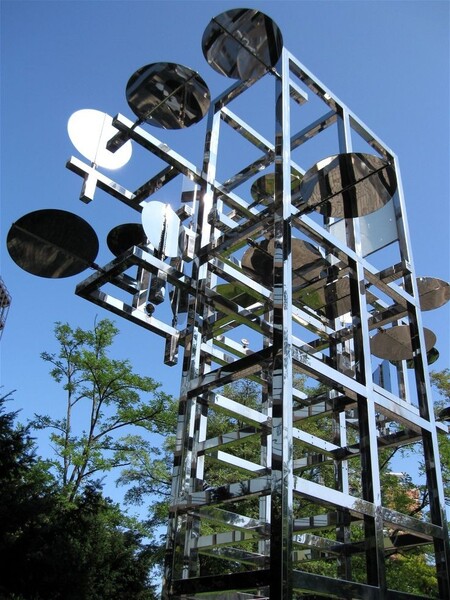
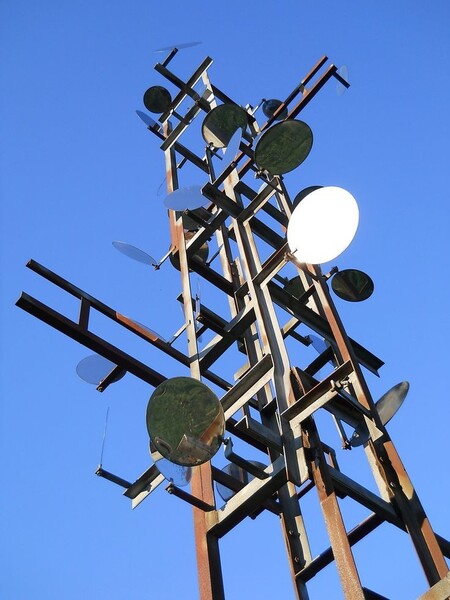
Chronos, 1971-1980
Apart from the Realistic Manifesto mentioned above, there is a lot of literature on kinetic art, created not only by the artists themselves, but also by art historians. Frank Popper provided one of the first detailed analyses of the movement in his 1968 work, Origins and Development of Kinetic Art. He highlighted the importance of technology, participation, and new media. Victor Vasarely’s Manifest Jaune (1955), written for the Le Mouvement exhibition, was a call for a new abstract art of motion. Although Vasarely’s work moved only optically, he explicitly linked it to kinetic ideas and helped define postwar kinetic art.

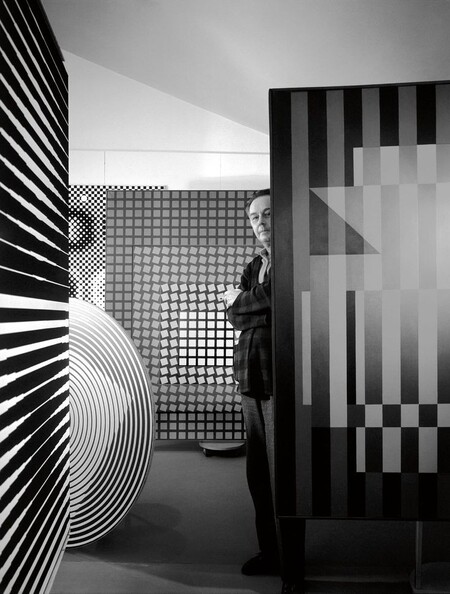
Victor Vasarely (1906-1997)
The impact of kinetic art went well beyond its prime. It greatly influenced Op Art, interactive art, installation art, light art, media art, digital art.
Today’s artists who work with robotics, algorithms, and responsive environments continue to build on concepts first explored by kinetic artists, showing that movement remains a relevant artistic principle, and new technologies can complement art. Examples include Aristarkh Chernyshev, Dmitry Kavarga, Dmitry Morozov (::: vtol:::), Theo Jansen and others.
Strandbeest, a series of works since 1990
Popper, Frank. Origins and Development of Kinetic Art. New York Graphic Society, 1968.
Brett, Guy. Kinetic Art: The Language of Movement. Studio Vista, 1968.
Gabo, Naum & Pevsner, Antoine. Realistic Manifesto. Moscow, 1920.
Popper, Frank. Art, Action and Participation. New York University Press, 1975.
Rickey, George. Constructivism: Origins and Evolution. George Braziller, 1967.