Media Concept
How game rules create doubt, tension, and a sense of control

Who it’s for and why
Indie gamers and enthusiasts
To understand what experience the game offers and how it differs.
Beginner Game Designers
See the connection between a specific rule and an experience.
Readers about internal states
Discover a familiar feeling through an accessible, playful example.
One topic over two weeks
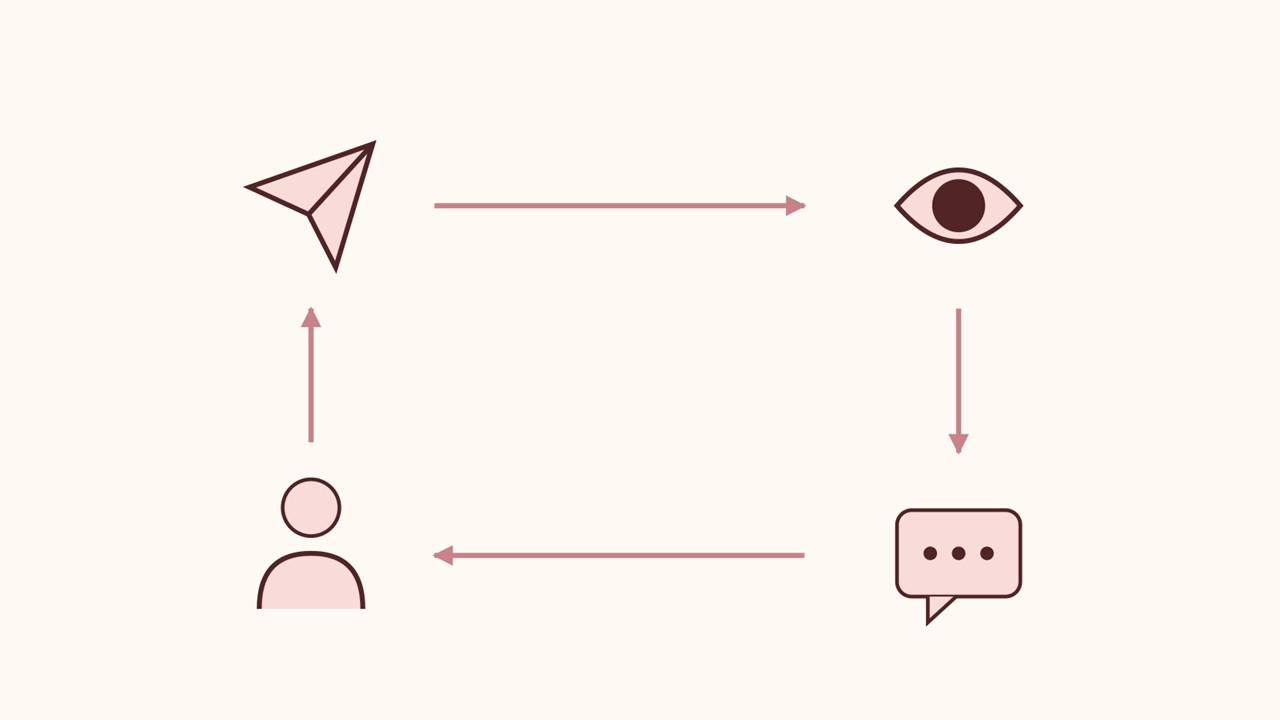
The channel’s distinction: a narrow focus, an original prototype, and comparisons of different versions of a single mechanic.
Publication Cycle:
- Posing a question to the reader.
- Analyzing a specific game rule.
- Comparing two variations.
- Summarizing the discussion or test results.
Six-Month Plan
Introduction — explain the channel’s theme and discover the readers' interests.
Doubt — launch regular version comparisons.
Order and Chaos — develop thematic series and navigation.
Loss of Control — discuss interface trust. Once the prototype is ready, invite users to test it.
Dialogue — address audience questions and arguments.
Continuation — summarize findings and select the next topics.
Ten pieces of content from the second part form the starting pool of publications.
Sources: project and external materials
What If Prototype? Game recordings, mechanic versions, and development notes. Used for demonstrations and comparisons.
Other Games and Developer Materials Game scenarios and explanation of solutions. Used for case studies and context.
Player and Perception Research Theses, methodologies, and limitations. Used to substantiate explanations.
Each thesis is saved with a link to the source material.
Sources: classroom and channel
Surveys and Discussions Reader questions, answers, and arguments help select topics.Completed Tests Observations, testing conditions, and participant answers form the basis of the «After the Test» column.Publication Statistics Available views, reactions, clicks, and applications help evaluate the channel’s performance.
Foundation from past research
Thematic Guidelines and Presentation Daryl Talks Games, The Psychology of Games, Mental Checkpoint, Game Maker’s Toolkit, and Design Doc.
Argument Verification Mechanics are checked against the game or developer materials. Psychological theses are based on the original research.
Scope of Conclusions Competitive analysis is preliminary. Previous growth charts show scenario calculations, not channel statistics.
Material Card
For each publication, we record: — Topic and Category: doubt, order, or control. — Source: author, link, or file, date. — Basis: observation, research, reader response, or hypothesis. — Thesis: what we aim to show. — Limitations: what the material does not allow us to assert. — Visuals: a recording of play, a diagram, or a designated mock-up. — Status: collected, verified, draft, approved, published.
Data Processing Flowchart
The person selects the topic and sources. The machine decodes and sorts the materials. The person verifies the facts and constraints. The machine prepares a draft. The person edits and approves the material. The machine publishes the approved content. The machine gathers available metrics and feedback. The person draws conclusions and selects the next topic.
Who is responsible for the outcome?