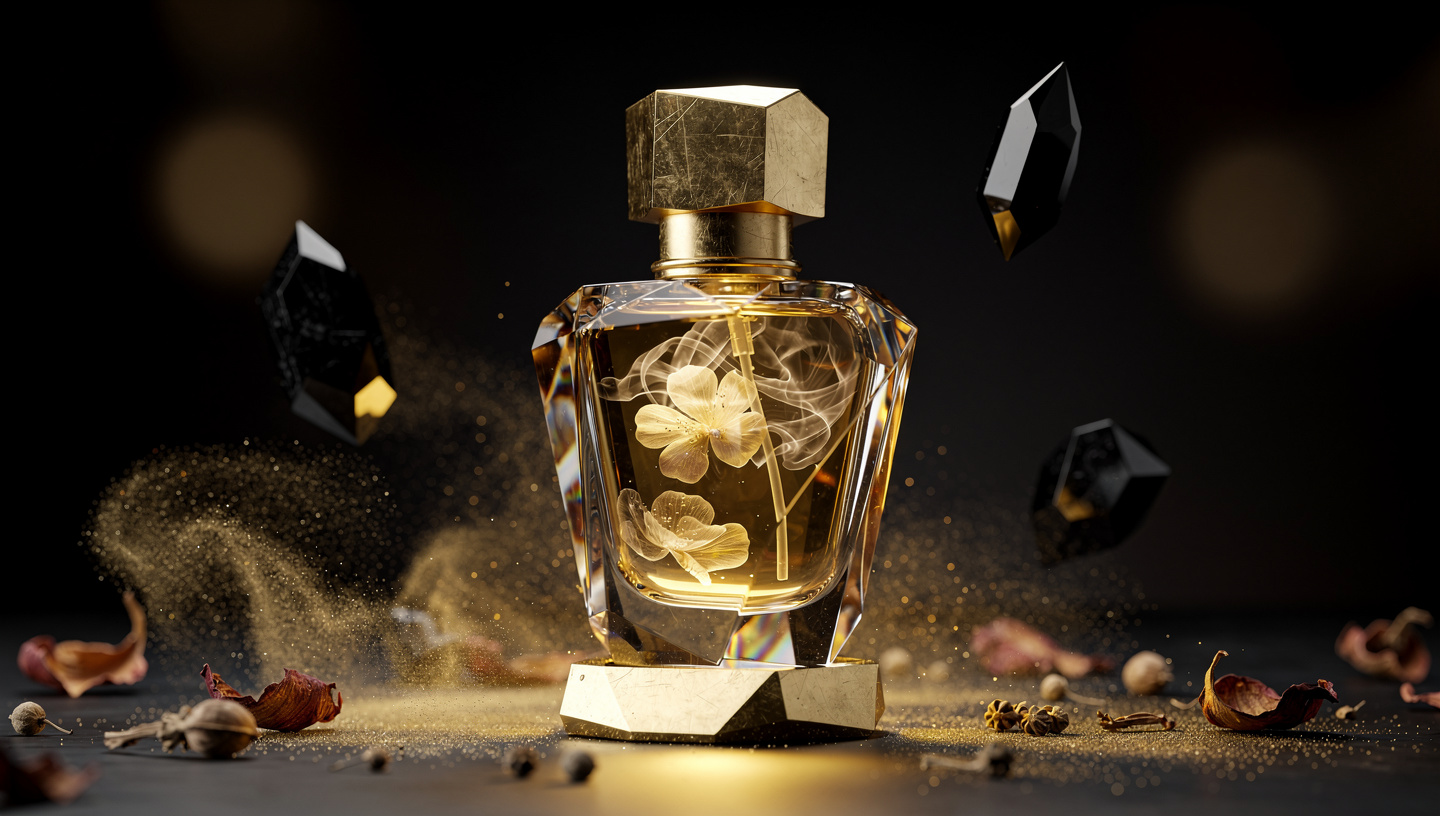
Генеративная алхимия
Медиа-лаборатория о том, как ИИ меняет парфюмерию, бьюти-эстетику и создаёт новые ольфакторные миры
- Media Goal Description
Problem
The perfume and beauty industries have always been built on synesthesia, sensuality, and a premium aesthetic. Now, AI is entering this field—from generating fragrance formulas to personalized AI skincare recommendations—but no one explains how to work with it.
Creators and emerging brands are trapped: either they ignore AI and spend millions on 3D renderings and photoshoots, or they start generating monotonous, «plastic» beauty imagery in neural networks, sacrificing the premium feel and unique identity of the scent or brand.
«AuraAI» arises from the question: how can AI be utilized in perfumery and beauty in a way that it enhances, rather than replaces, the sensual experience and premium aesthetic, helping to create new products and content that were previously unattainable?
Context
AI information is ubiquitous right now, but it is either overly technical (targeted at ML programmers) or too generalized («The 10 Best Neural Networks of the Week»). Perfume and beauty media outlets (Fragrantica, Flacon) cover products, but they rarely delve into the technologies behind creation and visualization through AI.
The audience—perfume enthusiasts, designers, and brand managers—is looking for specific answers: how to visualize a scent like «smoke and rose» using Midjourney, how AI-driven perfume selection works in e-commerce, whether generative AI can be used for niche brand packaging, and which service delivers high-end visuals rather than something amateurish.
Meanwhile, major brands (Coty, Givaudan, Firmenich) are already implementing AI assistants for perfumers, and clients are actively searching for creators who can produce premium content using AI.
The Goal of Media
To help perfume enthusiasts, creators, and niche brands consciously and aesthetically integrate generative AI into their creative process and business—understanding how AI can visualize olfactory notes, design bottles, and personalize the beauty experience.Media does not teach you «just how to generate»; it teaches you «AI alchemy»: the fusion of technology and sensibility to create a unique product or content.
Objectives
Aesthetic Case Studies: Presenting real pipelines for creating luxury visuals and concepts—from the olfactory pyramid to the finished 3D render of a bottle.AI Olfactory Design: Analyzing how LLM models can analyze, describe, and even simulate combinations of perfume notes.Prompt Alchemy: Publishing proven prompt recipes for creating premium-quality packaging, bottles, and beauty imagery.Community: Building a community for exchanging experiences in BeautyTech and AI Design.
How will we know the goal has been achieved (in 6 months)
The focus is on engagement, not just reach.350 Telegram subscribers (organic, generated through aesthetics and reposts, no advertising).Engagement Rate (ER) above 18% (niche topic, engaged audience).On average, posts analyzing prompts and case studies receive 15+ shares.Every month, we receive 3+ inquiries from niche brands or creators seeking consultation or analysis of their AI pipeline.
Thematic Directions of Future Media
Segment: BeautyTech, AI Design, Generative Art, & Premium Lifestyle.Narrow Focus: Applying generative AI (Midjourney, Leonardo, LLM) to high-end perfumery, advertising creative development, and the visualization of olfactory experiences.Title: «AuraAI / Perfume & Beauty Lab.» This name carries a dual meaning: Aura (the olfactory trail) and AI; a laboratory where technology merges with aesthetics.
How the material is structured
Each post follows the «Alchemical Breakdown» principle: olfactory challenge (notes/mood/scent) $\rightarrow$ AI tool & prompt $\rightarrow$ what the neural network produced $\rightarrow$ «manual» refinement (aesthetics/edits) $\rightarrow$ premium result $\rightarrow$ what to take away. The reader sees not just a «beautiful image,» but the entire creative process, understanding how to connect sensory experience with technology.
Thematic Tracks
Scent Visualization: How AI translates olfactory pyramids into synesthetic visuals, mood boards, and synesthetic concepts.AI Formulas and Notes: How LLM models assist in developing fragrance concepts, describing pyramids, and simulating note combinations.Prompt Lab: Aesthetic prompt recipes for packaging, 3D bottles, glass textures, liquids, and beauty imagery.AI Business and Trends: Case studies on implementing AI in perfume/skincare selection for e-commerce, and AI analysis of trends in beauty marketing.Beauty Synesthesia: Interviews with perfumers, designers, and creators about how technology can amplify sensory perception.
Sections
Competitors and Their Analysis
Competitive Landscape
«AuraAI» sits at the intersection of four media groups. All of them compete for the attention of our target audience (beauty enthusiasts, creators, and brands), but they only address parts of their needs.
AI design and creative media (too general, lacking niche perfumery aesthetics).
Perfumery and beauty media (Fragrantica, Flacon — lacking the technology segment).
Telegram channels focused on premium lifestyle and fashion (aesthetic, but without AI tools).
B2B BeautyTech services (closed platforms for formulas, not media).
Our audience lacks a single place where they can see how to use AI in perfumery and beauty to solve their specific, sensory challenges—for free and with a luxurious tone of voice (ToV). This niche is what «AuraAI» fills.
Where and How We Looked
Search and Wordstat: queries «AI in perfumery, ” „scent visualization, ” „AI beauty branding, ” „neural networks for luxury, ” „perfumery prompts.“Social Media: TGStat and Telemetr catalogs, searching for niche perfumery chats and channels, analyzing AI Design accounts on LiveDune.Media and Curations: articles from vc.ru, Unisender, and Timeweb featuring rankings of channels about design, beauty, and technology.Reviewed the last 10 posts from each: topics, Tone of Voice (ToV), visuals, Engagement Rate (ERR), reactions, and presence of AI.
Who is who:
Direct — the same topic (AI in perfumery/beauty) or something very closely related (premium AI design) on the same platform.Indirect — the same audience, but a different angle: focusing only on fragrance, or only on beauty marketing.Potential — major players who could easily enter the niche if they wished (glossy media, online beauty business schools).
Competition Criteria
Platforms and Adaptation: Where content is published, duplicated, or adapted for each platform.Niche and Depth: Is it simply beautiful imagery, or is it an analysis of specific perfumery challenges?Visual Style: Photos, videos, carousels—is there a recognizable premium identity?Tone of Voice: Is it sensual, expert, academic, or mentorship-driven?Tools: Pins, comments, polls, challenges, streams, videos.Monetization: How much advertising and course sales are present in the feed.Audience Reaction: Reach (ERR), engagement, shares—which posts perform best.
Direct Competitors: Statistics