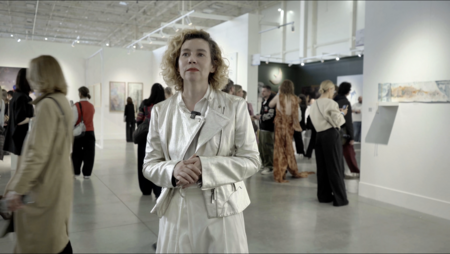
Ruarts is closing the gallery space that has been operational for 21 years. During this time, it has played a significant role in the development of contemporary Moscow art. We decided to recall several seminal exhibitions that took place at the gallery.
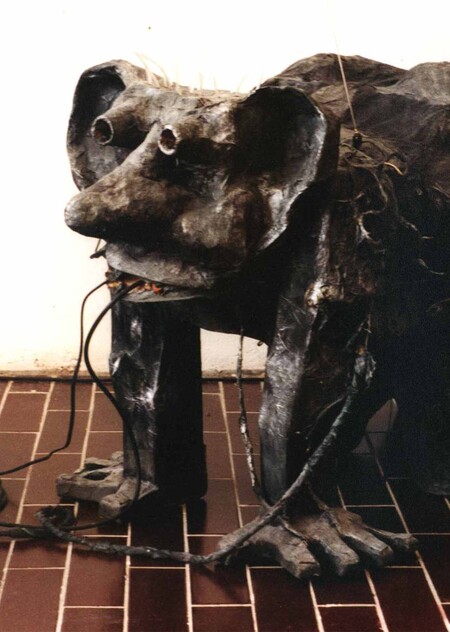
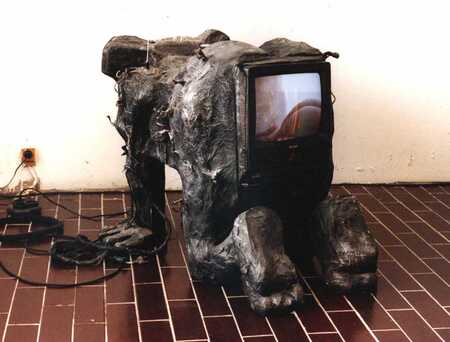
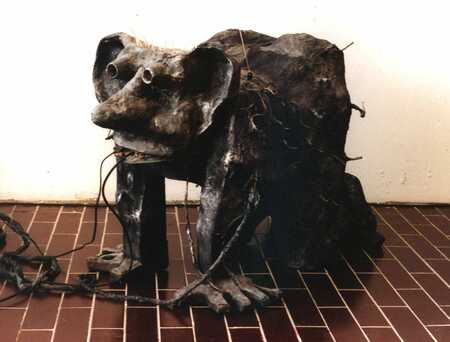
The gallery launched with a high-profile opening—an exhibition of Russian video art titled «Art is an Illusion.» Curator Antonio Juza explored the development of video art from the 1980s through the early 2000s. Here, video intersected with interactive projects, computer games, virtual reality, and installations. Artists mastered digital technologies and media art, striving to understand how these elements were altering the very structure of the artwork. Among other pieces featured in the exhibition were Boris Yukhnanov’s «Mansions, ” from 1986, and Bulat Galeev’s „The Electronic Boy in Wet Diapers, ” from 1990—the oldest video installation in Russia. The project became the first major attempt to systematically examine how the domestic underground and new technologies interacted during the post-Soviet period.
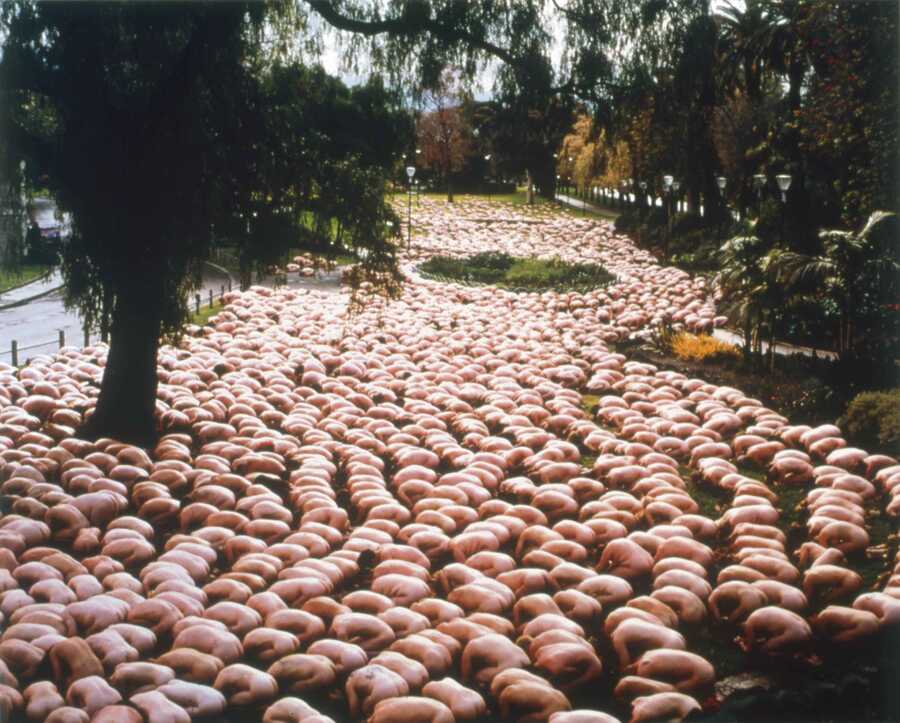
Imagine: hundreds of nude people walking right out onto the street in broad daylight. It seems that such acts no longer surprise anyone these days. However, the question of why a crowd of naked people still grips us—why it affects everyone so strongly—remains relevant. Perhaps this is because in a crowd of nude people, we see living individuals, not the perfect marble gods we are accustomed to seeing at the Pushkin Museum. Such crowds of the nude feature in the works of Spencer Tunick.
In Ruarts, his work was exhibited in 2005—a period when such large-scale discussions about nudity in public spaces were still perceived much more acutely. For Tunik, the body almost never functions as a portrait of a specific individual. An individual dissolves into a group, and the human mass transforms into a drawing, a landscape, or an architectural structure. This is the central tension of his photographs: they simultaneously speak to bodily freedom while stripping it of individuality. Nudity ceases to be an intimate subject and becomes a way to explore the relationship between the individual and society and space.
In the works of Erwin Olaf, everything is arranged in opposition. If Tunik works with large groups of people, Olaf builds the photograph around a single character, meticulously organizing the light, interior, clothing, and gesture. His images resemble movie stills, yet the narrative seems to begin only after something significant has already occurred. The «Trilogy: Hope. Rain. Grief» presents photography as an art of staging and implication. The simple techniques of glossy magazine photography—dramatic lighting, precise composition, flawless surface—instead create a disquieting sense of unspoken narrative.
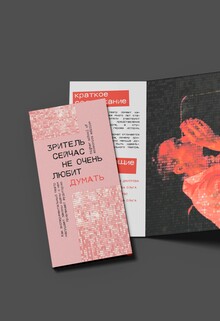
This week, the gallery will host the final exhibition of «Shift in Focus.» It will feature works by artists with whom the gallery has collaborated. Over two decades, the gallery has established itself as a leading fixture on the map of contemporary art in Moscow. It has showcased significant international artists and presented many renowned contemporary art photographers. We hope that news like this does not become a recurring trend in the coming years.