Navigation
- Concept
- Topic Selection
- Historical Context: Glassblowing in the Roman Empire
- Geometric Forms: Conical, Pear-shaped, and Spherical Vessels
- Figural Forms: Vessels in the Shape of Fruits and Plants
- Color, Relief, and Glass Decoration
- Contemporary Replicas and Interpretations
- Conclusion
- Sources
Concept
Scent is impossible to see, but it can be given form. It is the vessel that becomes its material embodiment, transforming an invisible content into an object possessing its own silhouette, color, texture, and character.
The project investigates how objects with similar functional purposes could adopt entirely different visual solutions. The focus is on the diversity of Roman glass flask shapes and the relationship between their construction, intended use, and decorative features. The central research question is why vessels designed to store aromatic oils and similar substances acquired such varied designs. The project examines how usage characteristics, glass-making technologies, and the aesthetic preferences of the era influenced the appearance of these objects.
The core concept of the project is based on comparing two approaches to form creation: geometric and figural. The first is based on simple volumes and proportions, such as conical, pear-shaped, and spherical silhouettes. The second involves transforming a familiar vessel into a recognizable image, like a bunch of grapes, a date, or a pinecone. Despite functional similarities, these objects demonstrate fundamentally different ways of working with form—ranging from concise geometry to plastic imitation of natural objects.
Topic Selection
I chose this topic because the field of design resonates with me, and I enjoy paying close attention to the unusual shapes and details of everyday objects. I have always been particularly drawn to perfume bottles. I find it interesting to examine them not merely as packaging, but as distinct design objects.
When I saw the ancient Roman glass vessels, I was struck by their remarkable diversity—ranging from simple and understated to unusual forms reminiscent of fruits and plants. I wanted to study them more closely and understand how people approached the design of such everyday objects two thousand years ago.
Historical Context
«The Amur and Psyche Making Perfume.» Roman fresco, 50–79 AD.
In the 1st and 2nd centuries CE, the Roman Empire experienced a period of vigorous development in crafts and trade. Glass objects became increasingly common and gradually occupied an important place in daily life.
Small glass vessels—unguentaria, designed for storing aromatic oils, cosmetics, and medicinal preparations—held particular significance. These scents were used for body care, during bathing rituals, and in everyday routines.
A major development was the spread of glass-blowing technology, which first emerged in the 1st century BCE. This innovation allowed for faster production of vessels and the creation of diverse shapes that were previously more difficult to manufacture.
It was during this period that numerous variations of glass vials appeared: from simple rounded and elongated containers to extraordinary pieces mimicking the form of fruits and plants. Artisans experimented with color, transparency, and surface relief, transforming small, everyday items into expressive works of glass art.
Conical Forms
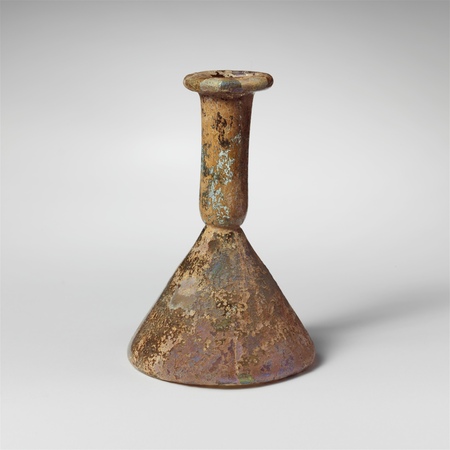
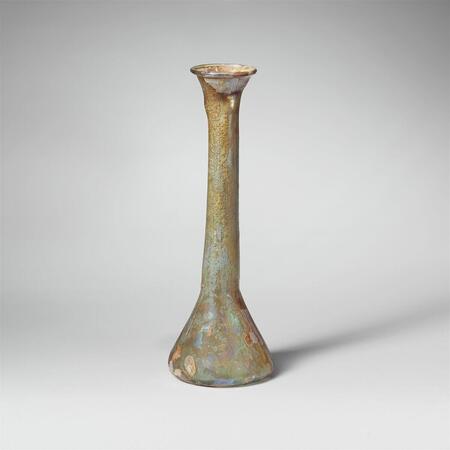
(1) Wide conical vessel, 1st century AD. Height 11.4 cm. (2) Cone with a long neck, 1st–2nd centuries AD. Height 10.3 cm.
The broad body of the first vessel creates a sense of stability, while the elongated neck of the second lends the silhouette lightness and grace.
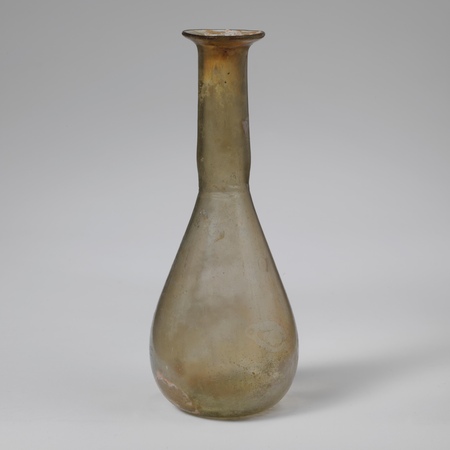
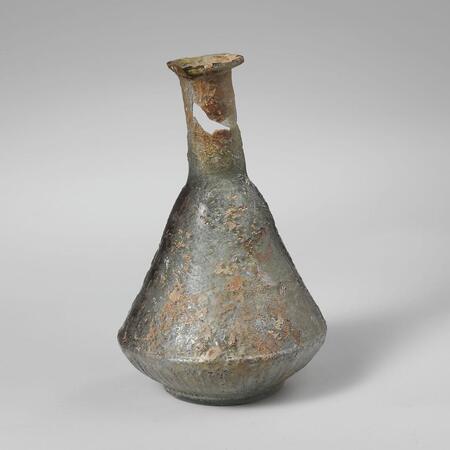
(1) High conical vessel, 1st century AD. Height 12.5 cm. (2) Compact conical vessel, 1st century AD. Height 5.9 cm.
The difference in height alters the form’s character: the first bottle appears slender and elongated, while the second is miniature and squat.
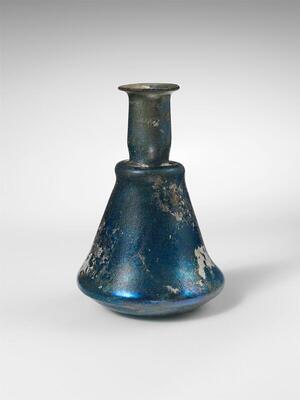
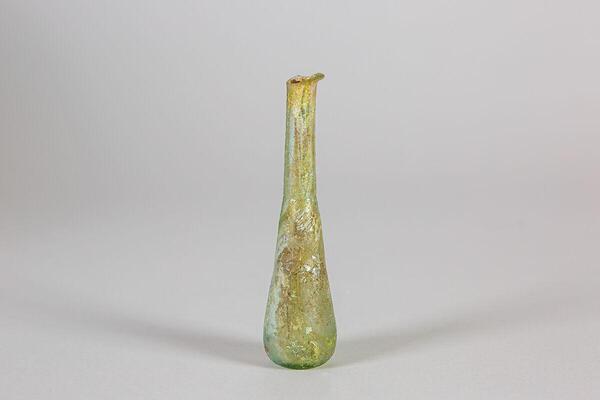
(1) Wide conical flask, 1st century CE. Height 8.1 cm. (2) Narrow elongated conical flask, 1st–2nd centuries CE. Height 7.1 cm.
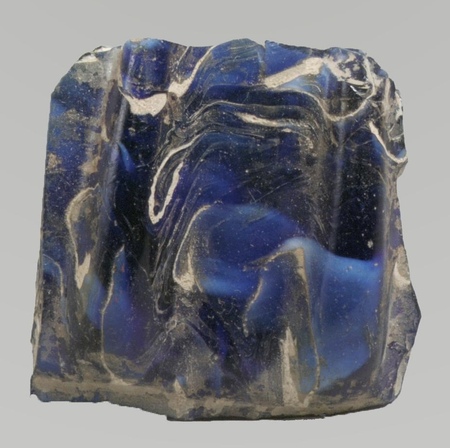
The broad body of the first bottle creates a massive silhouette, while the narrow proportions of the second lend the form grace and lightness.
Pear-shaped forms
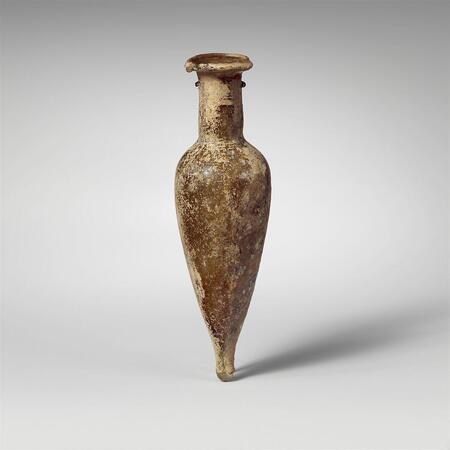
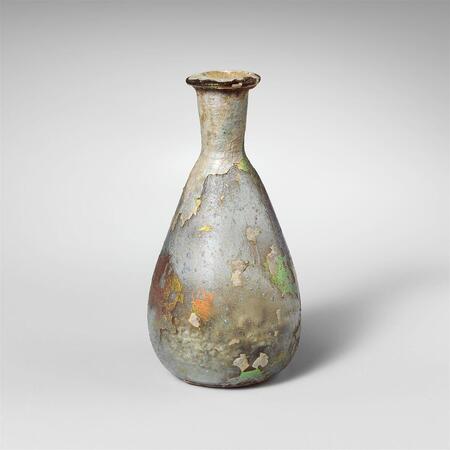
(1) Pear-shaped vessel with a pointed base, 1st century CE. Height: 10.7 cm. (2) Pear-shaped vessel with a rounded body, 1st century CE. Height: 7.3 cm.
The sharpened base of the first vessel emphasizes the verticality of its silhouette, while the rounded lower section of the second creates a softer, more flowing form.
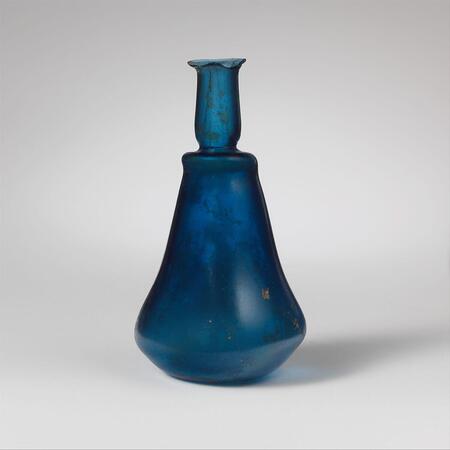
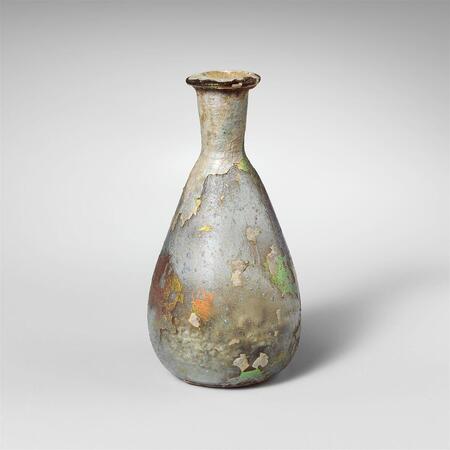
(1) Narrow pear-shaped vessel, 1st century AD. Height 10 cm. (2) Broad pear-shaped vessel, 1st–2nd centuries AD. Height 13.1 cm.
The first vial features elongated lines, while the second has a wide, volumetric body. This gives the two vessels distinctly different visual characteristics.
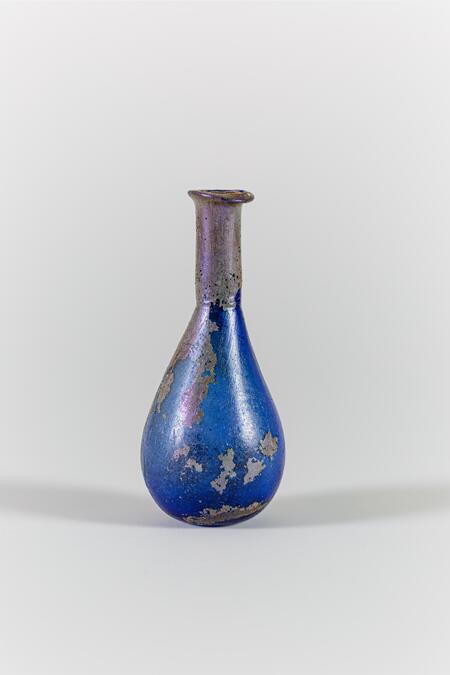
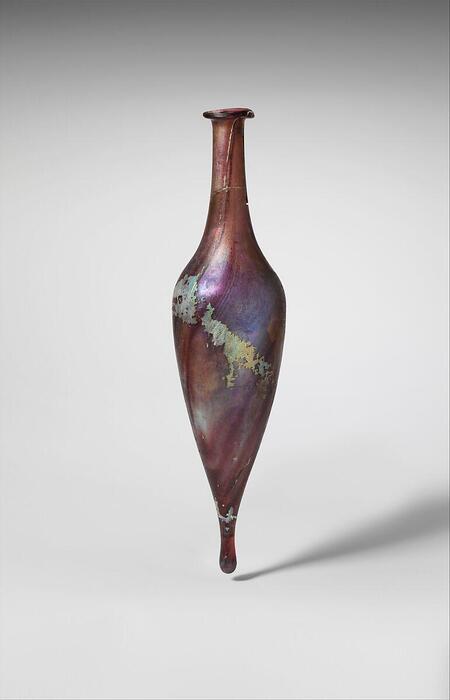
(1) Blue pyriform flask, Early 1st Century CE. Height 8.3 cm. (2) Purple elongated flask, 1st Century CE. Roman Cyprus. Height 17.5 cm.
The blue flask features a compact, rounded shape, while the purple one has a slender silhouette with a tapered base.
Spherical forms
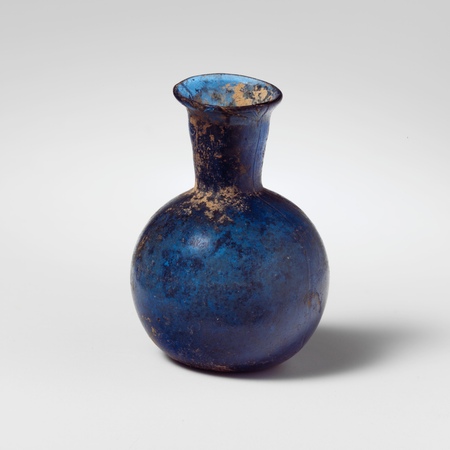
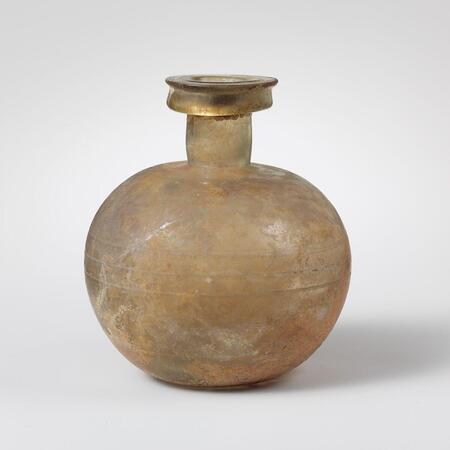
(1) Miniature spherical vessel, 1st century CE. Height 5.1 cm. (2) Resemiform spherical vessel, 1st–early 2nd century CE. Height 6.5 cm.
The first flask approaches the correct sphere, maintaining compactness and symmetry. The second features flatter proportions.
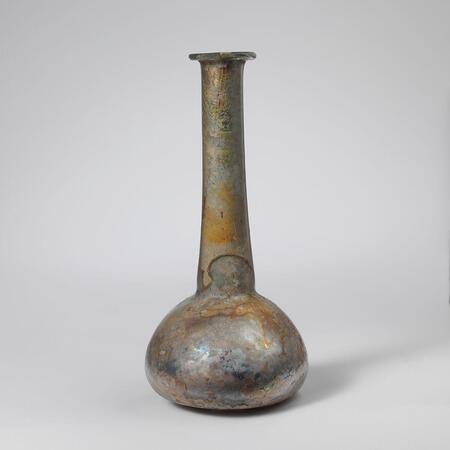
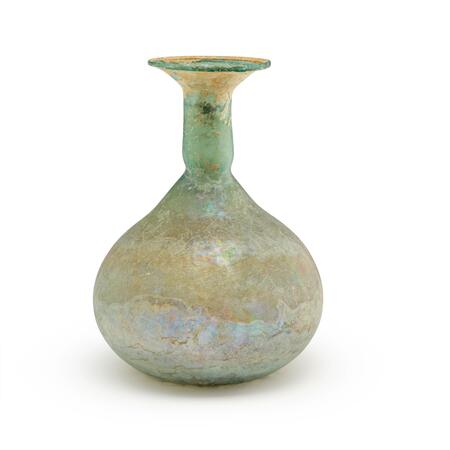
(1) Globular vessel with a slender neck, Late 1st — mid 2nd century CE. Height 14.4 cm. (2) Round vessel with a cylindrical neck, 1st–2nd century CE. Height 8 cm.