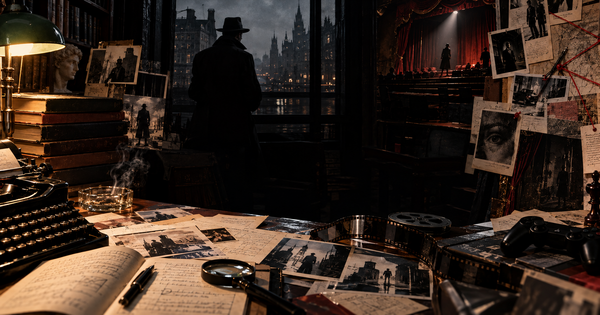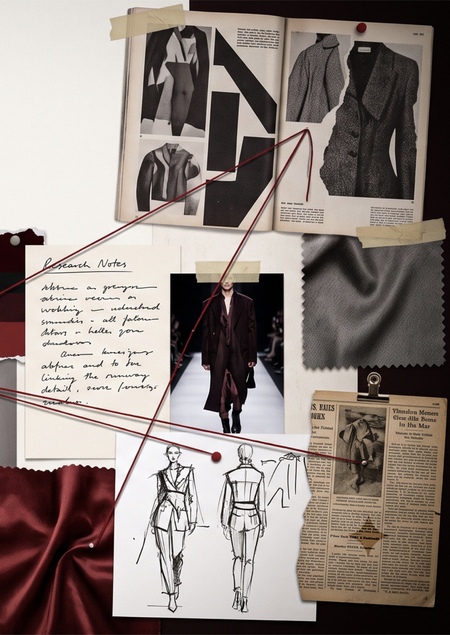
Fashion Detective is a digital media outlet dedicated to the origins of modern fashion trends and aesthetics. The project investigates where familiar clothing elements and visual phenomena come from, how they have evolved over time, and why they are becoming relevant again.
Data sources for media
To create materials for Fashion Detective, various sources of information are utilized. This is necessary to examine fashion not only from an aesthetic perspective but also from historical, cultural, and social angles.
- Museum Archives Examples: The Metropolitan Museum of Art, Victoria and Albert Museum. These are used to study the history of costume, find archival photographs, descriptions of garments, and historical references.
- Fashion House and Designer Archives Examples: Vivienne Westwood, Dior, Alexander McQueen. These help in studying the history of brands, collections, design concepts, silhouettes, materials, and sources of inspiration.
- Fashion Publications Examples: Vogue, Business of Fashion, Dazed. These are used to track contemporary trends, study designer interviews, and analyze current processes within the fashion industry.
- Academic Publications and Research Examples: Google Scholar, JSTOR. These assist in finding research on the history of costume, the sociology of fashion, gender, subcultures, and visual culture.
- Photo Archives and Visual Platforms Examples: Getty Images, Pinterest. These are used to search for historical photographs, visual references, archival imagery, and styling examples.
- Film, Art, and Cultural Archives These are used to investigate the influence of cinematography, painting, architecture, and other art forms on fashion.
- Social Media Examples: Instagram, TikTok, VK. These help track the emergence of new aesthetics, analyze trend popularity, and observe how users interpret fashion directions. When working with sources, it is crucial to distinguish between materials used for ideation and materials used for fact-checking. For instance, Pinterest can help locate a visual reference, but historical information must be verified through museum archives, academic publications, or other reliable sources.
Data schema separated into human and machine processing
In the Fashion Detective process, the workflow is divided into two areas: machine processing and human processing of information. Machine processing helps accelerate the search, translation, systematization, and preparation of materials. Human processing is responsible for verifying accuracy, analyzing information, interpretation, and making final decisions.
Stage 1. Information Retrieval Machine Processing: ● Keyword-based material searching. ● Searching for similar publications and images. ● Utilizing neural networks to identify research directions. Human Processing: ● Selecting the publication topic. ● Formulating the research question. ● Determining appropriate sources.
Stage 2. Data Collection and Systematization Machine Processing: ● Downloading and sorting materials. ● Optical Character Recognition (OCR) for images and documents. ● Translating foreign publications. ● Creating brief summaries. Human Processing: ● Selecting the most valuable materials. ● Verifying authorship and source origins. ● Correlating information from various sources.
Stage 3. Information Analysis Machine Processing: ● Extracting keywords and main theses. ● Grouping information by theme. ● Generating preliminary synopses. Human Processing: ● Analyzing historical and cultural context. ● Identifying connections between historical events and contemporary trends. ● Formulating personal viewpoints and conclusions.
Stage 4. Content Creation Machine Processing: ● Assistance in structuring the text. ● Spelling and punctuation check. ● Preliminary editing and text condensation. Human Processing: ● Writing original material. ● Fact and terminology verification. ● Text refinement and maintaining media style. ● Formulating final conclusions. Stage 5. Visual Material Preparation Machine Processing: ● Image search based on specified parameters. ● Object and label recognition in photographs. ● Image quality enhancement as needed. Human Processing: ● Selection of appropriate images. ● Verification of authorship and usage rights. ● Determining the relevance of visual materials to the publication’s theme. Stage 6. Publication and Results Analysis Machine Processing: ● Scheduled material publication. ● Collection of view, reach, and engagement statistics. ● Calculation of audience engagement metrics. Human Processing: ● Final publication review. ● Analysis of comments and audience reaction. ● Evaluation of material effectiveness. ● Adjusting the future content plan. Thus, automation helps reduce time spent on technical tasks, but key research and editorial decisions remain with the human.
Guidelines for Automated Services
To work on Fashion Detective, several automated services are intended for use. Each performs a specific function and helps accelerate content production. ChatGPT Purpose: identifying research directions, structuring information, drafting content, and assisting with text editing. Usage Guidelines: ● Do not use the AI’s responses as the sole evidence for historical facts. ● Verify dates, quotes, names, and designer information using primary sources. ● Use the neural network as an assistant, not as a replacement for original authorship. ● Proofread the final text for errors and inaccuracies. Google Translate / DeepL Purpose: translating foreign articles, museum descriptions, and research materials. Usage Guidelines: ● Verify the translation of professional terminology. ● Retain original names of collections, works, and proper nouns. ● Cross-reference the meaning of the translated text with the original. Google Lens Purpose: searching for the origin of images, clothing items, and visual references. Usage Guidelines: ● Use found matches as a starting point for research. ● Verify information on primary source websites. ● Do not consider the first match found as confirmation of the image’s origin. Perplexity Purpose: searching for topic-related information and conducting a preliminary overview of research materials. Usage Guidelines: ● Follow the provided links and check the sources. ● Ensure that the source genuinely corroborates the stated information. ● Do not use automatically generated links and citations without verification.
Notion / Google Sheets Purpose: Storing links, notes, photographs, and organizing research materials. Usage Guidelines: ● For every piece of material, save a link to the source. ● Include the author, publication date, and title if this information is available. ● Differentiate between verified facts, assumptions, and personal conclusions. ● Note the verification status of the information. SMMplanner Purpose: Planning and scheduling the publication of content on social media. Usage Guidelines: ● Before publishing, check the text, images, captions, and links. ● Ensure that the publications align with the overall media concept. ● Do not publish material without final editorial review. General rules for using automated services:
- Factual Verification. Historical facts, dates, and quotes must be corroborated by reliable sources.
- Preservation of Primary Sources. For every publication, links to the original articles, archives, museum collections, or research must be maintained.
- Authorial Editing. While neural networks can assist with information retrieval and text structure, the final material must be verified and edited by a human.
- Image Handling. Before publication, the authorship and usage rights for photographs must be verified. The presence of an image in the public domain does not automatically grant permission for its publication.
- Maintaining Authorial Voice. Automated services should not transform publications into generic content. It is crucial to preserve the distinct tone of Fashion Detective—one that is investigative, clear, and infused with elements of detective narrative.
- Data Security. Private correspondence, confidential materials, and data for which you lack authorization should not be uploaded to third-party services.
Conclusion
In Fashion Detective, automated services function as tools for research and editorial support. They help to find, translate, analyze, and systematize information more quickly. However, the primary value of media lies not in the sheer volume of collected data, but in its intelligent interpretation. Therefore, verifying authenticity, analyzing cultural context, establishing an authorial stance, and quality control of publications remain the responsibility of the human editor.