Concept
From the dawn of time, people across the globe created small figurines depicting their idols. These small figures, fashioned from bone or clay, served important sacred functions; they were used in religious and magical rites, burial rituals, and as mediators to the divine world. The methods of creation and the meaning of these figurines have evolved over time, yet people never stopped making them. Even today, we encounter monuments of human culture in shops or souvenir stalls, contained within the form of small statuettes.
In this study, I will trace the transformation of ritual figurines from prehistoric times to the modern era—how their sacred significance changed, and what trends and religious themes are discernible within idolatry across different epochs of our history.
The study is divided into the following sections: — Prehistoric Society — The Ancient World — The Middle Ages — The Early Modern Period — Modernity
Primitive society
During the Paleolithic era, specifically 40–12 thousand years ago, the first ritual figurines began to appear across Eurasia. These figures held purely practical, magical significance, closely tied to the survival of the tribe, and were not notably elegant; they were most often crafted from bone, fired clay, or limestone.
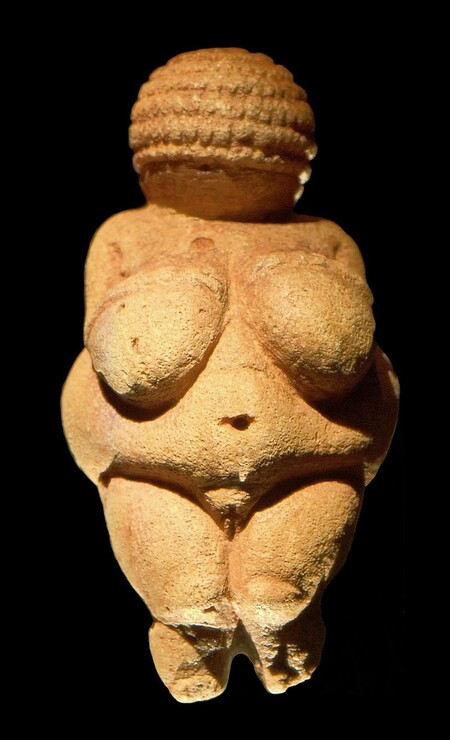
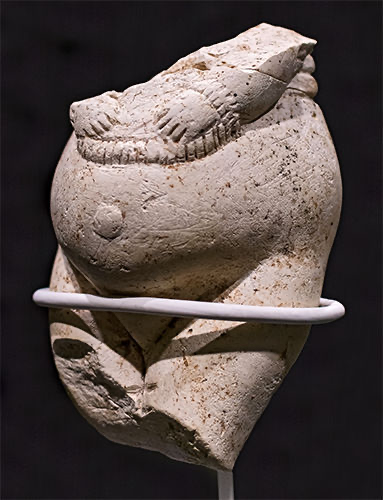
Venus Villendorff and Venetka from Limestone
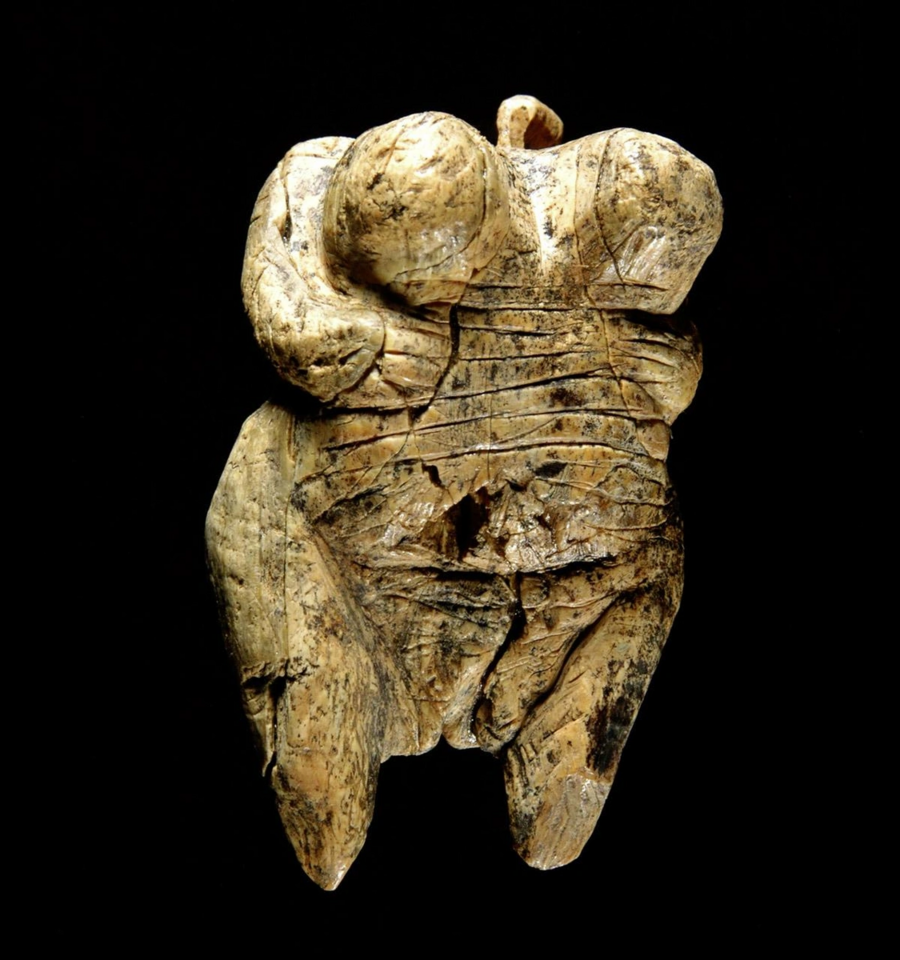
Venus from Hölefels
Paleolithic Venus figures are among the most striking representatives of ritual statuettes from primitive societies. They were connected to the cult of fertility; Venus figures were often depicted as pregnant women with ample breasts. The artifact site writes: «Such images may have served as the embodiment of a mother goddess or other supernatural forces that, according to ancient beliefs, protected the tribe.» [1] The size of these statuettes varied from 4 to 25 centimeters.
Bird Figurines from the Khule-Felz Cave
Cave bear figurine from the German Höhle-Fels cave
«Human Anchor» Figurine
Zoomorphic figures are often associated with hunting magic. It was believed that depicting a specific animal would help attract good luck in hunting that animal, casting a spell upon it, and ultimately conquering it. Furthermore, the appearance of zoomorphic forms could be connected to totemism—the depicted animal might symbolize an ancestor or tribal protector, ensuring the community’s safety.
Ancient World
With the advent of the Bronze Age (from 3300–3000 to 1200–1100 BCE), the era of hunter-gatherers drew to a close as the first civilizations emerged. People transitioned to agriculture and no longer required a mother goddess or hunting magic; instead, they adopted new myths and idols to which they dedicated ritual figurines. Metal and bronze became the primary material in this new era—artisans poured them into molds, which allowed sculpture to become standardized because the mold could be used repeatedly.
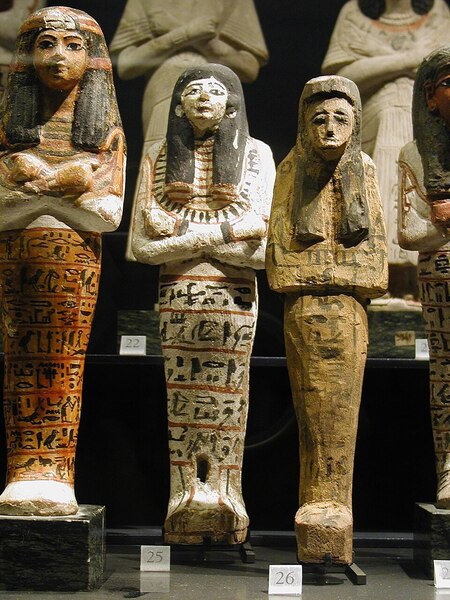
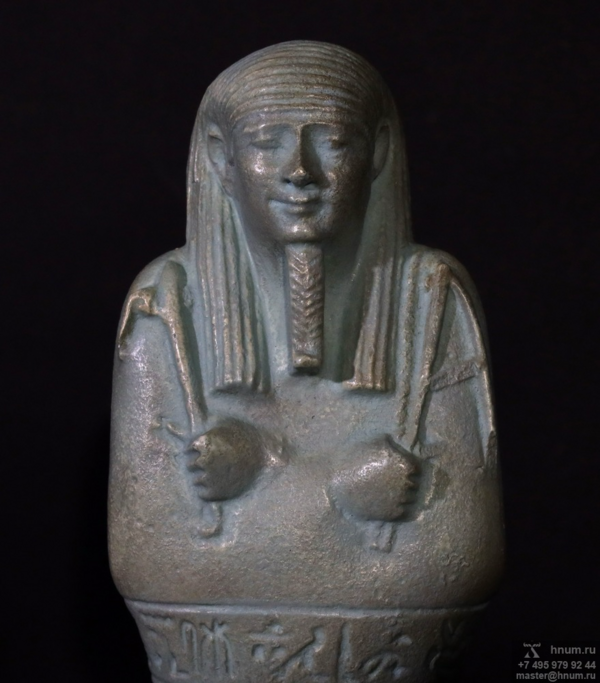
Ancient Egypt, Ushabti, Louvre, Paris, France, and the Ushabti Sculpture. Fragment
Ushabti are ancient Egyptian ritual figurines associated with the afterlife cult. These figures were placed in the tomb with the deceased, as Egyptian beliefs held that they were meant to serve as the deceased’s laborers in Osiris’s fields. The number of Ushabti in one tomb equaled the number of days in the year, so the deceased would not have to work a single day in their afterlife. Ushabti were crafted from wood, faience, terracotta, or stone.
Prayers from Tell Asmar (ancient Ashnunna, Iraq)
The adoration figures from Mesopotamia are somewhat similar to Ushabti in their sacred function. They served as substitutes for humans within the temple; they were custom-made for noble individuals so that the statuette would closely resemble the person it replaced.
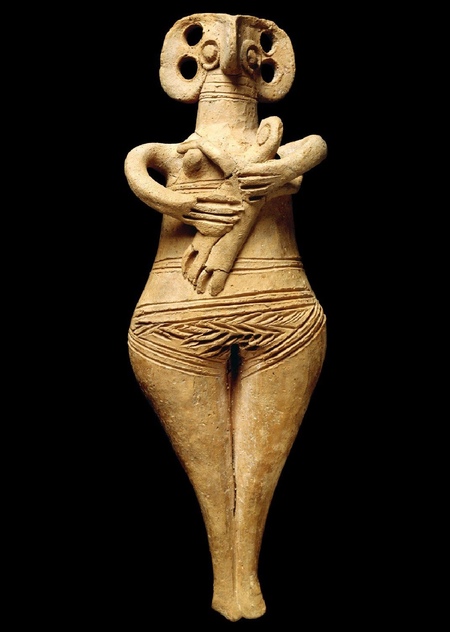
The Eyes of the Adorers
The adorers prayed continuously for the man, and their markedly large eyes testified to the statuette’s connection with the divine.
Lar (1st century, National Archaeological Museum, Madrid)
Lares and Penates were ancient Roman deities who protected the home and family; they performed similar functions but were distinct from one another. Lares protected the physical space where they resided; they were considered the guardian spirits of the hearth and home, often viewed as the souls of deceased ancestors. Lares were most often depicted as dancing youths in short tunics, accompanied by a horn of plenty, a bowl, or a dog.
Lares are categorized based on whom they protect; the Wikipedia site offers the following typology: «Lares Domestici — homes Lares Familiares — families Lares Patrii — paternal, possibly identified with ancestral spirits Lares Permarini — seas Lares Praestitis — states Lares Privati — private (in contrast to the public Lares Publici) Lares Rurales — lands Lares Viales — travelers.» [2]
Domestic Gods. Artist J. W. Waterhouse / Offering to the Lares and Penates
Home altar in the ruins of Herculaneum. It likely served for offerings to the Penates and Lares.
The Penates symbolized the material well-being of the family or the entire Roman populace (depending on whether the specific Penates were private or public), sustenance, and stability in life. Penates were depicted as seated youths holding spears. The Lares and Penates were housed in a special shrine (lararium) to which offerings were made.
The Middle Ages
With the arrival of Christianity, the attitude toward ritual statuettes changed significantly. In the older world, people worshipped the images themselves, believing them to be vessels of divine essence or conduits between the human world and the world of the gods. In Christianity, the image is what matters, not the physical form. Past idols were overthrown—a striking example is the Christianization of Rus', during which all pagan idols that existed before the advent of the monotheistic religion were burned and destroyed.
«The Overthrow of Perun by Prince Vladimir.» L.N. Medvedev
Christians generally have a complex relationship with idols and their images, as they believe that the only being humans should serve is God.
In his essay «On Idolatry, ” Tertullian writes: „Idolatry is the chief sin of the human race, the highest transgression of the world, the sole cause of the Last Judgment. For any other crime can be attributed to a specific variation and is subject to judgment under its own name, but in the case of idolatry, all crimes are committed simultaneously.“ [3]