While studying the course, I became interested in further training the model on the world-renowned Ukiyo-e style of Edo-period Japanese graphics, and to see what it would look like if dinosaurs still existed on Earth with us—how would they fit into these tranquil landscapes?
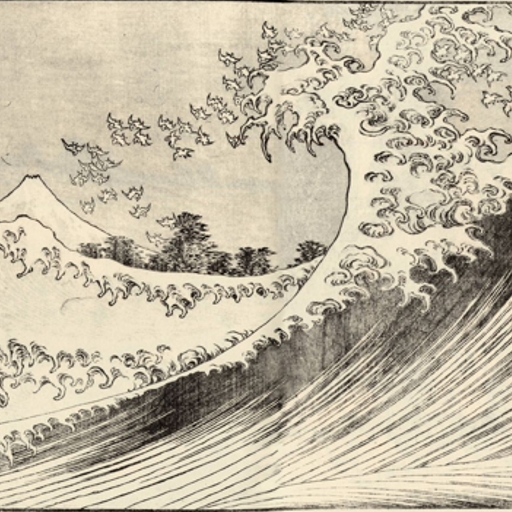
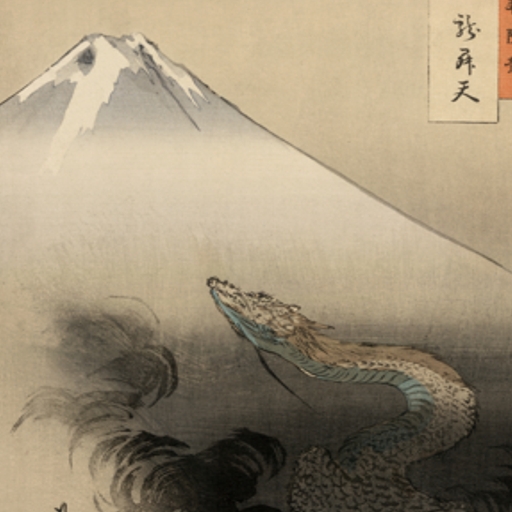
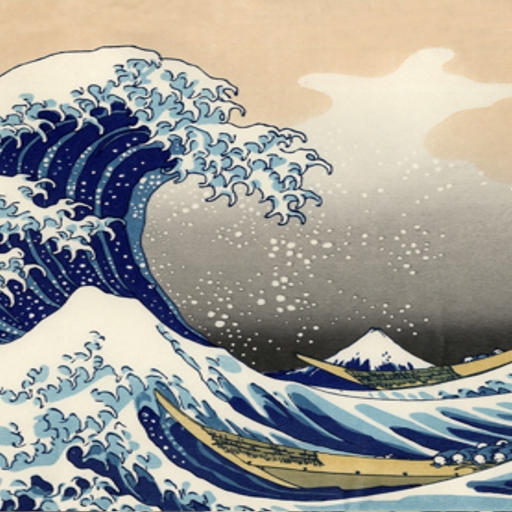
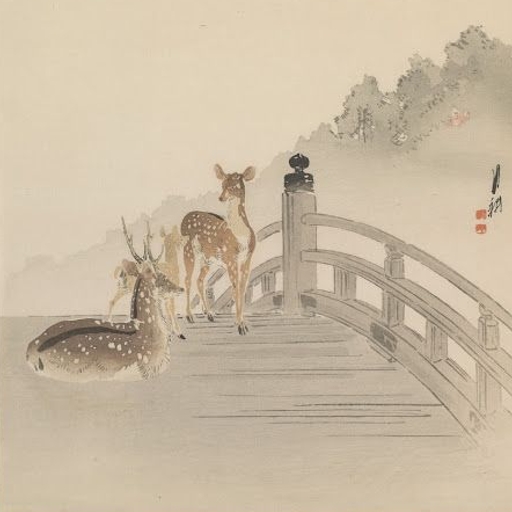
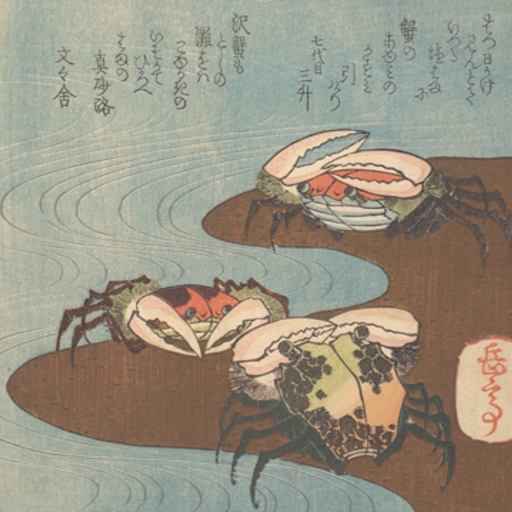
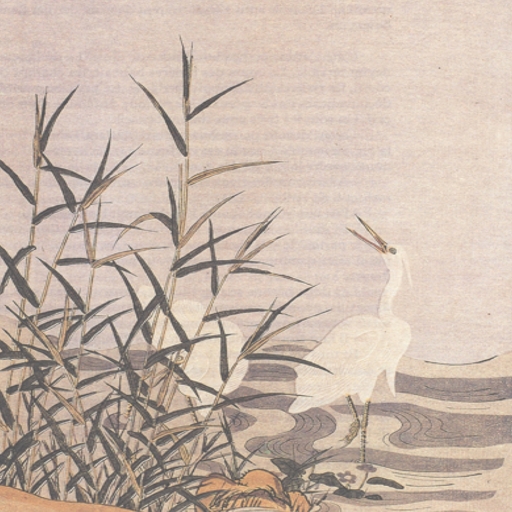
512×512 format
To begin, I selected 28 images by several Japanese artists known for the ukiyo-e style. I aimed to choose similar paintings and specifically artists who emphasized landscapes and depictions of animals (for example, here are works by Yasushi Gakutei, Katsushika Hokusai, Ogata Ekko, and Suzuki Harunobu) so that the neural network could correctly adapt the style to dinosaur illustrations. I cropped all the paintings to a uniform 512-pixel square format to reduce model training time; therefore, the images displayed on the website are low quality.
As a result of my studies, I created the following body of work:
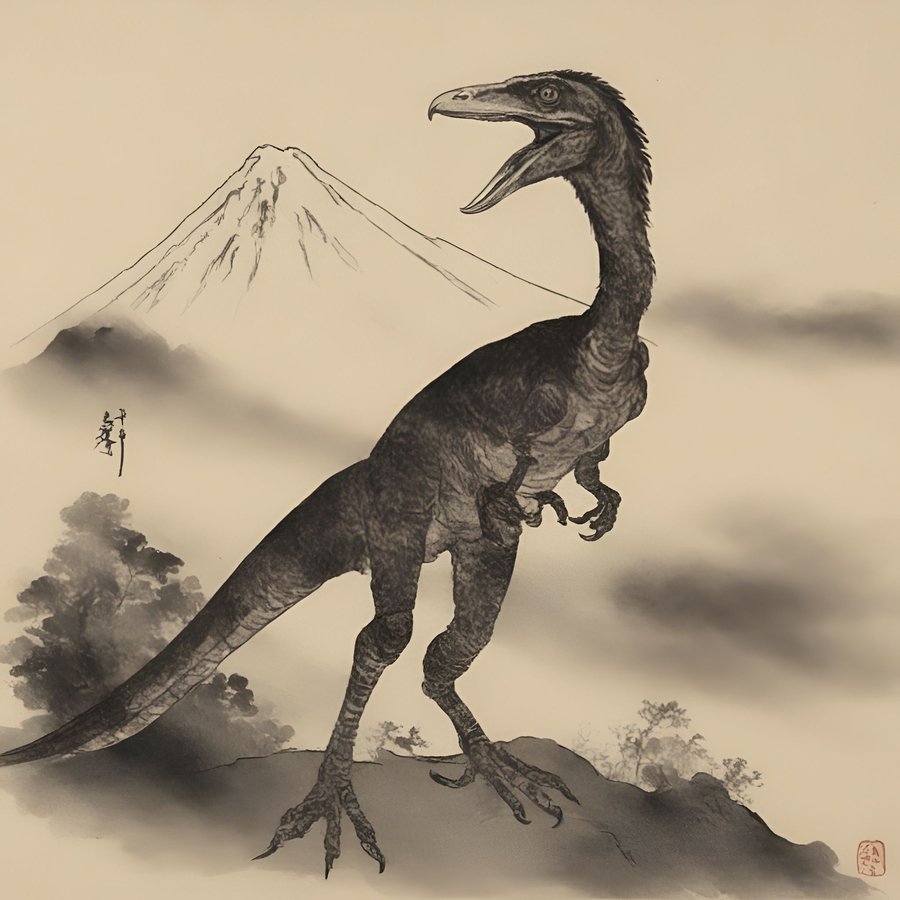
prompt: a drawing in YUKIE style, Velociraptor with two legs and two hands painted in ink on the background of Mount Yuzu
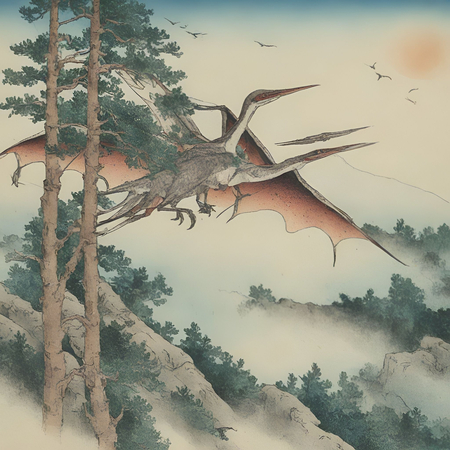
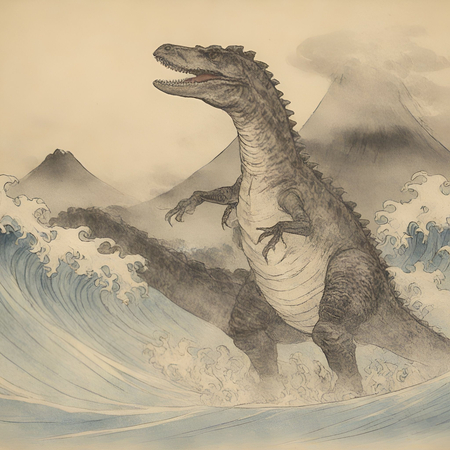
1 prompt: a drawing in YUKIE style, Pterodactyl with two wings painted in colorful ink flying above the pine trees. 2 prompt: a drawing in YUKIE style, Spinosaurus with two legs and two hands painted in ink standing in the water against the backdrop of Great Wave.
prompt: a drawing in YUKIE style, Pliosaurus with four flippers in the water painted in ink
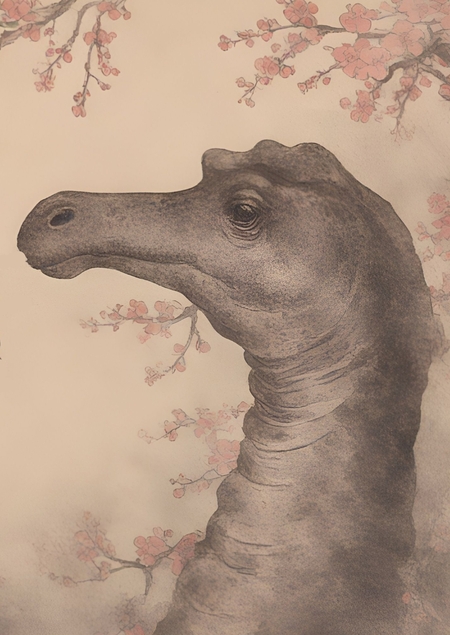
prompt: a drawing in YUKIE style, a Brontosaurus face painted in ink eating sakura branches
The model successfully maintained the concept I envisioned and picked up the Ukiyo-e style quite proficiently: the landscapes, color palette, softness, delicacy, and watercolor quality of the work were conveyed accurately. As is fitting for the style, the compositions are simple and uncrowded, and the dinosaurs are naturally integrated into the environment. While the creatures themselves might sometimes be rendered with a hyperrealistic or slightly awkward and non-anatomical touch, the considered detailing and fluidity of the lines have been taken into account. I am also pleased that the images differ in composition; the model learned to utilize various landscapes in different proportions—in some instances, the characters are tightly surrounded by the environment, while in others, they exist in a more open space, allowing for a sense of air and negative space.
Because I had selected a small image size, after generating with Stable Diffusion, I needed to use an AI image upscaling editor—I turned to picsart.com for this.
Link to
To fine-tune the model, I created a dataset of Ukiyo-e style images, then set the training prompt to the style: «a drawing in YUKIE style.» To reduce the training time, I set 500 steps with a checkpoint at 250. In the end, the process took approximately 30–40 minutes. After that, I wrote the necessary prompts for image generation (they are listed in the captions under the pictures), discarded the unsuccessful variations where the dinosaurs had too many limbs or exhibited hyperrealism, and saved what you can see in the final result.