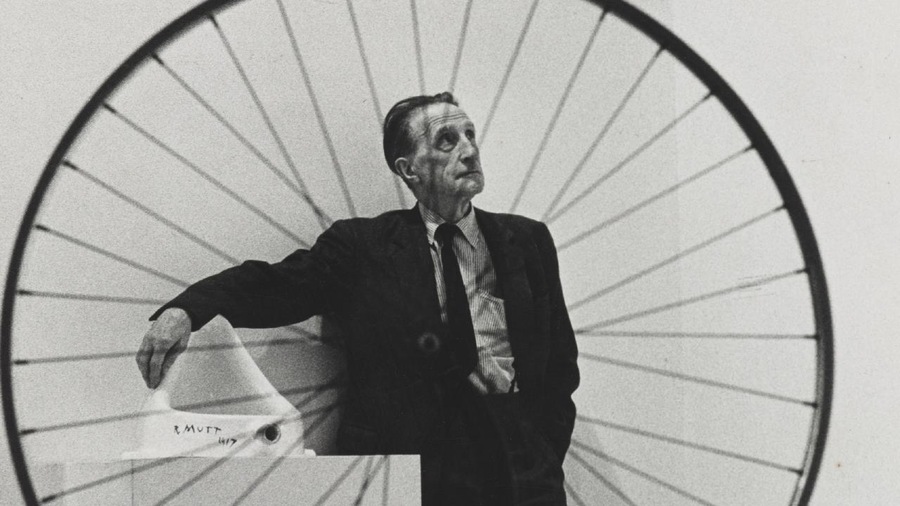
Marcel Duchamp with a bicycle wheel. France Amerique.
What is Dadaism?
Dadaism was an avant-garde movement that emerged in Zurich at the Cabaret Voltaire in 1916, during the First World War. It was a radical protest against rationalism, nationalism, and bourgeois values, which artists believed had led Europe into catastrophe. As Hugo Ball wrote in his «Dada Fragments», Dada was «a harlequinade made of nothingness in which all higher questions are involved.» The movement rejected traditional art, mocked museums and academies, and sought to replace aesthetic pleasure with scandal, irrationality, and what Tristan Tzara called «anti-art.»
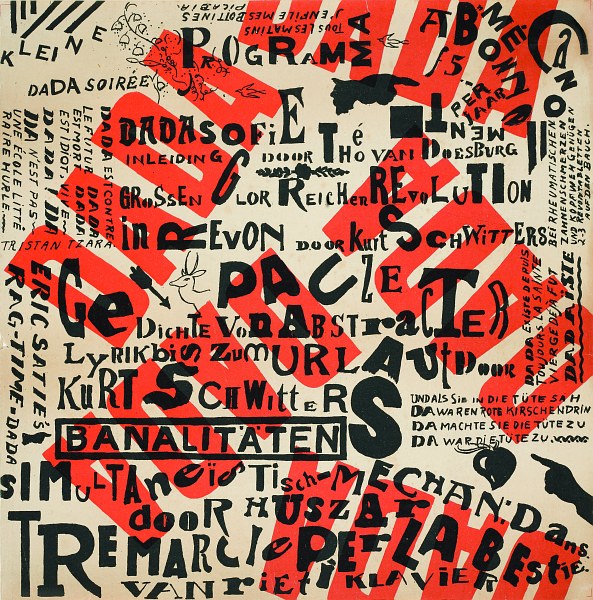
«Kleine Dada Soirée». Theo van Doesburg. 1922.
Key Characteristics
The main characteristics of Dada included collage, photomontage, irony, absurdity, and the readymade — ordinary objects presented as works of art. Marcel Duchamp argued that an artist could take any everyday object, place it in an art context, and thereby create «a new thought for that object.» Dada also celebrated performance and noise poetry (bruitist poems), intended to shock the public and blur the boundary between life and art.
Three Key Works
Marcel Duchamp
Three works exemplify the Dadaist approach. First, Marcel Duchamp’s Fountain (1917) — a porcelain urinal signed «R. Mutt» — directly attacked the idea that art must be beautiful or handmade. It was rejected from an exhibition, which only confirmed its provocative power.
«Fountain». Marcel Duchamp. 1917.
Second, John Heartfield’s photomontages used cut-up fragments of newspapers and magazines to create grotesque political satires of the Weimar Republic.
John Heartfield
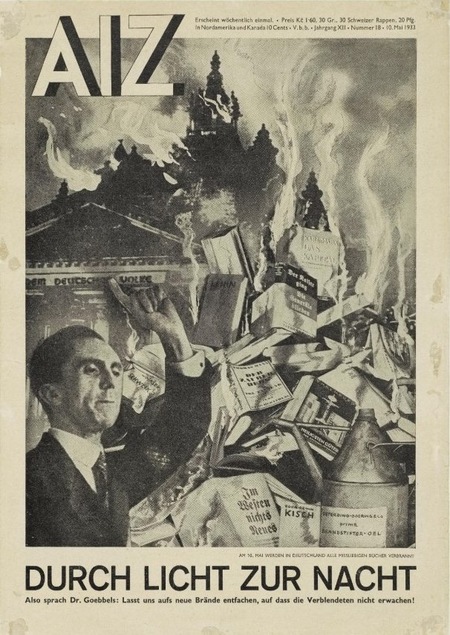
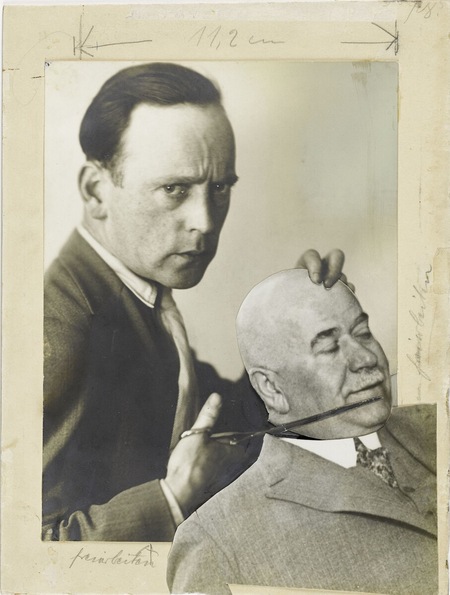
John Heartfield. «Light to Night». 1933 // John Heartfield. «Self-Portrait with Police Commissioner Zörgiebel». 1929.
Third, Hugo Ball’s sound poems (1916) — recited in a «magician’s» costume — consisted of abstract, meaningless syllables, symbolising a rejection of language corrupted by wartime propaganda.
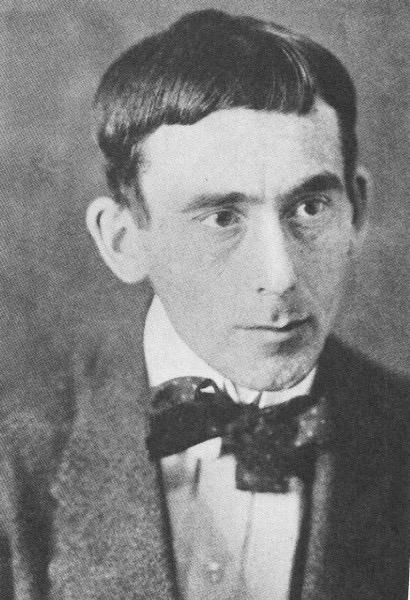
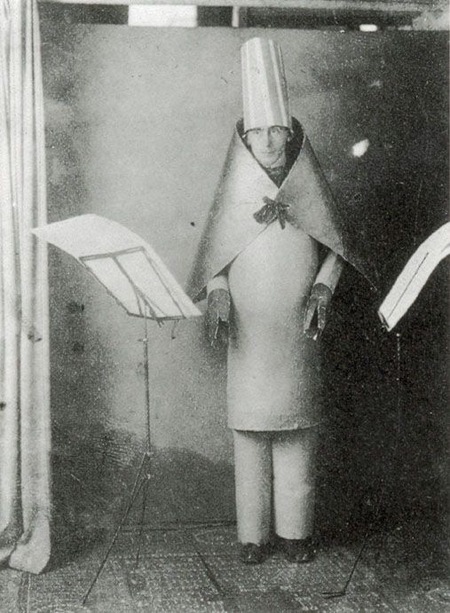
Hugo Ball. //German: Studio photo for invitation postcard for Hugo Ball’s performance at the Cabaret Voltaire. 1916.
Main Practitioners
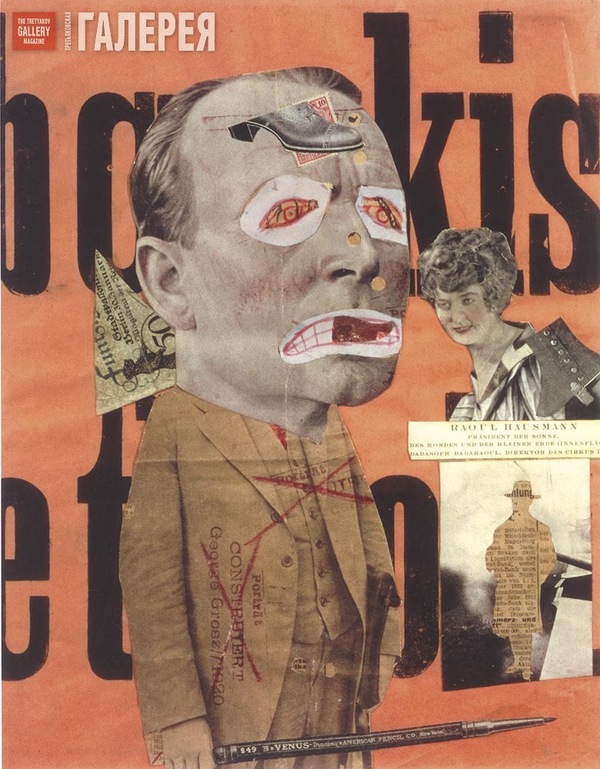
Leading practitioners included Marcel Duchamp, whose readymades revolutionised the understanding of authorship; Tristan Tzara, the Romanian poet and organiser of Zurich Dada; and Raoul Hausmann and John Heartfield, who led the politically radical Berlin branch of Dada.
Tristan Tzara
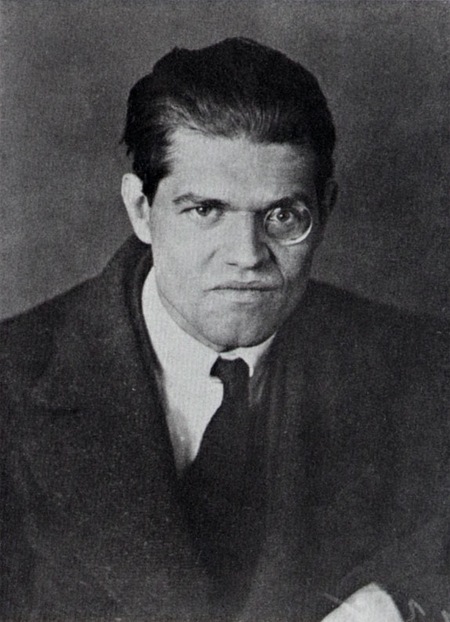
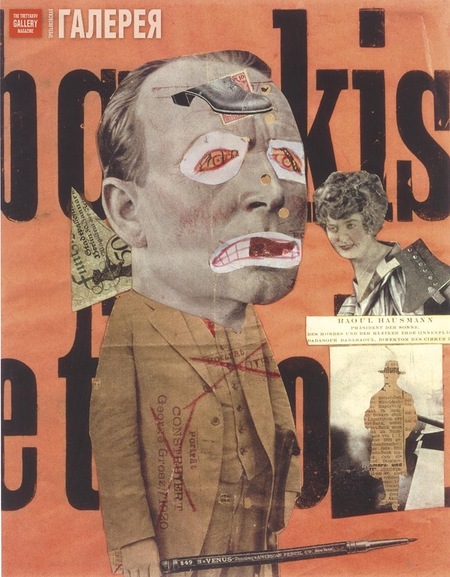
Raoul Hausmann. // «The Art Critic». Raoul Hausmann. 1919–1920.
Self Portraitby. John Heartfield. 1920.
Main Theorists
Principal theorists were Hugo Ball, founder of the Cabaret Voltaire; Tristan Tzara, whose «Dada Manifesto 1918» proclaimed that «Dada means nothing» and demanded the destruction of logic and memory; and Richard Huelsenbeck, who in the «First German Dada Manifesto» (1918) condemned Expressionism for escaping from reality and called for the use of new media like collage.
«Dada Manifesto». 1918.
Origins and Influences
Dadaism was formed as a direct reaction to the horrors of the First World War and the perceived failure of rationalism. It rejected both academic art and, initially, Futurism and Expressionism, which it saw as mere variations of old aestheticism.
Legacy
Dada’s legacy was enormous. It directly influenced Surrealism (especially automatic writing), Pop Art (the use of mass-culture objects), and Conceptual Art (the priority of the idea over the physical object). Performance, happenings, and installation art also trace their lineage back to Dada evenings and actions. In short, Dada fundamentally questioned what art could be, shifting the focus from craft and beauty to concept and critique.
Harrison C., Wood P. (eds.) Art in Theory 1900-1990: An Anthology of Changing Ideas. — Oxford: Blackwell Publishers, 1992. — 1189 p.
Ball H. Dada Fragments (1916-17) // Art in Theory 1900-1990 / ed. by C. Harrison, P. Wood. — Oxford: Blackwell, 1992. — P. 246-248.
Duchamp M. The Richard Mutt Case (1917) // Ibid. — P. 248.
Tzara T. Dada Manifesto 1918 // Ibid. — P. 248-253.
Huelsenbeck R. First German Dada Manifesto (1918) // Ibid. — P. 253-255.