Concept
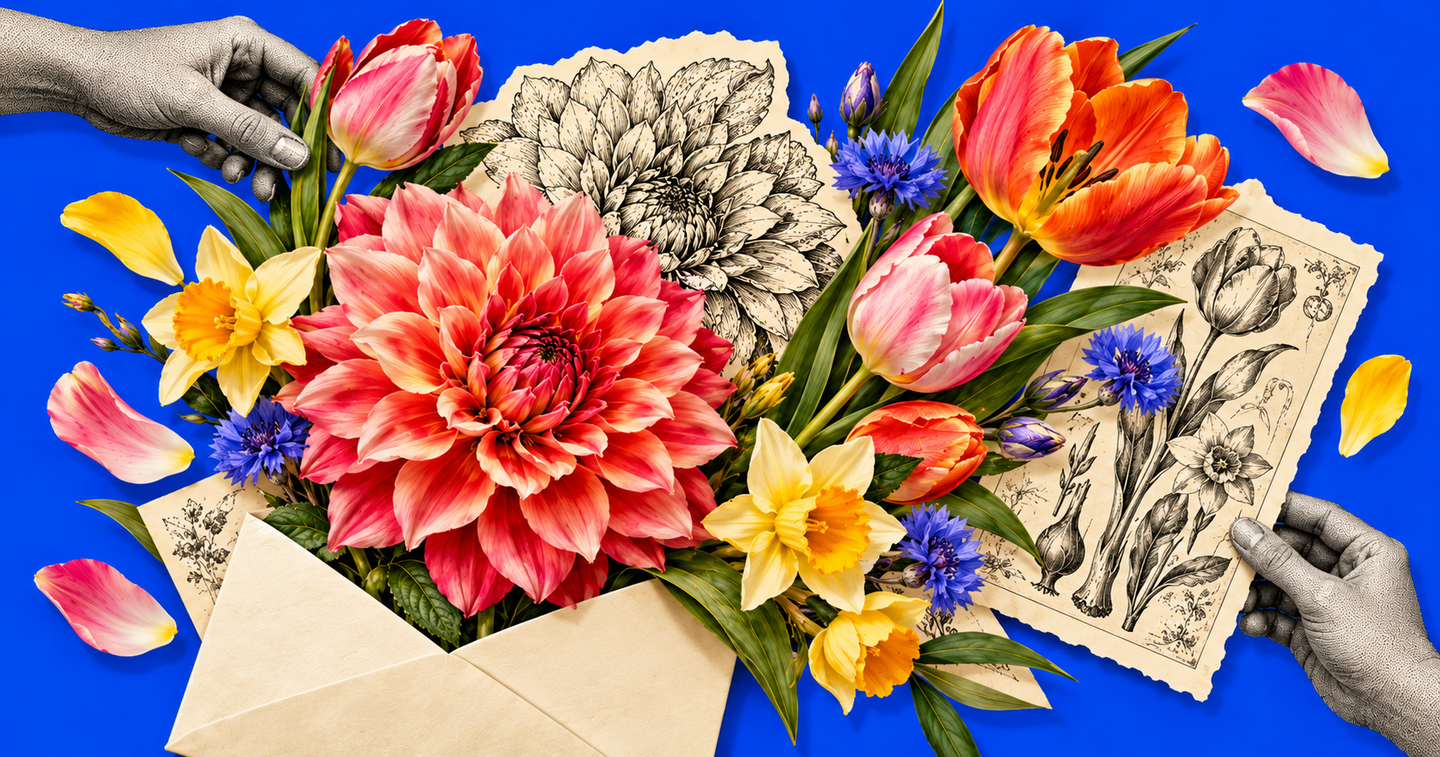
«Flowers Don’t Keep Quiet”—a cultural and educational media platform about the meanings of flowers and the history of their appearance.
Flowers are given as a sign of love and gratitude, brought to celebrations, and kept as mementos. The concepts associated with them may seem familiar, even if their origins are not always obvious. Why did a particular flower become a symbol of acknowledgment, memory, or farewell? How did one plant acquire different meanings in different cultures? „Flowers Don’t Keep Quiet“ answers these questions by exploring the stories of individual plants, traditions, and works of art. Each publication focuses on a specific example—a flower, a hue, a custom, or an image—and explains where the associated meaning originated and how it has evolved.
Objective
To help readers understand color symbolism through its origins and cultural context. The media explores how people imbued plants with meaning, passed those ideas on to subsequent generations, and used them in daily life and art. Historical books, museum artifacts, and descriptions of customs allow familiar associations to be correlated with their sources.
Themes
A narrow theme of media: the symbolism of colors and the origins of related concepts.
The publications combine four areas:
— Plant histories. How individual flowers acquired meanings and why certain associations endured.
— Color and meaning. How a plant’s pigmentation influences its perception and what concepts are linked to specific shades.
— Floral traditions. How flowers become part of gifts, celebrations, weddings, and memorials.
— Flowers in art. What a floral detail in a painting, book, or old postcard can reveal.
Meaning is examined in relation to specific time, place, and method of use. A single flower can become a carrier of diverse meanings.
Studio
This media is intended for readers interested in cultural history, art, and the origins of everyday traditions. No special preparation is required to engage with the material; the starting point is a recognizable flower, image, or custom.
A separate segment of the audience includes designers, illustrators, florists, and creators of cultural projects. They can reference these publications for historical context, visual examples, and resources for their own work.
How does this media work?
Categories and Formats
The «Flowers Speak» publications are grouped into four categories. Each offers a distinct starting point: a specific plant, its coloration, a custom, or an image. Together, they illustrate how floral meanings emerge, evolve, and manifest within culture.
What Does the Flower Say?
Stories of individual plants and the meanings people have attributed to them. How did a flower become associated with a specific feeling, event, or concept? What sources allow us to trace this connection, and how has it changed over time?
This feature helps explore the history of a familiar plant and reveals the specific circumstances behind its common association.
Formats: illustrated stories, plant spotlights (carousels), and short animated collage videos. In Telegram, you will find in-depth texts with historical examples and source links.
The Matter of Color
The meanings of shades and the origins of the concepts associated with them. Why does the coloring of a flower influence its perception? Do interpretations of the same shade align across different sources, cultures, and eras?
This segment explores common associations and explains the contexts in which they appear.
Formats: comparative cards, visual collections, and analyses of statements regarding color symbolism. On Telegram—a matching of interpretations with explanations and examples from various sources.
On What Subject
Flowers in gifts, celebrations, wedding customs, and memorials. How do plants become part of an event? Why are they chosen for a particular occasion, and how have these traditions evolved over time?
This feature connects the history of floral symbolism with everyday actions—giving a bouquet, decorating a space, or keeping a flower as a keepsake.
Formats: histories of customs, thematic carousels, and «then/now» sequences. On Telegram, there are detailed posts about these traditions and discussions about reader experiences.
Flora in Detail
An analysis of floral motifs in painting, book illustrations, and vintage postcards. What role does a plant play in a specific image? What helps to understand its significance: the narrative, neighboring objects, the caption, or the circumstances of its creation?
This section teaches students to observe details and examine floral symbolism within the context of a work.
Formats: Images with enlarged fragments, commentary cards, and short video analyses. On Telegram—illustrated texts with captions to the works and supplementary materials.
Yearly Thematic Plan
The annual program is comprised of twelve thematic months. It begins with an introduction to the language of color, then delves into the specific meanings, traditions, and uses of plants. In the second half of the year, the focus shifts to social standing, myths, art, print culture, and personal histories.
Each month is unified by a central theme, within which various segments and narrative styles are interwoven. Four main features are planned per month—roughly one story per week. Between these, short visual notes, questions, and polls are published.
One story is adapted for two platforms: a standalone carousel on Instagram and an extended post on Telegram with additional examples and sources. Over the course of the year, the program includes 48 core stories.
The months are indicated by sequence numbers starting from the launch. Posts related to specific holidays are placed near the corresponding dates when compiling the calendar.
What does a month look like within media?
Each monthly theme is explored through several independent stories. To maintain diversity in the publications, four types of core materials alternate within the month: — History: The origin of the meaning of a specific flower, shade, or custom. — Visual Analysis: A close reading of a painting, illustration, or postcard, explaining the floral details. — Comparison: Juxtaposing the symbolism of a single plant across different cultures, eras, or contexts. — Source Exploration: A narrative about a page from a flower dictionary, a historical book, or a museum artifact that aids in investigating the theme.
Between the main articles, there is a discussion feature: a question for readers, a poll on associations, or an invitation to share a family floral tradition. Personal experience enriches the historical narrative and sparks new avenues for research.
For instance, a «Month of Remembrance» could unite the history of a single floral symbol, an analysis of a memorial postcard, a comparison of customs, and an introduction to a historical source. In the discussion, readers share which flowers they keep as mementos and why.
In this way, the medium consistently explores a broad theme, offers various ways to engage with it, and connects cultural history with the readers' personal experiences.
Platforms and Distribution
In the first stage, «Flowers Do Not Stay Silent» develops on Instagram and Telegram. The platforms complement each other: the visual story introduces the reader to the topic, while the detailed publication allows for a deeper exploration.
What should change in six months?
In the first six months, «Flowers Don’t Stay Silent» must establish the foundation for a regularly published media outlet: a recognizable visual identity, consistent content segments, and the first collection of stories about floral symbolism. The development goal is to release 24 core pieces, build an engaged readership around the project, and determine which topics and storytelling approaches resonate most strongly. Each story will receive a standalone visual version on Instagram and an expanded publication on Telegram.