Данный проект является учебной работой студента Школы дизайна или исследовательской работой преподавателя Школы дизайна. Данный проект не является коммерческим и служит образовательным целям
Проект принимает участие в конкурсе

Introduction

Pyaterochka is one of the largest grocery retail chains in Russia and a key part of the X5 Group retail ecosystem. Founded in 1999 in Saint Petersburg, the company has grown into a nationwide network of 25,533 Pyaterochka stores as of December 31, 2025. Over the years, Pyaterochka has transformed from a typical neighborhood grocery store into the leading convenience retail brand in Russia. According to the company’s brand book, the brand consistently outperforms its competitors in customer awareness, store visits, and customer loyalty.

big
Исходный размер 1280x305

The brand positions itself as a convenient neighborhood store that combines affordability, accessibility, and quality. In the current economic environment, many consumers are looking for opportunities to reduce everyday expenses while maintaining their usual standard of living. Pyaterochka responds to this demand by offering low prices without sacrificing product quality, store convenience, or customer service. The company emphasizes that customers should not have to choose between affordability and comfort.

big
Исходный размер 944x424

The central idea of the brand is expressed through its slogan «Pyaterochka Helps Out» («Пятёрочка выручает!»). This slogan communicates the company’s mission to support customers in everyday situations by offering affordable products, convenient shopping experiences, and useful services. Rather than presenting itself as a large retail corporation, the brand seeks to create the image of a reliable helper that understands the everyday needs of ordinary people.

The target audience of Pyaterochka is broad and includes several consumer groups. The core audience consists of middle-income and budget-conscious consumers who regularly purchase groceries and household products. Families with children represent one of the most important customer segments because they require frequent shopping and pay close attention to both prices and product quality. Another significant audience group includes older consumers and pensioners who value affordability, store proximity, and reliability.

At the same time, Pyaterochka is working to attract younger and more digitally active consumers. Through mobile applications, online delivery services, loyalty programs, and personalized promotions, the company appeals to customers who expect convenience and digital integration in their shopping experience. This strategy allows the brand to maintain relevance among both traditional and modern consumer groups.

Исходный размер 2198x1236

The company’s brand personality is based on several key values: care, trust, respect, simplicity, and openness. The brand book describes Pyaterochka as a friendly companion that communicates with customers in a human and understandable way. The company avoids corporate jargon and overly formal language, preferring communication that feels natural and relatable. As a result, the brand creates an image of a helpful neighbor rather than a distant commercial organization.

Overall, Pyaterochka’s positioning is built on the combination of functional benefits, such as low prices and convenience, and emotional benefits, such as care, trust, and community support. This balance helps the company maintain its leadership position in the highly competitive retail market.

Communication Channels

Pyaterochka uses an integrated communication strategy that combines digital platforms, traditional advertising channels, in-store communication, and public relations activities. The primary goal of the company’s communication is not only to promote products and special offers but also to strengthen customer loyalty and reinforce the brand’s image as a helpful and caring neighborhood store.

Исходный размер 1920x1055

One of the most important communication channels is social media. Pyaterochka actively maintains accounts on platforms such as VKontakte, Telegram, YouTube, and other digital media channels. The brand book states that communication on social media should be lively, positive, humorous, and emotionally engaging. The company aims to eliminate the distance between the brand and consumers by presenting itself as a close friend rather than a formal corporation. Social media content often includes storytelling, everyday situations, seasonal topics, recipes, entertainment content, and promotional campaigns. Humor plays a significant role in communication, but the company avoids offensive jokes, excessive slang, and controversial topics.

The tone of voice used by Pyaterochka is one of the most distinctive elements of its communication strategy. The company describes its communication style as friendly, human, respectful, and optimistic. Messages are designed to sound natural and conversational while maintaining professionalism and respect for customers. This approach helps create emotional connections with consumers and encourages audience engagement.

Исходный размер 1600x1238

Another major communication channel is the Pyaterochka mobile application and the X5 Club loyalty program. Through these platforms, customers receive personalized discounts, bonus points, promotional offers, and purchase recommendations. The application allows the company to maintain direct communication with customers even when they are not physically present in stores. Push notifications, digital coupons, and personalized offers increase customer engagement and encourage repeat purchases.

Исходный размер 2880x1440

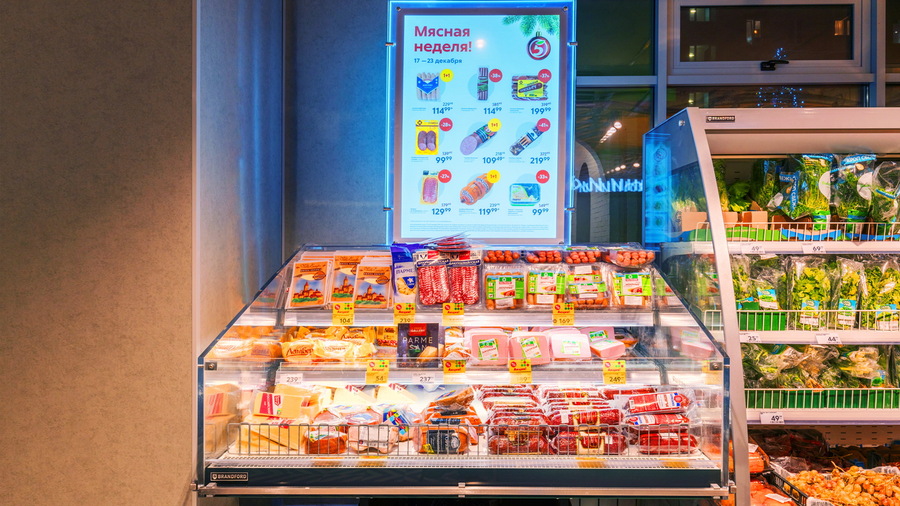
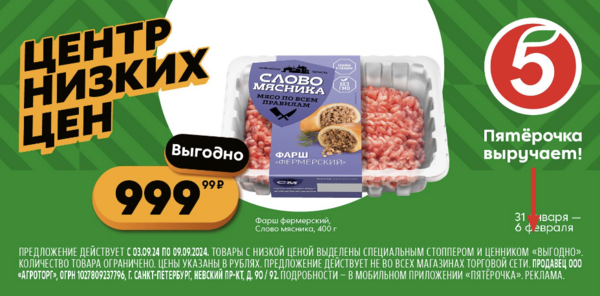
The company also relies heavily on in-store communication. Promotional posters, shelf labels, price tags, banners, and branded visual materials help inform customers about discounts and special offers at the point of purchase. Because purchase decisions are often made inside the store, these communication tools play an important role in influencing consumer behavior. The consistent use of corporate colors, typography, and graphic elements strengthens brand recognition and creates a unified visual identity.
0

Outdoor advertising remains another significant communication channel. Pyaterochka uses billboards, city-light posters, banners, and other forms of outdoor media to increase visibility and attract customers. These advertisements usually focus on price promotions, seasonal campaigns, and special offers. The visual design follows strict brand guidelines and relies on the recognizable green color, logo, and slogan of the company.

Television advertising continues to be an important element of the company’s communication strategy. According to the brand book, all television advertisements incorporate the official brand slogan and corporate jingle. These elements help create strong brand recognition and ensure consistency across different communication channels. Television campaigns typically focus on affordability, convenience, and positive everyday experiences associated with shopping at Pyaterochka.

In addition to marketing communication, the company actively engages in public relations activities. Pyaterochka regularly communicates initiatives related to social responsibility, community support, sustainability projects, and customer care programs. Such activities help strengthen the company’s reputation and demonstrate that the brand contributes to society beyond its commercial objectives.

Исходный размер 1600x1238

Overall, Pyaterochka uses a multichannel communication strategy that combines social media, digital technologies, television advertising, outdoor media, loyalty programs, and public relations. The consistency of visual identity and tone of voice across all communication channels helps the company maintain a strong relationship with consumers and reinforce its image as a trustworthy, accessible, and customer-oriented retail brand.

Theoretical Framework

This study examines the communication strategy of Pyaterochka’s ready-to-eat food category through the lens of consumer trust, persuasion, and brand–consumer interaction. Although ready-to-eat food has become an increasingly important part of modern retail, consumers often remain skeptical about the freshness, quality, safety, and nutritional value of products prepared and sold by supermarkets. Therefore, communication in this category performs a dual function: it must not only attract attention and stimulate purchase intention but also reduce uncertainty and build trust.

To analyze how Pyaterochka addresses these communication challenges, this research applies two complementary communication theories: the Elaboration Likelihood Model (ELM) developed by Petty and Cacioppo and Dialogic Communication Theory proposed by Kent and Taylor. Together, these theories provide a framework for understanding both persuasive communication and relationship-building processes between the brand and its audience.

The Elaboration Likelihood Model explains how individuals process persuasive messages through two distinct routes: the central route and the peripheral route. The route chosen by the consumer depends on the level of motivation, involvement, and cognitive effort invested in evaluating the message.

The central route involves careful and rational processing of information. Consumers evaluate arguments, compare alternatives, and make decisions based on evidence and factual information. In the context of ready-to-eat food communication, central-route persuasion includes information about ingredients, freshness, nutritional value, quality standards, production processes, expiration dates, and price–quality relationships. Since consumers may have concerns regarding the quality and safety of supermarket-prepared meals, these rational arguments play a crucial role in reducing uncertainty and encouraging purchase decisions.

Исходный размер 1000x500

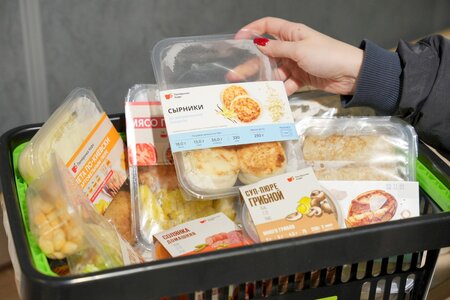
The peripheral route, in contrast, relies on visual, emotional, and symbolic cues that require minimal cognitive effort. Consumers make quick judgments based on attractive food photography, packaging design, color schemes, slogans, promotional labels, discounts, and overall visual presentation. Such elements are particularly important in retail environments where purchasing decisions are often spontaneous and made within seconds.

For Pyaterochka, both routes operate simultaneously. The brand uses appetizing food imagery, promotional graphics, and a recognizable visual identity to attract attention, while also providing information about product quality, freshness, and affordability. The Elaboration Likelihood Model is therefore useful for evaluating whether the communication strategy successfully combines emotional appeal with rational evidence. This framework allows the study to assess how visual and informational elements contribute to persuasion and consumer trust.
While the Elaboration Likelihood Model focuses on persuasion, Dialogic Communication Theory examines communication as a process of relationship building between organizations and their audiences. Developed by Kent and Taylor, this theory argues that effective communication should not be limited to one-way information transmission but should instead encourage interaction, participation, and mutual understanding.


According to Dialogic Communication Theory, organizations build stronger relationships when they actively listen to stakeholders, respond to feedback, and create opportunities for meaningful dialogue. In digital communication environments, such dialogue may occur through social media interactions, comments, reviews, customer support responses, surveys, polls, and other forms of direct engagement.

This perspective is particularly relevant for the ready-to-eat food category because consumer trust cannot be established solely through advertising messages. Customers often have questions regarding freshness, ingredients, preparation methods, packaging, and food safety. As a result, communication becomes more effective when the brand demonstrates transparency, responds to concerns, and publicly addresses customer feedback.

For Pyaterochka, dialogic communication can be observed through interactions on social media platforms, responses to customer comments, discussions surrounding product quality, and communication within loyalty and delivery ecosystems. The extent to which the company engages in genuine dialogue directly influences consumer perceptions of credibility and reliability.

Applying Dialogic Communication Theory enables this study to evaluate whether Pyaterochka’s communication strategy functions merely as promotional messaging or whether it successfully fosters trust-based relationships with consumers. Particular attention will be paid to how the brand addresses concerns, responds to questions, and maintains ongoing communication with its audience.

Relevance of the Selected Framework The combination of the Elaboration Likelihood Model and Dialogic Communication Theory provides a comprehensive analytical framework for this research. ELM explains how Pyaterochka persuades consumers through both rational and emotional communication mechanisms, while Dialogic Communication Theory explains how the brand develops trust through interaction and responsiveness.

Together, these theories allow the study to investigate three key dimensions of communication within the ready-to-eat food category: persuasion, trust, and engagement. Since the central communication challenge of ready-to-eat food is convincing consumers that products are fresh, safe, convenient, and worth purchasing, these theoretical approaches offer an appropriate foundation for analyzing both visual communication and audience interaction across the brand’s communication channels.

Analysis

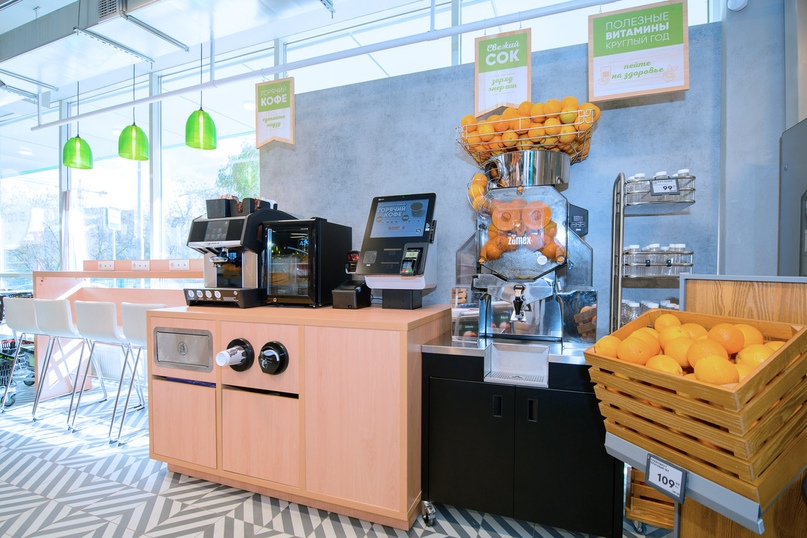
For the analysis, we focus on the communication of Pyaterochka’s ready-to-eat food category. This direction is especially relevant because it combines several communication challenges: the need to prove product quality, make food visually attractive, justify the price, and build consumer trust. The brand does not only sell food as a product, but also communicates a promise of convenience, accessibility and everyday usefulness.

1. Elaboration Likelihood Model: visual persuasion and trust The Elaboration Likelihood Model helps to explain how Pyaterochka persuades consumers through both rational and emotional/visual signals. The central route of persuasion is connected with arguments that require more conscious attention from the consumer. In the case of ready-to-eat food, these arguments include freshness, expiration date, ingredients, price, safety, quality control and nutritional value. This route is especially important because consumers may be sceptical about ready-made food in supermarkets. Therefore, communication should not rely only on attractive images: it also needs to give clear proof that the product is fresh, safe and worth buying.

The peripheral route of persuasion works through quick visual impressions. In Pyaterochka’s communication, this can include appetising food photography, bright brand colours, discount labels, simple slogans, packaging design and the overall look of the product in the store or in digital posts. These elements help the consumer make a fast decision, especially when the purchase is spontaneous.

However, the effectiveness of this visual persuasion is limited by the trust issue. If the product looks attractive but the consumer does not fully trust its quality, the peripheral route is not enough. This means that Pyaterochka’s communication should combine visual appeal with rational proof: «looks tasty» should be supported by «clear composition», «freshness control», «safe production» and «transparent quality standards».

2. Dialogic Theory: two-way communication and reputation Dialogic Theory is useful for analysing how Pyaterochka builds or fails to build two-way communication with its audience. For the ready-to-eat category, dialogue is especially important because the key barrier is trust. If consumers are worried about freshness, ingredients or taste, one-way promotional communication is not enough. The brand needs to show that it listens to feedback, reacts to complaints, explains quality control and uses consumer comments to improve the product.

The most important dialogic tools here are comments in social media, replies from the brand, reviews, Q&A formats, polls, feedback forms and public explanations of how quality is controlled. These formats can turn communication from simple advertising into a relationship-building process.

If Pyaterochka only posts promotional content, the communication remains mostly one-directional. But if the brand actively responds to questions about quality, ingredients, delivery, packaging or taste, it strengthens trust and reduces the distance between the company and the consumer.

Overall evaluation The communication of Pyaterochka’s ready-to-eat category has strong potential because it is based on clear consumer needs: saving time, buying food nearby, finding an affordable meal and solving everyday food routines. The brand also has strong advantages: high accessibility, price competitiveness and broad recognition.

At the same time, the main weakness is that visual attractiveness and convenience do not fully solve the problem of trust. For this category, persuasive communication must combine three elements: appetising visual presentation, clear rational proof of quality, and active dialogue with consumers.

Therefore, the most effective communication strategy for Pyaterochka would be to move from simple product promotion to trust-based communication: show not only what the food looks like, but also why it is safe, fresh, convenient and relevant to the consumer’s daily life.

Conclusion & Recommendations

The analysis shows that Pyaterochka has a strong communication foundation as a convenient, affordable, and customer-oriented neighborhood retailer. The brand maintains a recognizable visual identity, a friendly tone of voice, and a clear value proposition based on accessibility, everyday usefulness, and support for consumers. These features are especially relevant for the ready-to-eat food category, where consumers are looking for quick, affordable, and convenient meal solutions.

From the perspective of the Elaboration Likelihood Model, Pyaterochka’s communication actively uses the peripheral route of persuasion. The brand attracts attention through appetizing food images, bright promotional materials, recognizable corporate colors, discount labels, and emotionally positive messaging. These elements are effective in a retail environment where many purchase decisions are spontaneous and made quickly.

At the same time, the central route of persuasion could be strengthened. Pyaterochka provides basic rational information, such as price, product name, ingredients, and expiration date, but the communication does not always give enough deeper evidence about preparation processes, freshness standards, storage conditions, and quality control. Since ready-to-eat food can cause consumer concerns about safety and trust, rational arguments should play a more visible role in the brand’s communication.

From the perspective of Dialogic Communication Theory, Pyaterochka demonstrates an intention to build a closer relationship with consumers through a friendly and accessible communication style. The brand presents itself not as a distant corporation, but as a helpful everyday companion. This supports emotional engagement and strengthens the image of a brand that understands ordinary consumer needs.

However, the communication around ready-to-eat food still needs to become more dialogic. Product promotion, discounts, and visual attractiveness are important, but they do not fully solve the problem of trust. For this category, the brand should more actively respond to consumer questions, address concerns about freshness and ingredients, and show that customer feedback is noticed and used. A stronger two-way communication strategy would help Pyaterochka build credibility and reduce skepticism toward supermarket ready-made meals.

Overall, Pyaterochka’s communication strategy is effective in generating awareness, attracting attention, and communicating convenience and affordability. Its main area for improvement is trust-building. The brand should combine visual persuasion with clearer rational proof and more active dialogue with consumers. This would make the communication of the ready-to-eat category not only more attractive, but also more convincing and reliable.

Our recommendations: 1. Increase transparency regarding product quality The company should provide more information about ingredients, preparation processes, freshness standards, storage conditions, and quality control procedures. Such information would strengthen the central route of persuasion and reduce consumer uncertainty.

2. Introduce educational content about ready-to-eat food Instead of focusing exclusively on promotions and discounts, communication could include behind-the-scenes materials, explanations of food preparation processes, information about suppliers, and quality assurance practices. This would help transform trust into a visible communication asset.

3. Strengthen dialogue with consumers Pyaterochka should expand opportunities for interaction by actively responding to questions about ready-to-eat products, addressing concerns in comments, conducting Q&A sessions, and encouraging customer feedback. Greater responsiveness would reinforce perceptions of openness and reliability.

4. Utilize customer-generated content and reviews Publishing authentic customer experiences, testimonials, and product reviews would increase credibility and provide social proof. Consumers often trust other consumers more than traditional advertising messages.

5. Connect convenience with quality Current communication strongly emphasizes convenience and affordability. Future campaigns should more explicitly demonstrate that convenience does not come at the expense of freshness, safety, or product quality. This balance would support both rational and emotional decision-making processes. In conclusion, Pyaterochka possesses a strong communication foundation and significant brand equity. The next stage of development for the ready-to-eat category should focus not only on promoting products but also on systematically building consumer trust through transparency, evidence-based communication, and meaningful dialogue.

Библиография
Показать полностью
1.

Известия. Россияне стали отказываться от доставки еды в пользу самостоятельной готовки [Электронный ресурс] // Известия. — 2025. — 4 июля. — URL: https://iz.ru/1915085/2025-07-04/rossiane-stali-otkazyvatsa-ot-dostavki-edy-v-polzu-samostoatelnoi-gotovki (дата обращения: 10.06.2026).

2.

Как завоевать доверие покупателя в ритейле и не разориться [Электронный ресурс] // РБК Маркетинг. — URL: https://marketing.rbc.ru/articles/16321/ (дата обращения: 10.06.2026).

3.

РОМИР. Доля свободных денег в ноябре 2025 года [Электронный ресурс] / Исследовательский холдинг «Ромир». — Москва, 2025. — URL: https://romir.ru/feed/dolia-svobodnykh-deneg-v-noiabre-2025 (дата обращения: 10.06.2026).

4.

РОМИР (Сидорина А.). Готовая еда: баланс между скоростью, ценой и качеством [Электронный ресурс]. — 2026. — 27 марта. — URL: https://www.romir.ru/feed/gotovaia-eda-balans-mezhdu-skorostiu-tsenoi-i-kachestvom (дата обращения: 10.06.2026).

5.

При покупке готовых блюд россияне больше всего тратят на салаты [Электронный ресурс] // Romir. — URL: https://romir.ru/feed/pri-pokupke-gotovyh-blyud-rossiyane-bolshe-vsego-tratyat-na-salaty (дата обращения: 12.06.2026).

6.

Сегмент готовой еды компании «Пятерочка» [Электронный ресурс]: мультимедийная презентация для НИУ ВШЭ / ПАО «Корпоративный центр X5». — 2025. — 12 слайдов.

7.

5ka.ru. Каталог товаров [Электронный ресурс] // Пятёрочка: официальный сайт. — URL: https://5ka.ru/catalog/ (дата обращения: 05.06.2026).

8.

X5 Group. География [Электронный ресурс] // X5 Group: официальный сайт. — URL: https://www.x5.ru/ru/about/where-we-operate/ (дата обращения: 12.06.2026).

9.

Инновации и стандартизация: как рынок меняет упаковку готовой еды [Электронный ресурс] // Сибур: журнал. — URL: https://magazine.sibur.ru/publication/direct/hard_pack/innovatsii-i-standartizatsiya-kak-rynok-menyaet-upakovku-gotovoy-edy/ (дата обращения: 10.06.2026).

10.

ВЦИОМ. Досуг — хорошо, но мало: аналитический обзор [Электронный ресурс] / Всероссийский центр изучения общественного мнения. — Москва, 2025. — 20 нояб. — URL: https://wciom.ru/analytical-reviews/analiticheskii-obzor/dosug-khorosho-no-malo (дата обращения: 10.06.2026).

11.

Эксперт Юг. Как одинокие люди меняют потребительский рынок в России? [Электронный ресурс] // Эксперт Юг. — 2025. — 10 дек. — URL: https://www.expertsouth.ru/comments/kak-odinokie-lyudi-menyayut-potrebitelskiy-rynok-v-rossii-/ (дата обращения: 10.06.2026).

12.

Course «Communication Theory: Bridging Academia and Practice» / HSE University. — 2024 (дата обращения: 10.06.2026)

13.

Kent M. L., Taylor M. Building dialogic relationships through the World Wide Web // Public Relations Review. — 1998. — Vol. 24, № 3. — P. 321–334. — DOI: 10.1016/S0363-8111(99)80143-X.

14.

Petty R. E., Cacioppo J. T. The Elaboration Likelihood Model of Persuasion // Advances in Experimental Social Psychology. — 1986. — Vol. 19. — P. 123–205. — DOI: 10.1016/S0065-2601(08)60214-2.

Источники изображений
Показать полностью
1.

Боровец И. Сделаем за тебя: как «Пятёрочка» отвечает на запросы покупателей готовой еды [Электронный ресурс] // Forbes.ru. — 2025. — 7 нояб. — URL: https://www.forbes.ru/brandvoice/549402-sdelaem-za-teba-kak-paterocka-otvecaet-na-zaprosy-pokupatelej-gotovoj-edy (дата обращения: 12.06.2026).

2.

Брендбук X5: руководство по использованию фирменного стиля X5 и бизнесов компании [Электронный ресурс] // X5 MediaHub. — URL: https://mediahub.x5.ru/brandbook (дата обращения: 12.06.2026).

3.

Мобильное приложение «Пятёрочка»: кейс e-legion [Электронный ресурс] // Workspace. — 2022. — URL: https://workspace.ru/cases/mobilnoe-prilozhenie-pyaterochka-2/ (дата обращения: 12.06.2026).

4.

Оценка товаров в «Пятёрочке»: оценивайте покупки и получайте баллы X5 Клуба [Электронный ресурс] // Пятёрочка. — URL: https://5ka.ru/ratings/ (дата обращения: 12.06.2026).

5.

Пятёрочка: Telegram-канал [Электронный ресурс] // Telegram. — URL: https://t.me/+N0qv7TBZAC05NzRi (дата обращения: 12.06.2026).

6.

«Пятерочка» увеличила ассортимент готовой еды в Москве и области на 50% [Электронный ресурс] // Селдон Новости. — 2023. — 17 нояб. — URL: https://myseldon.com/ru/news/index/300673378 (дата обращения: 12.06.2026).

7.

Торговая марка № 990938 — 5 ПЯТЁРОЧКА ВЫРУЧАЕТ: владелец торгового знака и другие данные [Электронный ресурс] // РБК Компании. — URL: https://companies.rbc.ru/trademark/990938/5-pyatyorochka-vyiruchaet/ (дата обращения: 12.06.2026).

8.

Три завода в цепочке готовой еды для СТМ «Пятёрочки» [Электронный ресурс] // Retail.ru. — 2025. — 6 янв. — URL: https://www.retail.ru/photoreports/tri-zavoda-v-tsepochke-gotovoy-edy-dlya-stm-pyatyerochki/ (дата обращения: 12.06.2026).

9.

Хомякова Н. Еда на «Пятёрочку»: как производится готовая еда для торговой сети? Репортаж «Афиши Daily» [Электронный ресурс] // Афиша Daily. — 2023. — 20 февр. — URL: https://daily.afisha.ru/eating/25242-eda-na-pyatyorochku-kak-proizvoditsya-gotovaya-eda-dlya-torgovoy-seti-reportazh-afishi-daily/ (дата обращения: 12.06.2026).