INTRODUCTION
In the contemporary world, brands compete not only for sales and consumer attention, but also for the ability to create new meanings and social statements. In recent years, marketing has increasingly gone beyond the distribution of information and started to engage with current socio-political issues. In this way, brands form not just media images, but also communities united by shared values. In the context of digital communication and social media, the consumer also becomes an agent in the process of meaning creation and distribution.

Liquid Death production
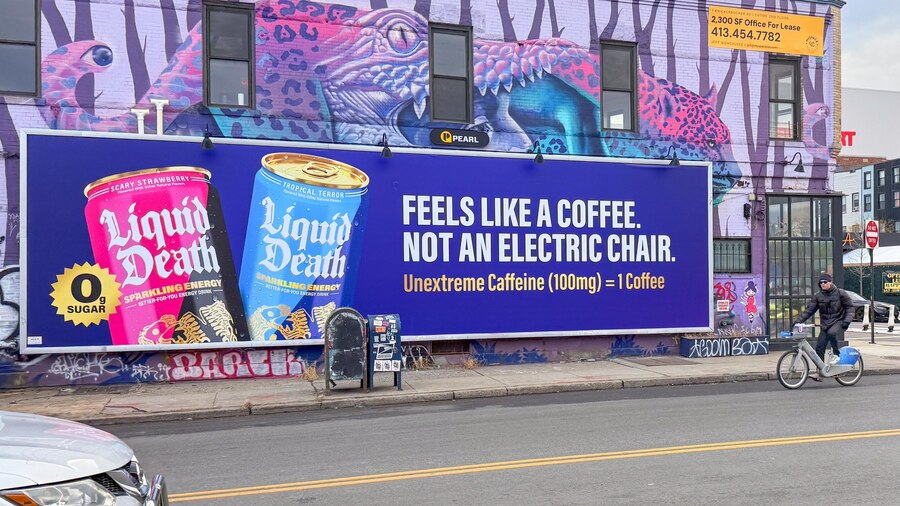
Provocative marketing has existed for as long as mass advertising itself. The disruption of social norms and expectations, and the breaking of advertising patterns are used to attract attention and are constantly adapted to new formats. The central theme of provocation is the exploration of sensitive social subjects, including politics, religion, gender roles, and sex. For instance, during the 1980s and 1990s, the advertising campaign of the clothing brand Benetton became well known for its billboards connected with racism, wars and social inequality. These campaigns gave rise to profound public discourse on ethical issues and the contravention of norms, which in turn engendered a significant increase in brand visibility.
Liquid Death billboard
Before the internet became a widely used tool, advertising was distributed through a variety of traditional media, including newspapers, radio, outdoor billboards, and television. However, the rise of the internet and digital technologies has changed the way brands interact with audiences. Social media platforms provide a channel for brands to respond rapidly to current events and to engage in direct communication with consumers. In this context, the success of an advertising campaign is increasingly defined by its ability to attract attention and trigger user reactions. This phenomenon is also referred to as virality. In such contexts, the concept of provocative marketing has adapted to new forms. The ability to respond quickly to current events, to interact with audiences in real time, and a higher degree of creative freedom in the digital environment have significantly changed brand communication strategies. The use of provocative marketing is most commonly associated with products that are considered to be unhealthy — such as fast food, alcohol, cigarettes, and sweets. It is precisely in these categories that bold advertising campaigns have historically been used, often strengthening their popularity. For example, Burger King is especially notable in this regard, as it uses provocative push notifications in its app.
«Decades of Soda Marketing Is BS» commercial
The brand Liquid Death has been developed in direct response to the marketing strategies employed by competitors in the sector. The company’s marketing strategy is based on reinterpreting the provocative advertising of its competitors. Liquid Death, a company specialising in the production of drinking water and low-sugar drinks, uses marketing tools that are primarily associated with beer producers. The brand defines its mission as follows:
«For centuries, all the funniest and coolest marketing and branding was only done for unhealthy products like beer, fast food, candy, and junk food. But those days are over. Soon, Liquid Death will use health and humor to conquer the world and make all beverages Liquid Death for eternity».
Liquid Death x YETI: The Life-Sized Casket Cooler
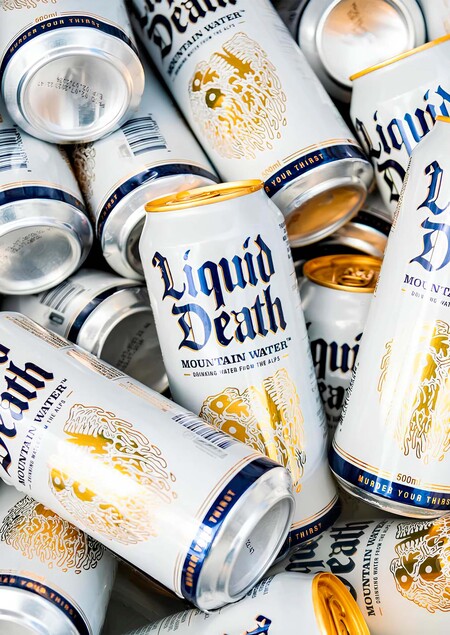
For the beverage market, it is important to create a strong brand identity, as the basic function of products in this category is reduced to one need — to relieve thirst. In conditions of high competition, consumers make choices not only in relation to the product itself, but also the aesthetics and values connected with it. Liquid Death’s unique selling point is predicated on a specific communication style that combines humour, self-irony, countercultural aesthetics and environmental responsibility. The target audience of the company consists of active internet users — millennials and Gen-Z. It focuses on consumers who appreciate humor and irony, are interested in internet culture, and want to express their identity through medium consumption. For example, Liquid Death products are packaged in metal cans that mimic the appearance of beer cans. This design choice is not only a visual strategy, but also reflects an attempt to reduce plastic usage. The identity of Liquid Death is formed not through the product itself, but through its symbolic and cultural meaning.
COMMUNICATION CHANNELS
Liquid Death employs a multi-channel integrated marketing strategy, in which digital platforms, influencers, collaborations, viral content, and offline activities are used in combination to create a unified communication space for the brand. The fundamental basis of this approach is the perception of the brand as an element of the entertainment industry, where the primary goal is not simply to promote a product, but to create content that is both engaging and entertaining, that can be spread across social media platforms.
The brand’s primary communication channels are social media, particularly Instagram, TikTok, and YouTube. Instagram* has been used to publish advertising formats in the parody style, interactive elements such as polls and quizzes in Stories, and user-generated content. This allows the company to maintain continuous audience engagement and create a sense of direct interaction between consumers and the brand.
*Instagram is owned by Meta Platforms Inc., a company whose activities have been classified as extremist and are prohibited within the Russian Federation.
Liquid Death Instagram stories
TikTok serves as one of the key channels for the viral distribution of content. On this particular platform, the brand shares advertisements of a provocative and humorous kind, along with influencer collaborations and challenges. These are designed to maximize user engagement and encourage content sharing. Content in this environment is largely based on shock value, absurdity, and satire, which is consistent with the overall communication strategy of the brand.
YouTube is used for longer and more structured content formats, including pseudo-documentary videos, behind-the-scenes footage, and creative advertising projects. This channel provides the brand to present itself in greater depth and demonstrate the content creation process while maintaining its entertaining and ironic communication style.
A separate direction of the brand’s communication strategy is the use of viral content as an independent marketing tool. Liquid Death is known for its unconventional marketing campaigns that often satirise the bottled water industry and common consumer habits. These campaigns rely on provocative visual elements and absurd storylines designed to attract attention and encourage rapid circulation across digital media platforms.


Liquid Death x The Boys collaboration
Influencer marketing also plays an important role in the brand’s communication strategy. Liquid Death collaborates with influencers, particularly those associated with alternative and punk culture, which allows the company to reach niche communities and build a loyal audience. These collaborations are often based on unconventional and provocative ideas that further reinforce the brand’s bold and rebellious image.
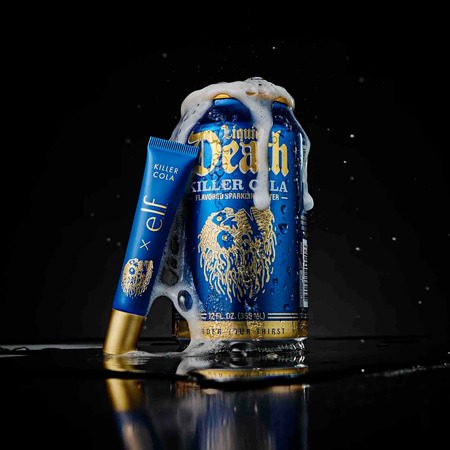
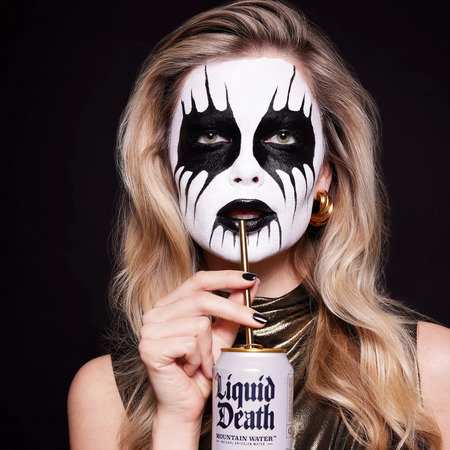
In addition, brand collaborations with other companies represent a significant communication channel. One example of this strategy is the partnership with brands such as e.l.f. Cosmetics, where joint products and advertising campaigns are developed. These integrations allow the brand to expand its audience reach by bringing together different communities and increasing the viral potential of its communication activities.
Liquid Death x e.l.f. cosmetics collaboration
Event marketing also occupies a significant place within the brand’s communication strategy. Liquid Death organizes various offline activities, including punk rock concerts, extreme sports events, and other experiences that reflect the brand’s identity and values. These activities serve both entertainment and promotional purposes, strengthening the emotional connection between consumers and the brand while creating additional points of contact with the audience.
Another important element of the communication system is the brand’s digital-first approach. Liquid Death relies on digital platforms as its primary promotional tool. The content is adapted to different platforms and formats, including both organic distribution and paid promotion. Limited-time campaigns, branded merchandise, and special product launches also play an important role, as they further stimulate audience engagement and encourage participation within the brand community.
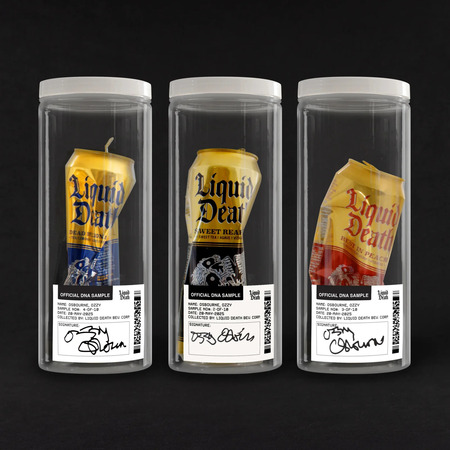
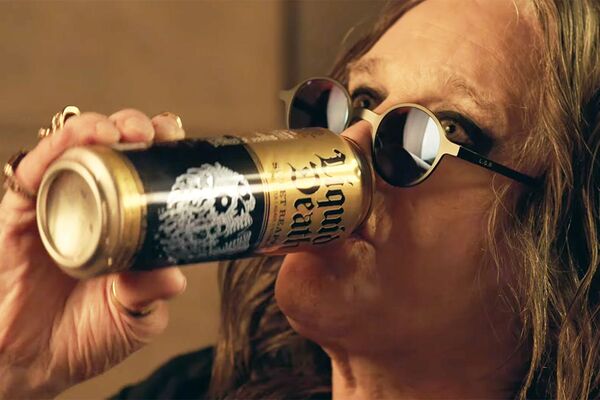
Liquid Death x Ozzy Osbourne collaboration
Overall, Liquid Death’s communication channels form an interconnected system in which social media, influencers, viral content, brand collaborations, and offline events reinforce one another. This combination of elements creates a consistent and easily recognised brand image, which helps the company maintain strong visibility and engagement across different audiences.
THEORY
Social Identity Theory. This theory was selected because it helps explain how a brand creates a sense of belonging to a particular group. The main idea of this approach is that individuals define themselves through affiliation with different social groups, adopting their values, symbols, and behavioral norms. According to Social Identity Theory, group membership becomes an important part of one’s self-concept and contributes to the formation of self-esteem.
Liquid Death does not simply sell water; rather, it offers an identity for people who are attracted to alternative culture, want to appear independent, and seek to avoid associations with conventional mainstream brands while maintaining a sober lifestyle. Through its communication strategy, the brand encourages consumers to identify themselves as members of a distinctive group that shares common values, aesthetics, and attitudes. This theory provides a useful framework for examining how Liquid Death builds a community around its brand and creates a clear distinction between its consumers and mainstream culture. In terms of Social Identity Theory, the brand relies on processes of social categorization and social identification, allowing consumers to perceive themselves as part of a unique in-group that differs from more traditional beverage consumers.
«Hey Kids, Murder Your Thirst» commercial
Framing Theory. Theory was chosen because it explains how the same information can be perceived differently depending on the way it is presented. Framing theory focuses on how particular frames shape our perception of reality by highlighting certain aspects of an object while neglecting others. As a result, audiences may evaluate the same product in different ways depending on the communicative context in which it is placed. In the case of Liquid Death, the company sells ordinary bottled water, but presents it within a highly unconventional frame. The product is communicated through heavy metal aesthetics, aggressive visual design, and packaging that resembles a beer can. Through this framing, the act of drinking water is transformed from an everyday behavior into a symbol of rebellion, individuality, and alternative culture.
This approach provides a useful framework for analysing how Liquid Death reconstructs the meaning of a basic consumer product. Rather than focusing on the functional characteristics of water itself, the brand shifts attention to the lifestyle, values, and cultural associations surrounding the product. Therefore, Framing Theory allows us to examine how Liquid Death reshapes consumers’ perceptions through alternative and provocative communication frames.
Narrative Paradigm. We chose this theory because it focuses on the power of storytelling and explains how narratives can shape attitudes toward a product more effectively than direct persuasive appeals. According to Fisher’s Narrative Paradigm, people are narrative beings who understand and experience reality through stories rather than through purely rational arguments. This approach views narration as the primary way of communicating meaning, where symbolic messages are conveyed through stories, characters, and conflicts instead of factual information alone.
This perspective is particularly relevant to Liquid Death. Almost every advertisement created by the brand functions as a small narrative involving demonic water, the «murder» of thirst, or a satirical battle against plastic pollution. Through these stories, the company rarely focuses on rational product attributes such as purity, ingredients, or quality. Instead, it communicates symbolic meanings and values through entertaining and memorable narratives. Applying the Narrative Paradigm allows us to examine how Liquid Death constructs its brand image through storytelling. It helps identify which narratives, symbols, and recurring themes are used to engage audiences and create a distinctive identity that consumers can easily recognize and remember.
Kylie Kelce x Liquid Death: «Kegs For Pregs» commercial