Rubricator
(1) General Theoretical Part (2) IZVOR: The Source of Cultural Memory (3) Visual Identity and Brand Touchpoints (4) Narrative and Belonging in IZVOR’s Communication Strategy (5) Bibliography and Image Credits

IZVOR: logo
(1) General Theoretical Part
Design is often perceived as a visual or aesthetic discipline. However, beyond beauty and form, it serves a more important function: communication. In branding, the sender of the message is the brand, and the recipient is the audience. The brand encodes meanings through colours, typography, symbols, images, materials, language and tone of communication, whilst the audience decodes these elements through their cultural experience and personal associations.
In this process, clothing functions as a communication medium through which cultural meanings are encoded and interpreted.
Fashion is a prime example of design as communication. Clothing not only serves a practical purpose but also conveys a person’s identity, values, sense of belonging and cultural stance. Through clothing, a person expresses not only their style but also the meanings and communities with which they identify.
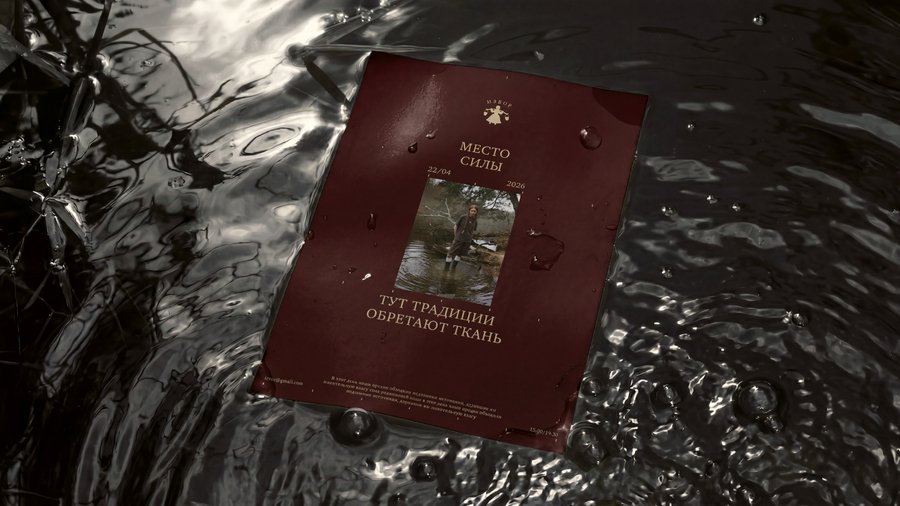
IZVOR: poster
Fashion functions as a visual language through which people express their identity and sense of belonging.
Two theories are key to analysing this type of communication.
The first is the narrative paradigm, which holds that people perceive the world through stories. Brands that use storytelling create a deeper emotional connection with their audience because they offer not just a product, but a world of meaning.
The second theory is the theory of optimal distinctiveness. It explains that people simultaneously want to be part of a community and retain their individuality. Fashion allows both these needs to be met: through clothing, one can belong to a particular culture whilst expressing one’s own uniqueness.
Brands that work with cultural heritage do not simply sell clothes. They create visual and symbolic systems through which the audience can reconnect with memory, tradition and cultural identity. IZVOR can be seen as a brand that transforms cultural memory into a contemporary visual form.
IZVOR: graphics system
IZVOR’s communication system is based on the principle of the origin: the main meaning of the brand is in the center — cultural memory, and all points of contact diverge from it. The logo, posters, packaging, tags, certificate and clothing work as separate elements of the same system, but each of them brings the audience back to the idea of roots, tradition and living heritage. All IZVOR speakers diverge from the same semantic source.
(2) IZVOR: The Source of Cultural Memory
IZVOR is a contemporary clothing brand that explores the connection between cultural heritage, memory and identity. The brand is designed for people who do not view clothing merely as an accessory or a trend. For IZVOR’s audience, clothing becomes a way to embody meaning and feel a connection to culture.
The brand’s positioning is expressed by the phrase: ‘We create fashion that preserves traditions and tells a story.’ This shows that IZVOR is built not only around clothing, but also around cultural communication. The brand translates traditional codes, symbols and memories into a contemporary visual form. The name IZVOR is associated with the image of a spring or a source. A spring is a place where underground water rises to the surface. In the same way, the brand brings to the surface cultural memory, traditions and meanings that may lie deep within a person or a community.
IZVOR presents tradition as a living source that can be reflected in contemporary clothing.
The brand’s mission is to preserve and reinterpret cultural codes, bringing them to life in contemporary clothing. IZVOR does not simply copy tradition, but adapts it through hand-printed designs, natural fabrics, symbolic imagery, original typography, posters and social media.
The brand’s values are engagement, cultural heritage, authenticity and unity. The brand invites its audience not simply to buy a product, but to become part of cultural history. Its communication is built around a sense of place, a connection to nature, roots and collective memory.
IZVOR’s target audience is young, conscious people aged 20 to 40. For them, it is not simply about ‘dressing well’, but about wearing meaning, feeling grounded in themselves and their culture, and being part of something deeper.
IZVOR: photo style
The brand’s tone of voice is enigmatic, respectful and poetic. The use of archaic words and the formal ‘you’ creates a sense of distance from conventional commercial discourse. IZVOR does not sound like a mass-market fashion brand. It does not shout or try to persuade aggressively, but invites you to listen, reminisce and feel.
IZVOR’s communication is designed not to inform, but to evoke reflection and emotional connection. Rather than encouraging immediate purchase, the brand invites the audience to engage with cultural memory, recognise familiar symbols and build a personal relationship with heritage.
(3) Visual Identity and Brand Touchpoints
IZVOR’s communication strategy is built around a system of visual and physical materials. This includes a T-shirt, posters, packaging, tags, a certificate, an envelope, a bag, stickers, business cards, a banner and Instagram graphics. All these elements function as a unified system and support a single idea: cultural memory can be expressed through contemporary fashion. Together, these touchpoints create a consistent communication environment in which every interaction reinforces the same cultural narrative and strengthens the audience’s connection with the brand.
IZVOR: merch, T-shirt
In the IZVOR system, a T-shirt is more than just an item of clothing. It functions as a wearable medium of communication: it brings the brand’s symbols, visual language and cultural narrative into everyday life. When someone puts on a T-shirt, they become part of the brand’s story.
Hand-printed designs emphasise the connection to craftsmanship, manual labour and authenticity. Natural fabrics reinforce a sense of closeness to nature and authenticity. In the IZVOR context, the material is not neutral — it too plays a part in creating meaning. Material, technique and form become part of the brand’s communication.
IZVOR: posters
The brand logo is inspired by the image of a grandmother with a yoke and the figure of a forest guardian. The grandmother carrying water symbolises the preservation of the source — not only as a source of water, but also as a source of tradition, memory and cultural heritage. The hooves evoke archaic images of forest spirits and reinforce the connection with the natural, primordial beginning. The custom typeface, with its breaks reminiscent of the movement of a quill, maintains a link with historical writing and the tradition of handwriting.
All IZVOR media share a common visual language and reinforce the idea of a living tradition.
IZVOR: the color system
The colour palette is based on natural shades: dark grey, deep brown-red, beige and muted olive. These colours evoke a sense of earth, water, fabric, wood and aged surfaces.
The posters serve not only as promotional materials. They create the brand’s world through short phrases, symbolic imagery and atmosphere. Packaging, tags, certificates and printed materials enhance the brand experience: the customer receives not just an item, but a part of a symbolic system.
IZVOR: city poster
(4) Narrative and Belonging in IZVOR’s Communication Strategy
IZVOR’s communication strategy is based on the idea that fashion can serve as a vehicle for cultural memory. The brand does not rely on direct commercial persuasion, nor does it build its communication solely around trends or the product itself. Instead, it creates a symbolic narrative centred on origins, roots, nature, tradition and a sense of belonging.
In communication terms, IZVOR acts as the sender, while culturally conscious young adults constitute the receiver. The brand encodes meanings related to memory, heritage and belonging through visual symbols, language and material choices. These meanings are then decoded by the audience through their own cultural experience and personal associations.
From the perspective of the narrative paradigm, IZVOR functions as a story. The brand’s central image is the spring. It refers both to water rising from the depths of the earth and, at the same time, to cultural memory that comes to the surface through clothing, symbols and visual materials.
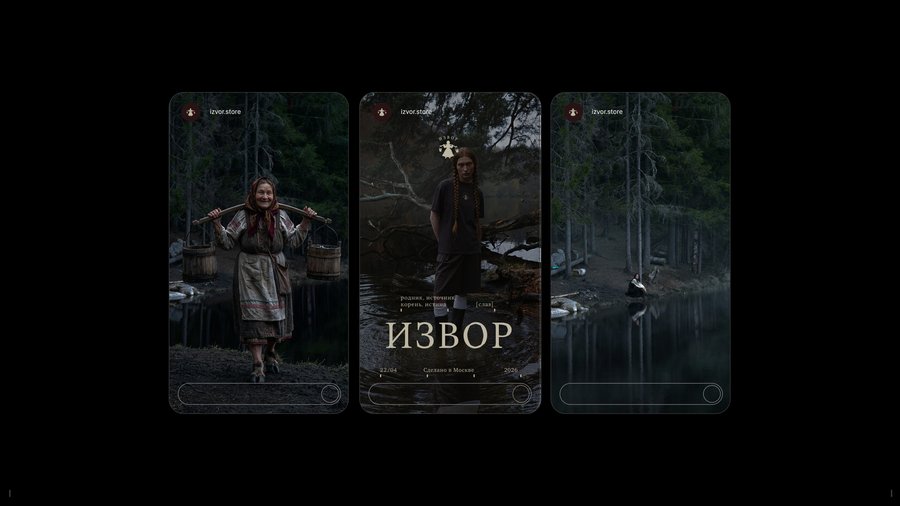

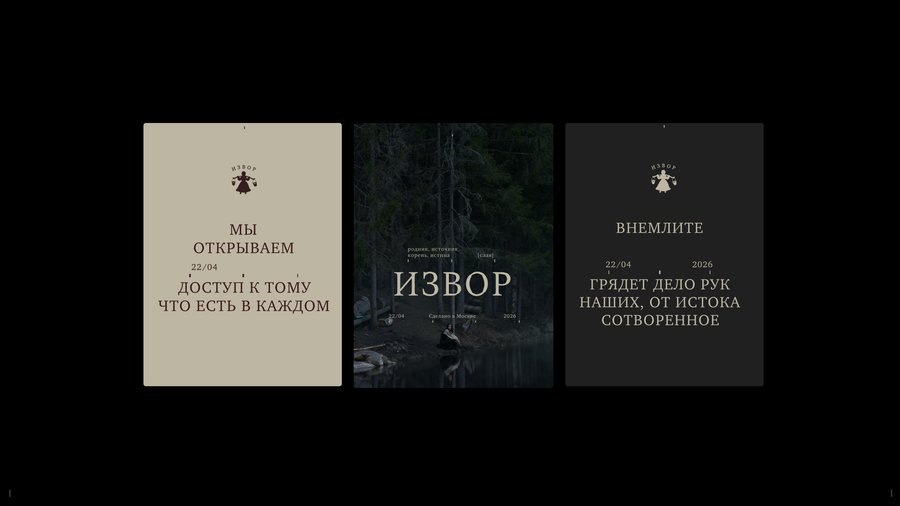
IZVOR: social media communication
The metaphor of the source unites the brand’s name, logo, visuals, language and products. IZVOR’s visual communication is built around recurring symbols. Water signifies origin and continuity. The forest represents hidden knowledge, mystery and a connection with nature. The grandmother symbolises memory and the passing on of experience between generations. Hand-printed fabric signifies craftsmanship and authenticity. Natural fabric conveys a closeness to the earth and the honesty of the material.
The brand’s language also supports this narrative. Archaic words, a mysterious tone and the use of the formal ‘you’ create a sense of a ritual space. The audience is not perceived as a passive buyer. They are invited to listen, remember and participate.