«Man’s best friend is the dog—everyone knows that!» © Short film «Bobik Visits Barbosa.»
They say it’s true: «Choose a friend slowly, and change them even slower.» We understand that this applies completely to our four-legged companions. Therefore, I decided to gather some information on currently popular dog breeds and attempt to analyze and visualize it using the new knowledge gained in this course.
VISUALIZATION
To enhance the clarity of the analysis results when constructing diagrams, a unified color scheme was employed. The colors were selected to ensure good graph readability and the visual emphasis of key elements. • Main column color → #e1a26a • Accent / scatter → #97533d • Keep background white
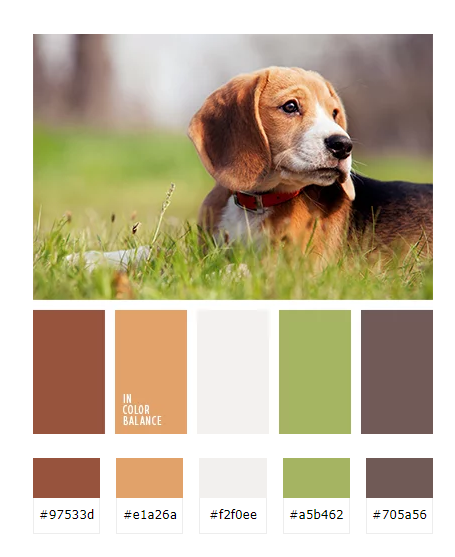
Warm reddish-brown shades harmonize well with green and gray. The color palette was developed using the resources available on IN COLOR BALANCE (https://color.romanuke.com/).
The dataset used in this project contains information on the breed name, country of origin, lifespan, height, coat and eye color, characteristic traits, and typical health issues for each breed.
The data in dog_breeds.csv (117 dog breeds, physical and health characteristics, a total of 8 features) was sourced from https://www.kaggle.com. The problem with the dataset is that the numerical data is specified as ranges («10-15»). The solution is to take the mean value of the range.
VERTICAL BAR CHART
Life Expectancy Histogram
Conclusion: Most dog breeds live an average of 10 to 14 years, as indicated by the concentration of values in this range.
DEPENDENCY DIAGRAM
Life Expectancy Correlated with Dog Size.
Conclusion: There is a tendency that larger breeds, on average, live shorter lives than smaller and medium-sized dogs.
HORIZONTAL BAR CHART
Next, we will list data on the most common illnesses in different dog breeds. Visualizing this data in a bar chart allows for a quick determination of which diseases are most typical for dogs overall, without needing to study each breed individually.
Incidence of diseases across various dog breeds.
Conclusion: Analysis of disease frequency across different dog breeds revealed the most common health issues:
• Dental problems; • Skin allergies; • Vision issues; • Hip dysplasia; • Eye diseases.
Less common, but significant diseases include heart conditions, respiratory problems, epilepsy, and bladder stones. The results indicate that: most problems relate to the musculoskeletal system, skin, and sensory organs; joint dysplasia is particularly characteristic of large breeds; and frequent dental and skin issues underscore the importance of preventive care.
CIRCULAR DIAGRAM
The diagram is constructed using an extended color scheme that incorporates adjacent shades of the same colors. Initial palette: browns $\rightarrow$ sand $\rightarrow$ olive $\rightarrow$ gray. Ten colors correspond to the ten most common character traits from the entire list.
Percentage distribution of the most common characteristic traits across different dog breeds.
WORD CLOUD
The word cloud visually displays the most frequently occurring character traits: • The size of the word reflects its frequency of mention; • Colors are used for visual variety.
Compiled from the most frequently observed characteristics of dog breeds.