Данный проект является учебной работой студента Школы дизайна или исследовательской работой преподавателя Школы дизайна. Данный проект не является коммерческим и служит образовательным целям
Проект принимает участие в конкурсе

Contents

(01)     About the brand

(02)     Communication Channels

(03)     Theoretical framework

(04)     Analysis

(05)     Conclusion & Recomendations

(01)     About the brand

→     Bushe doesn’t sell bread — it sells a lifestyle
post

The foundation of all Bushe communications is expressed in the philosophy «The Real Thing». This formula reflects the brand’s desire to speak not about external success, but about the value of genuine emotions, high-quality products, and lively human interaction. Bushe’s communications are virtually free of aggressive marketing or status shaming. Instead, the brand speaks of simple things:

• fresh bread; • family breakfasts; • gatherings with friends; • urban everyday life; • attentive attitude toward people.

This approach allows the company to occupy a unique position in the market. Bushe sells not so much a product as a feeling of comfort and belonging to the urban environment.

→     St. Petersburg as part of the brand
Исходный размер 1600x1067

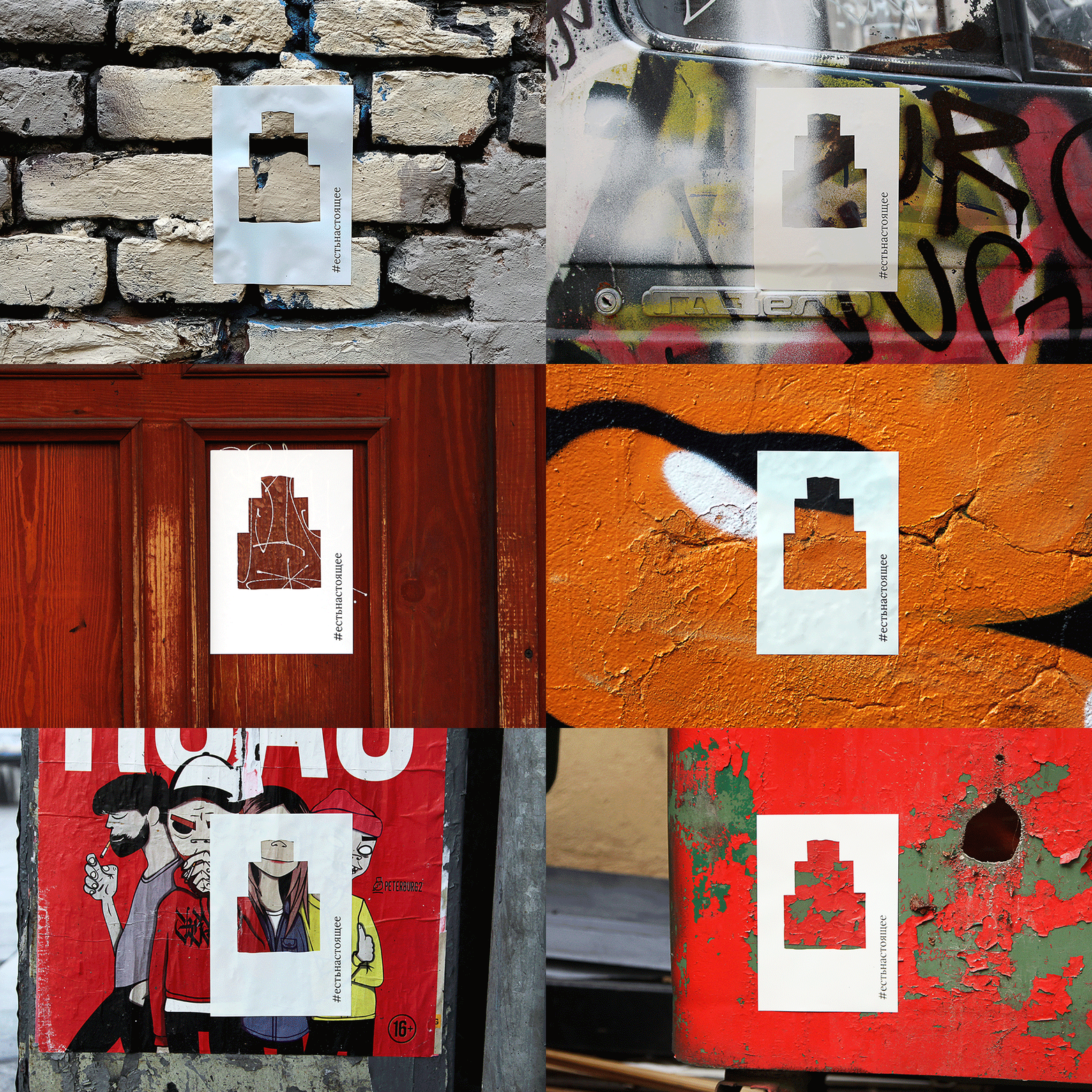
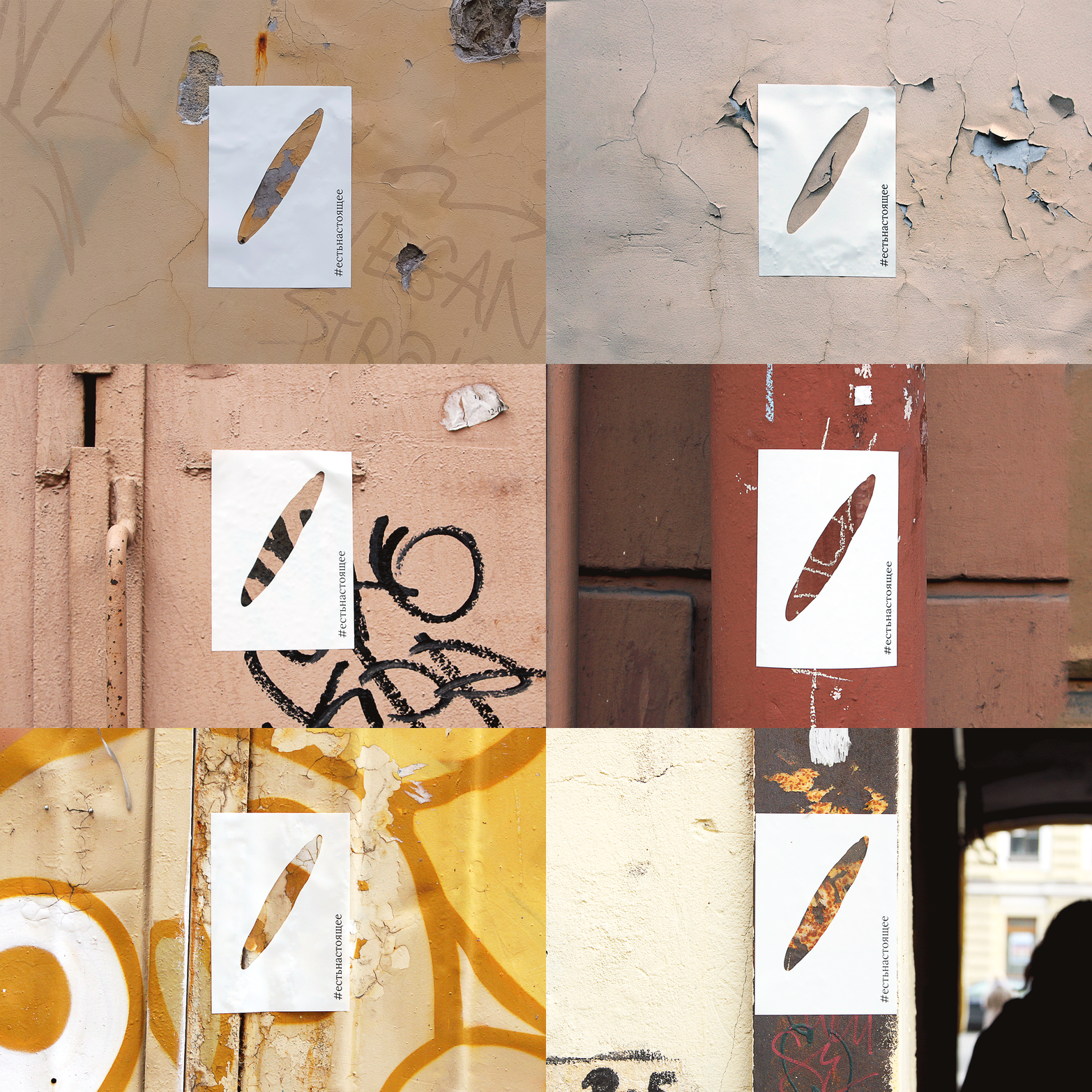
Laconic identity based on urban textures. Stencil graphics

post

One of the key features of the brand’s communications strategy is its close connection to the culture of St. Petersburg. Over the years, Bushe has become as recognizable a symbol of the city as its architecture, weather, and unique atmosphere. The brand makes excellent use of photo and video content, imbuing the media with the city’s atmosphere and the warmth of human relationships. This connection is also evident in all elements of the corporate identity:

• muted color palette; • use of urban textures; • minimalist typography; • visual references to street art; • coffee shop design.
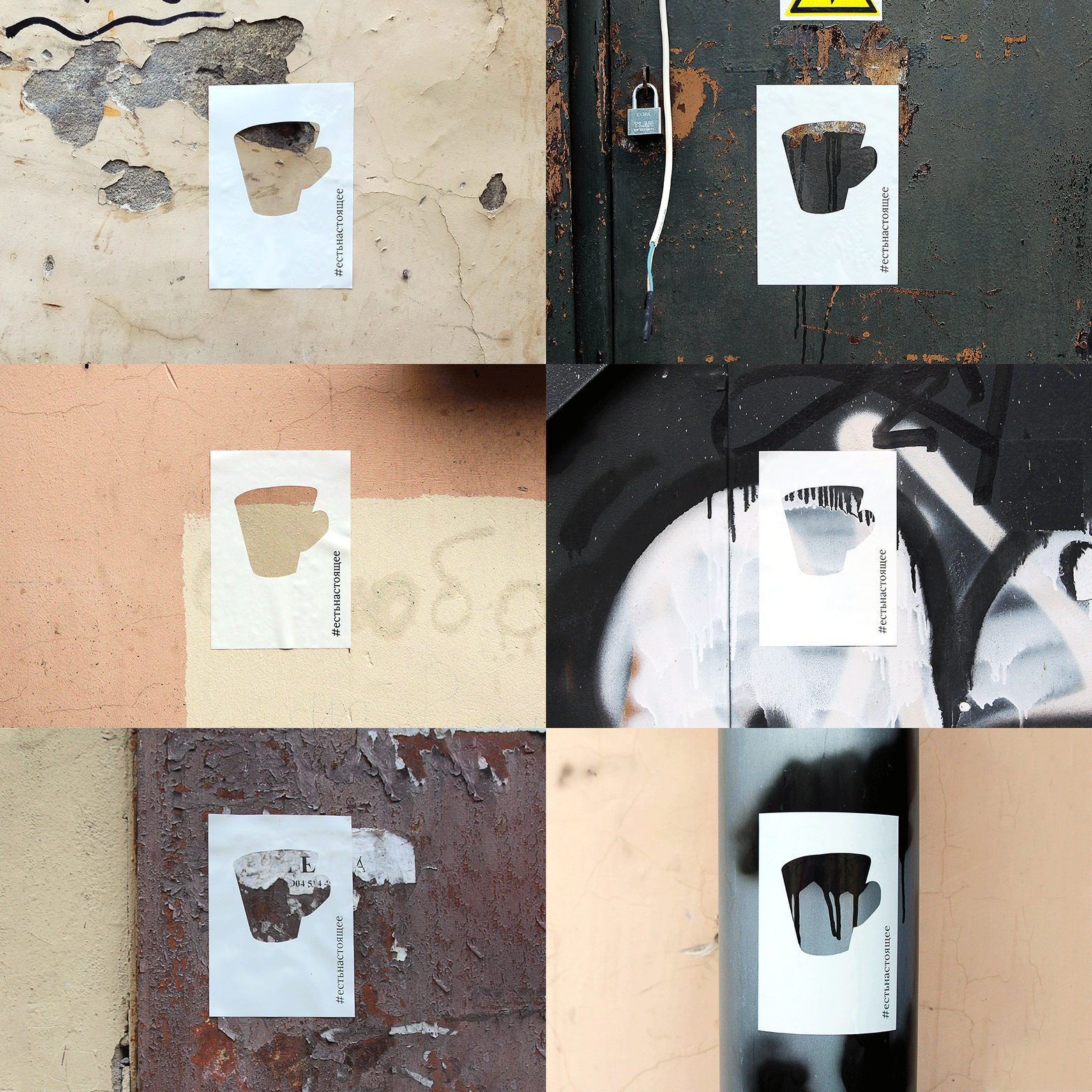
The principle of searching for textures for corporate identity elements

Unlike many chain establishments striving for universality, Bushe emphasizes its local identity. This allows the brand to be perceived as a natural and integral part of the city, rather than simply a commercial chain.

→     The story the brand tells
post

From a communication theory perspective, Bushe uses a storytelling strategy. The brand constantly tells the same story to its audience, but through different formats and channels.

This story goes something like this:

«Real life is made up of small joys: morning coffee, fresh bread, strolls around the city, and gatherings with loved ones»

Исходный размер 4993x2108

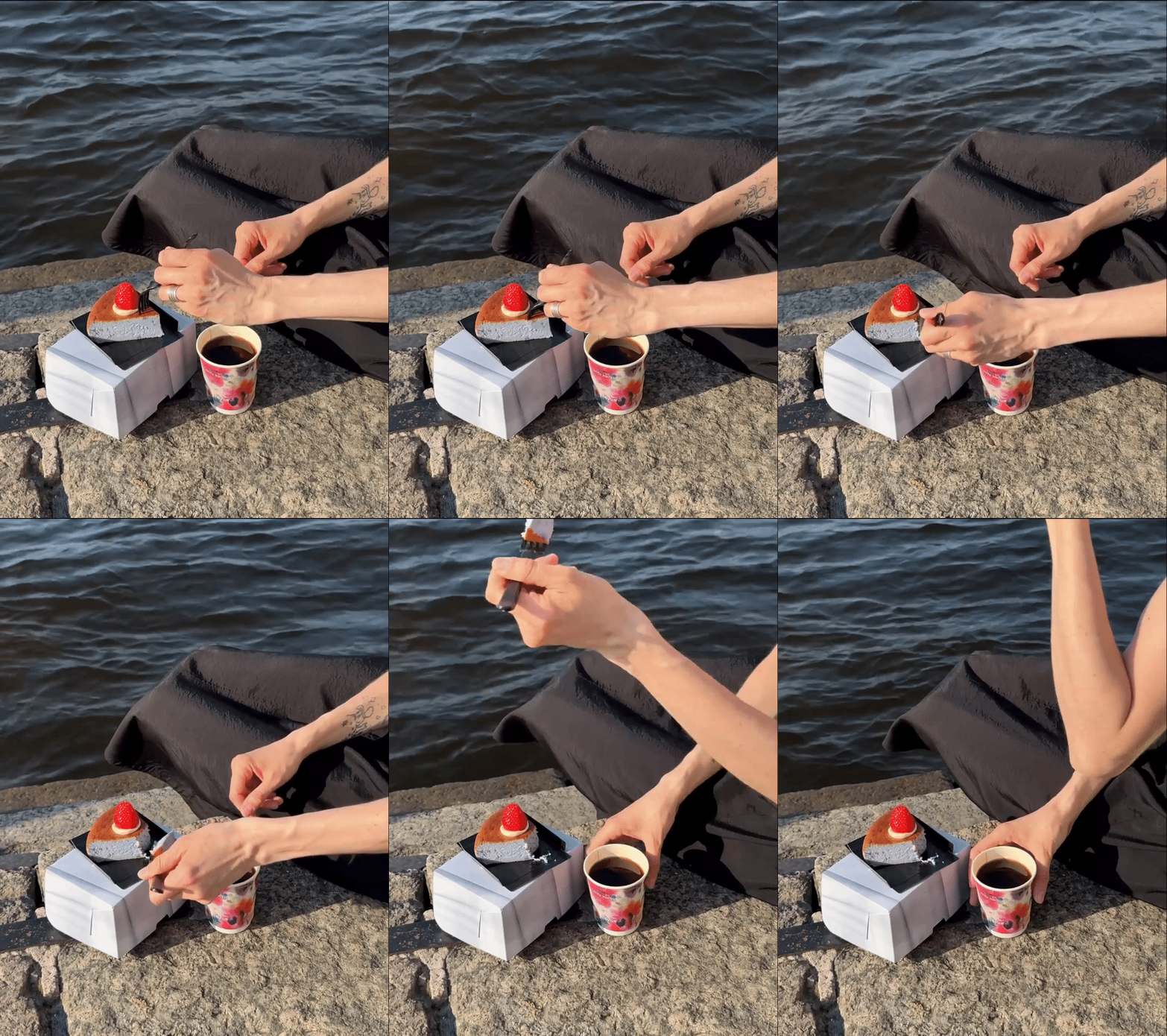
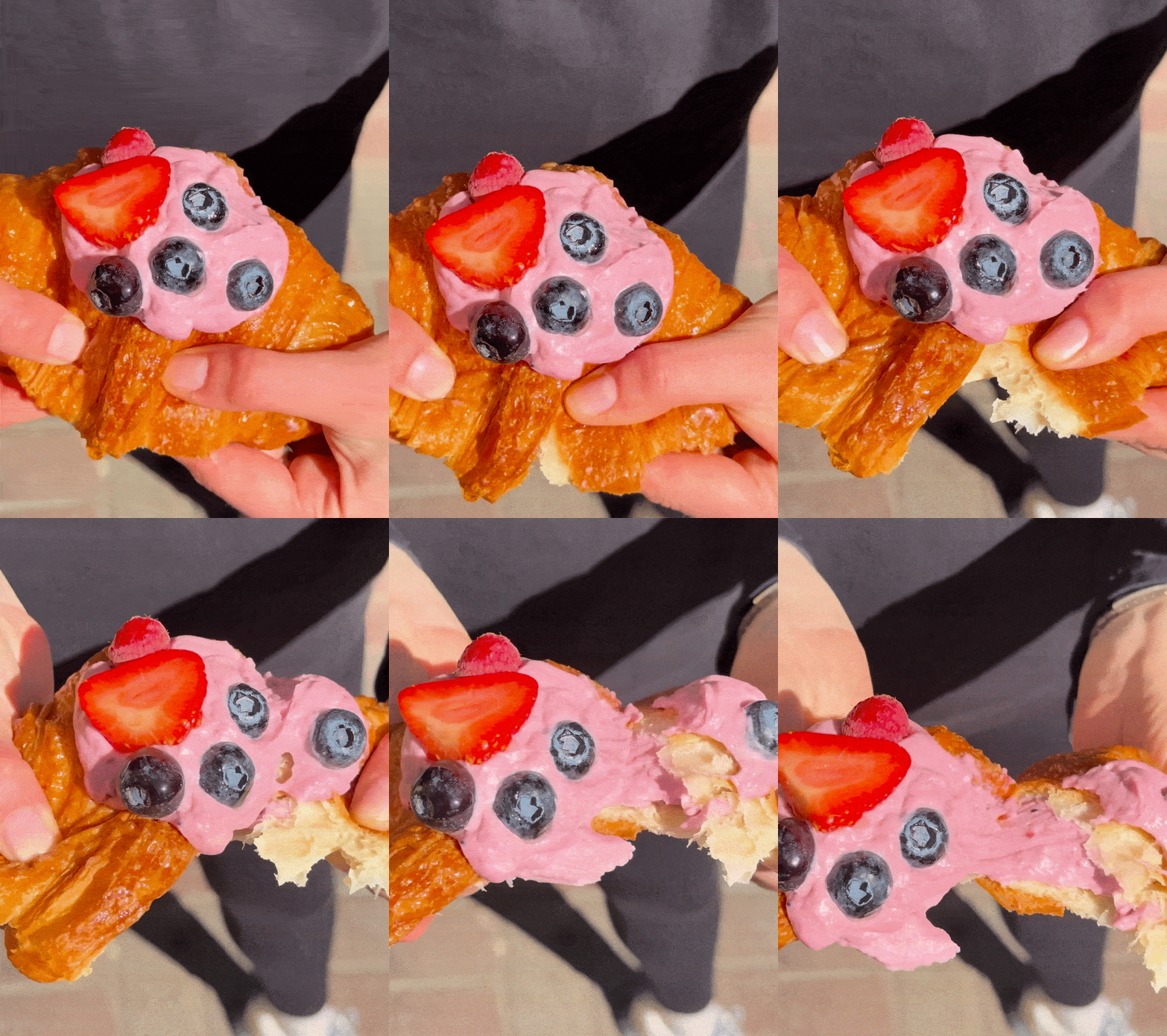
Delicious images of Bushe products on social media

post

That’s why Bushe’s communications rarely focus exclusively on the product. Instead, the brand depicts situations in which the product becomes part of everyday life. This approach creates an emotional connection with the audience and makes the brand recognizable visually and at the value level.

→     Visitor impressions

Исходный размер 4992x2110

The aesthetics of comfort and human warmth in the brand’s media content

Particularly interesting brand messages are those that reflect how actual guests perceive it. Review analysis reveals that you use consistent, recurring words like «cozy», «atmospheric», «beautiful», «pleasant» and «stylish».

post

Many visitors consider the chain’s bakeries their favorite places for breakfast, work, or relaxation. They perceive Bushe as part of their daily itinerary and a kind of urban routine. This is especially important for assessing the effectiveness of a communications strategy: audiences embody the very meanings that the brand is trying to convey, meaning the brand’s communications are truly effective.

→     The phenomenon of brand community

One of the hallmarks of a strong brand is the emergence of a community of fans around it. Bushe users even create their own informal terms for brand fans. For example, one review uses the humorous term «bushebolnye», demonstrating a high level of emotional engagement.

→     More than a bakery

At first glance, Bushe is a typical bakery and coffee shop chain. However, over more than twenty-five years of existence, the brand has expanded far beyond the food service industry and become a full-fledged part of St. Petersburg’s urban culture. Today, Bushe is associated not only with bread, coffee, or the famous raspberry monograms, but also with a certain way of life: measured, aesthetically pleasing, attentive to detail, and evoking the historical atmosphere of modern St. Petersburg.

The brand’s communications strategy is built around the idea that everyday life can be beautiful and meaningful. This is why Bushe’s analysis is interesting not only from a marketing perspective but also as an example of how local businesses shape a city’s cultural identity.

Исходный размер 2756x1075

Bushe’s interaction with cultural institutions in Saint Petersburg

(02)     Communication Channels

Bushe uses a combination of digital platforms to maintain communication with its audience. Each channel serves a different purpose, from providing information and promoting products to building engagement and strengthening customer loyalty. Together, these channels create a consistent brand image and support Bushe’s positioning as a modern lifestyle brand.

Website — information about the company, menu, locations, online ordering, and brand values

Instagram — visual communication through photos and videos

TikTok — trends, product promotion, and audience engagement through entertaining content

VK — product photos, company news, promotional campaigns, event announcements, and other media projects

Telegram — updates, news, new product launches, and reposts of content published on VK

Mobile Application — online ordering, loyalty program, personalized offers and customer retention

Исходный размер 4982x2104

The brand’s sincere and friendly communication on social media

Bushe’s key PR strategy is based on positioning the brand as a cultural and lifestyle symbol of Saint Petersburg rather than simply a bakery chain. Through storytelling, visual identity, collaborations with artists, and active communication across digital platforms, the brand promotes values of authenticity, comfort, creativity, and appreciation of everyday moments. Instead of focusing solely on products, Bushe builds emotional connections with its audience by integrating itself into the city’s cultural life and creating a strong sense of community around the brand.

(03)     Theoretical framework

This analysis applies two communication theories to evaluate Bushe brand communication:

— Semiotic Tradition (Robert Craig) — Socio-Cultural Tradition (Robert Craig)

These theories were selected because «Буше» does not rely on traditional advertising or direct persuasion. Instead, the brand communicates through visual signs embedded in urban culture and reproduces the social identity of St. Petersburg. This combination of symbolic meaning-making and cultural rootedness is rare in the HoReCa industry.

→     Semiotic Tradition — Robert Craig

According to Craig (1999), in the semiotic tradition, «communication is typically theorized as intersubjective mediation by signs». This means that people cannot directly transmit their thoughts and feelings to one another — there is always a certain «gap» between them that can only be bridged through shared signs, such as words, images, gestures, or visual codes. This is why Craig (1999) describes communication problems as «gaps between subjectivities that can be bridged, if only imperfectly, by the use of shared systems of signs». In other words, we can never be completely sure that we have been understood correctly, but a shared system of signs allows us to convey meaning at least approximately. Within this approach, meaning is never stated directly but is always encoded in signs and symbols, and the task of the audience is to decode these signs in order to grasp the message.

→     Socio-Cultural Tradition — Robert Craig

According to Craig (1999), the socio-cultural tradition focuses on «context, culture, and social practices». This means that communication here is understood not as a simple transfer of information from one person to another, but as a process that always occurs within a specific culture and depends on the social context. People do not communicate in a vacuum — their interaction is rooted in concrete everyday practices, norms, and shared meanings. This is why Craig (1999) describes communication in this tradition as a symbolic process that produces and reproduces shared sociocultural patterns. In simple terms, through everyday communication, people not only use existing cultural codes but also constantly recreate them, thereby maintaining social order.

(04)     Analysis

Исходный размер 3331x2105

The interaction of a corporate identity with the city’s environment of Saint Petersburg

post

I. SEMIOTIC TRADITION

The semiotic tradition understands communication as the exchange of meaning through signs and symbols. Meaning is never stated directly but is encoded in visual elements, and the task of the audience is to decode these signs in order to grasp the message. For «Буше», the central sign system is the visual language of St. Petersburg: urban textures, a muted palette, and street art motifs.

Example 1: Urban Textures as Signs of Authenticity

An outdoor ad for Bushe is shaped like a bread loaf and hung on a rough brick wall. This creates double encoding: the bread shape refers to the product, while the wall represents the city’s raw, unpolished texture (like old St. Petersburg). The brand says: «Our food is as real as this city.» For locals familiar with peeling plaster and industrial courtyards, the design signals authenticity — not a glossy import or global chain. Without conscious analysis, they simply feel that Bywe is familiar and genuine, thanks to a cultural code.

Исходный размер 3331x2105

A perfect match of identity and city’s atmosphere

Example 2: Street Art and Urban Textures as Symbols of Rebellion

The Bushe packaging uses street art textures — old plaster, graffiti, traces of time — as visual language. In St. Petersburg, street art is a symbol of the 1980s–1990s, when graffiti became the voice of unofficial culture, honesty, and rejection of official gloss. By using these codes, the brand says: «We are real. We are part of this city, its history, its texture» The consumer doesn’t analyze — they simply feel authenticity. The packaging is not «perfect»; it is as alive as Petersburg itself. This is semiotic communication: the signs speak for themselves.

II. SOCIO-CULTURAL TRADITION

According to Craig (1999), the socio-cultural tradition focuses on «context, culture, and social practices». Communication is not just the transfer of information. It always takes place within a specific culture and depends on the social context.

Example: The slogan «There is the real»

The Bushe slogan «There is the real» appears on cups, packaging, and posters. It emphasizes content over external gloss. In St. Petersburg, «the real» means honest, textured, imperfect — the opposite of pretentious. In another city, this cultural code wouldn’t work. Each time a resident sees it, they think: «I am for the real. I belong here»

(05)     Conclusion & Recomendations

The analysis shows that Bushe communication is organically embedded in the cultural code of St. Petersburg and the everyday practices of its residents. Through visual signs taken from the urban environment, the brand conveys the values of authenticity, honesty, and rejection of external gloss — values that resonate with the local audience. The slogan «There is the real», present on all brand touchpoints, becomes a marker of belonging to the city and its identity.

The brand’s strategy is theoretically grounded and practically effective, but further development requires a strategic choice. If Bushe plans to enter new markets, it needs to understand new cultural codes and adapt its communication to each city. If, however, the brand wants to remain a St. Petersburg brand and strengthen its position in its home city, it should do so through new approaches — for example, through collaborations with contemporary St. Petersburg artists, street festivals, or temporary art installations that would embed the brand even deeper into the urban fabric.

→     An image video with brand identity that promotes the values of Bushe

Loading...
Библиография
1.

Craig, R. T. (1999). Communication theory as a field. Communication Theory, 9(2), 119–161 (Accessed: 13 June 2026).

2.

Suprematika. (n.d.). «Есть настоящее» — айдентика для сети Буше. Retrieved from https://suprematika.ru (Accessed: 13 June 2026).

Источники изображений
1.

https://suprematika.ru/portfolio/bushe/ (Accessed: 13 June 2026).

2.

https://bushe.ru/ (Accessed: 13 June 2026).

3.

https://vk.com/bushe.bakery (Accessed: 13 June 2026).