INDEX
— Index — Concept — CHAPTER 1. Sharp Corners and the Geometry of Chaos (Psychological Deformation) — CHAPTER 2. Plasticity and the Organics of the «Living» City (Mystical Space) — CHAPTER 3. Gothic Verticality and the Labyrinths of Rock (Medieval Fatalism) — CHAPTER 4. Monumental Gigantism and the Geometry of Urbanism (Technogenic Constructivism) — Conclusion — Filmography — Bibliography — Image Sources
CONCEPT
This visual study examines landmark films such as The Cabinet of Dr. Caligari (1920, dir. Robert Wiene), The Golem: How He Came into the World (1920, dir. Paul Wegener), Nosferatu, a Symphony of Horror (1922, dir. F.W. Murnau), and Metropolis (1927, dir. Fritz Lang). Through these works, one can most diversely analyze the connection between the spatial solutions of early cinema and the psychological state of the characters on screen, as well as the evolution of architectural motifs. These films represent pivotal points in the history of global cinematic language during the first third of the 20th century, reflecting the social upheaval of the era, the crisis of humanism following World War I, and a profound anxiety facing a changing world. Studying the trends in their visual language reveals how filmmakers abandoned flat theatrical sets in favor of creating complex, emotionally charged architectural environments.In the 1920s, the cinema of each of these masters acquired a new spatial symbolism that formed the basis of a renewed concept of life within the frame. Elements of a unique visual style emerge from the reinterpretation of classical painting, Gothic tradition, Expressionism, and the nascent Constructivism. This style directly challenges realistic depictions of reality. The space on screen ceases to be mere background for the actors; it transforms into a complete dramaturgical tool that transmits themes of fate, madness, urban pressure, and fatalism.
The following hypothesis was proposed:
The architectural forms and spatial geometry in early German cinema are not merely decorative staging—they are a visual equivalent of the characters' psychological state. Directors employ spatial archetypes to materialize on screen the collective fears, identity crises, and alienation of humanity in the post-war world.
It is important to consider the following aspects:Spatial Shift and Deformation: An analysis of how the distortion of familiar line geometry translates the characters' inner chaos and madness. Organic Architecture and Plasticity: An investigation of handcrafted, «living» clay spaces as a symbol of a mystical and pre-technological world. Gothic Verticals and Enclosure: A study of pointed arches, narrow openings, and staircases as markers of a fatal trap and medieval fear. Scale and the Geometry of Urbanism: An analysis of the overwhelming verticals of a future metropolis, where architecture becomes a symbol of social segregation and mechanical dehumanization.
To confirm or refute this hypothesis, it was decided to gather and analyze information from various art historical articles, film history materials, and critically acclaimed film studies websites. In this visual study, the key question is addressed: How did perspectives on the organization of screen space change among German cinema masters in the 1920s, and does the move away from realistic architecture toward graphic, Gothic, and monumental deformations represent a radical method for visualizing the inner traumas of a society that has lost its former values? In an effort to answer this, I studied research materials and articles on the history of film styles, as well as compiling a mass of shots from key films of the period.
CHAPTER 1. Sharp Angles and the Geometry of Chaos
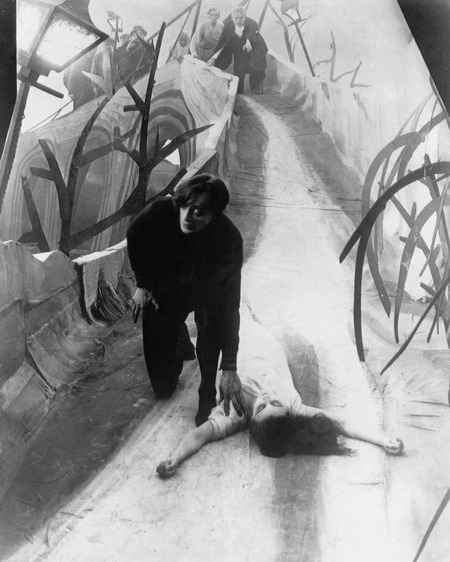
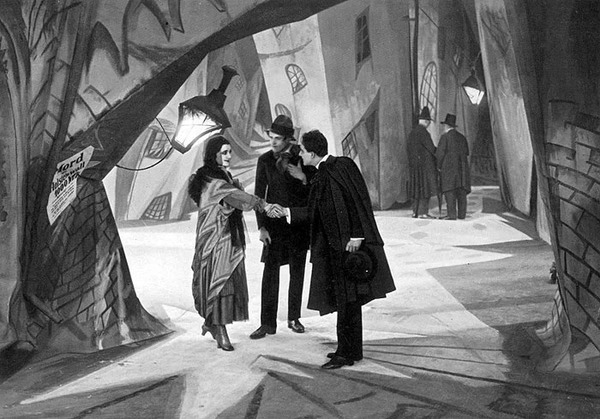
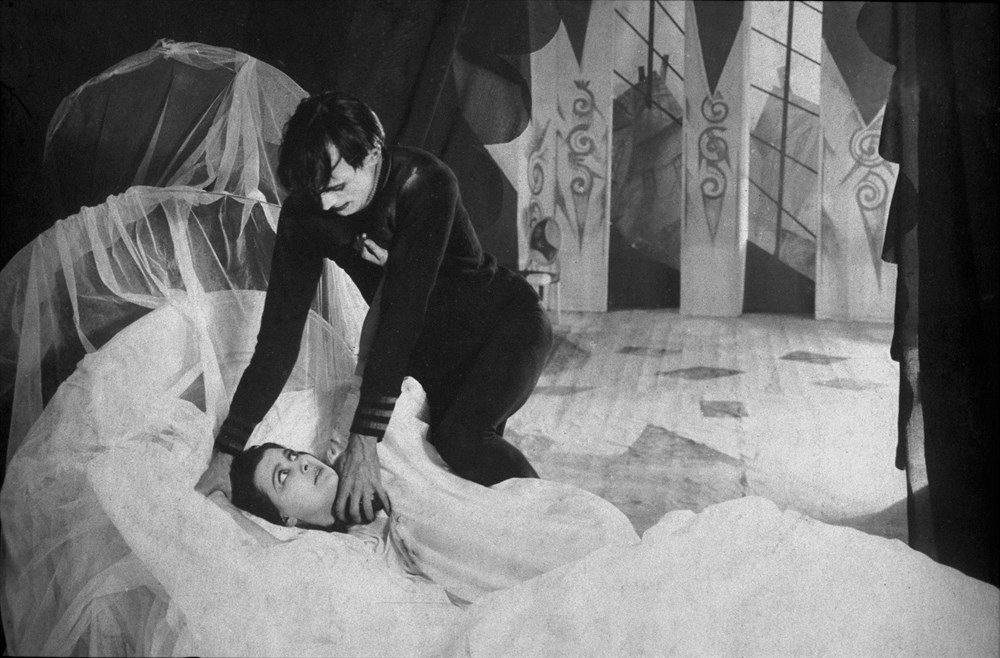
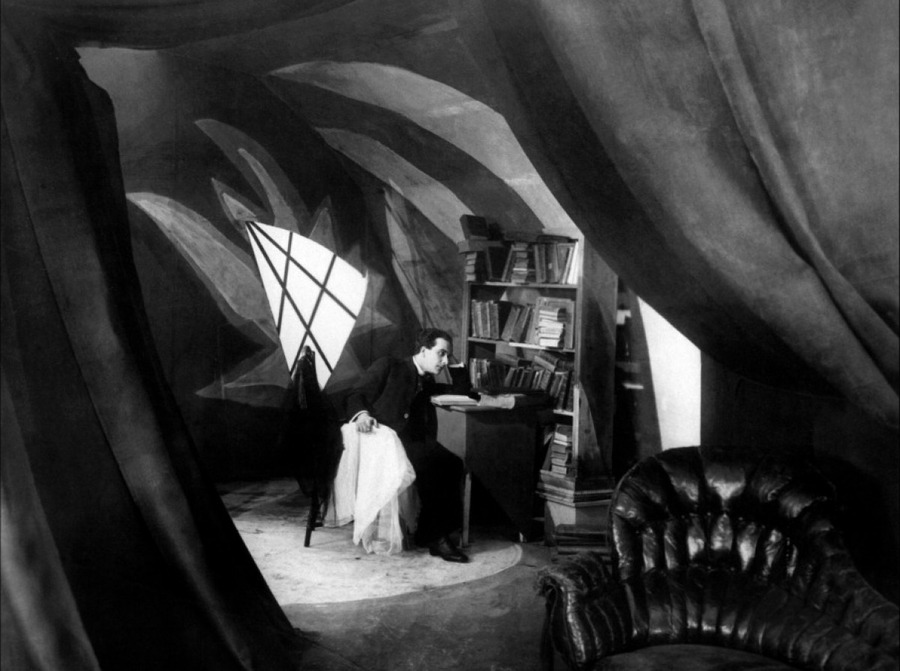
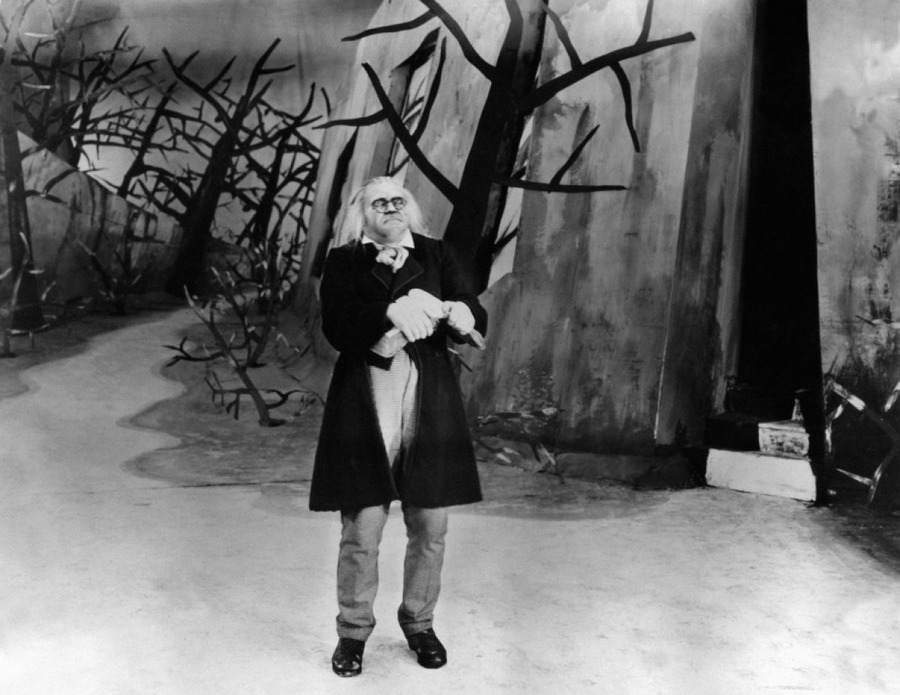
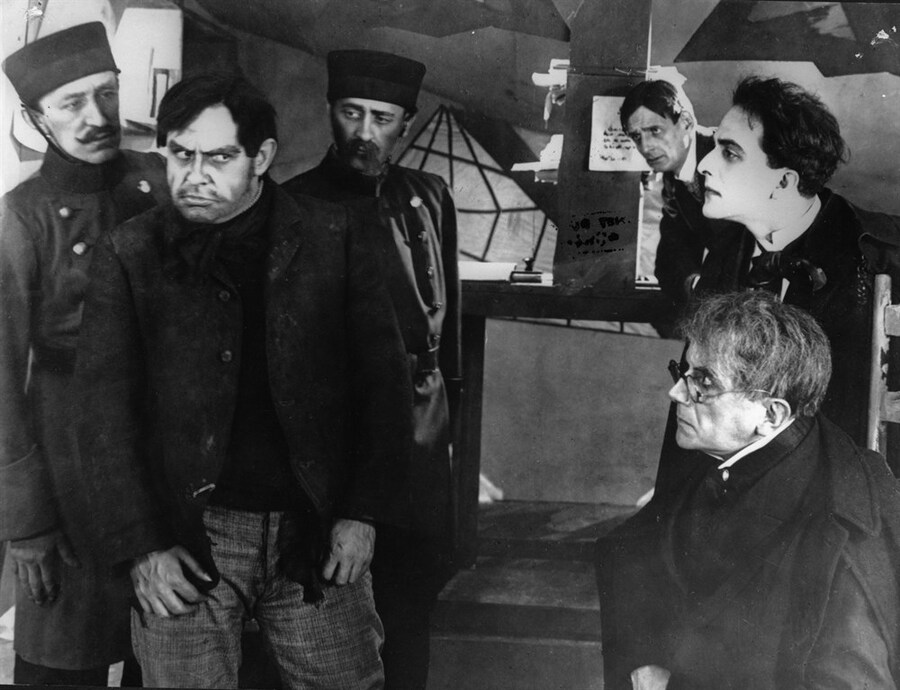
In these frames, the lead compositional technique of the production designers is clearly visible—the rejection of the principle of linear perspective. The walls of the houses are intentionally narrowing upwards and collapsing inward into the frame. The viewer sees fractured, sharp angles in the set design, which literally «press down» on the street space. Here, architecture ceases to be a passive backdrop and begins to actively threaten the human figure, transmitting chaos and discomfort.
«Dr. Caligari’s Office» // 1920 // Dir. Robert Wiene
«Caligari’s Cabinet» // 1920 // Dir. Robert Wiene
CHAPTER 2. Form and Organicism of the Living City. Mystical Space
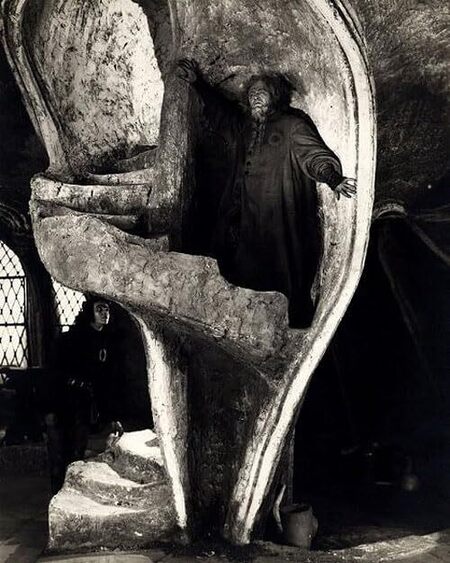
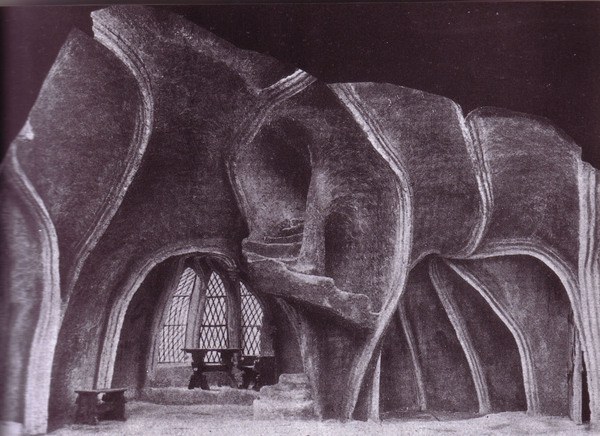
Stills from the film «Golem: How He Came Into the World”//1920// Dir. Paul Wegener
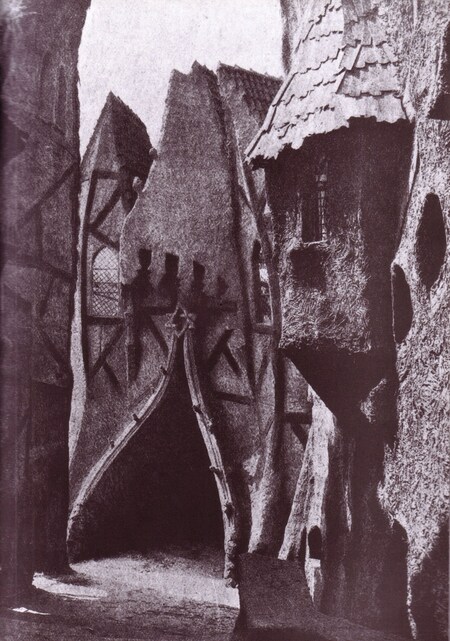
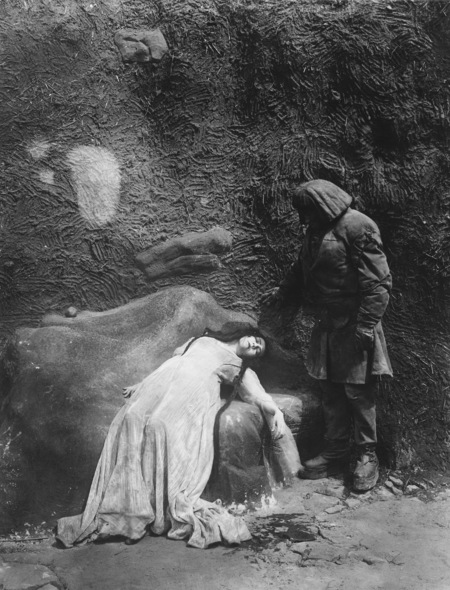
Film stills from «Golem: How He Came to the World» // 1920 // Directed by Paul Wegener
CHAPTER 3
Frame from the film «Nosferatu, Symphony of Horror» // 1922 // Dir. F.W. Murnau
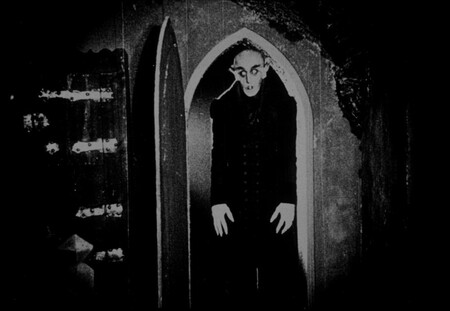
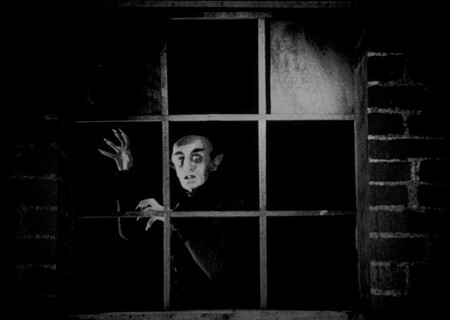
1, 2 — Stills from the film «Nosferatu, Symphony of Horror» // 1922 // Dir. Friedrich Wilhelm Murnau
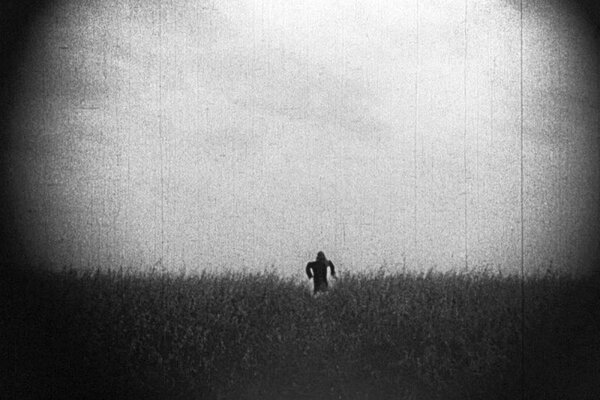
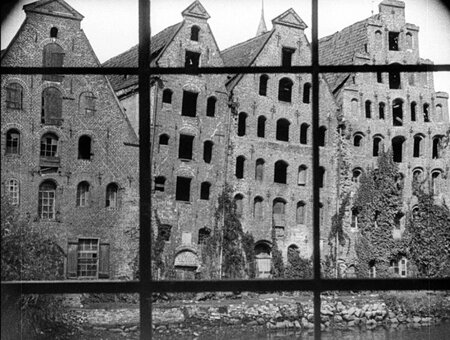
1, 2 — Stills from the film «Nosferatu, a Symphony of Horror» // 1922 // Dir. Friedrich Wilhelm Murnau
Frame from the film «Nosferatu, a Symphony of Horror» // 1922 // Dir. Friedrich Wilhelm Murnau
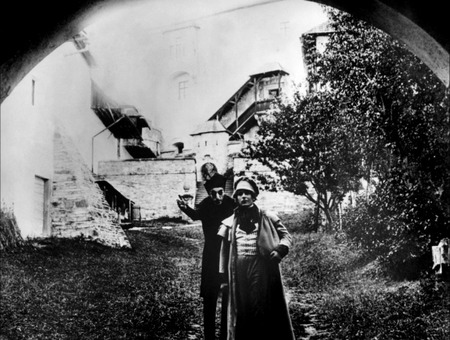
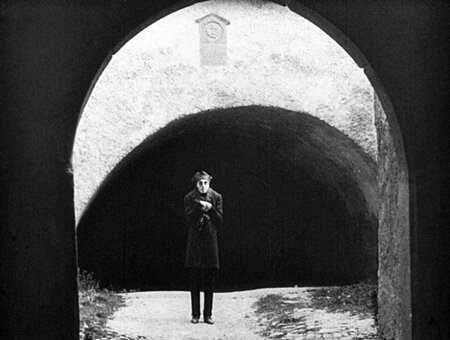
1, 2 — stills from the film «Nosferatu, a Symphony of Horror» // 1922 // dir. F. W. Murnau
CHAPTER 4. Monumental Gigantism and the Geometry of Urbanism
Still from the film Metropolis // 1927 // Dir. Fritz Lang
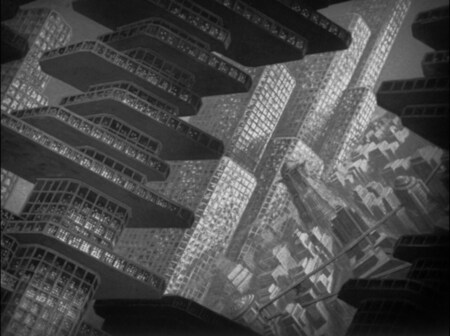
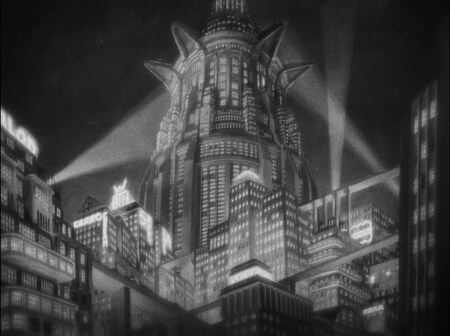
1,2 — Stills from the film «Metropolis» // 1927 // Dir. Fritz Lang
Frame from the film Metropolis // 1927 // directed by Fritz Lang
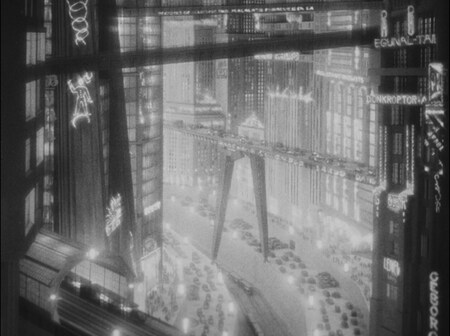
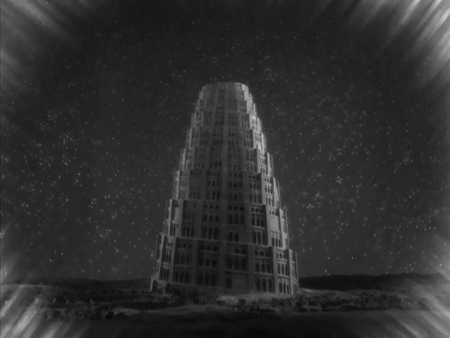
1, 2 — Stills from the film Metropolis // 1927 // Directed by Fritz Lang
Ermisheva Margarita Nikolaevna, Muradova Nadezhda Aleksandrovna, Chudinov Alexey Konstantinovich. ARCHITECTURE AND MUSIC IN CINEMA: STRATEGIES AND MEANS OF MEDIA TEXT ENGAGEMENT // Culture and Education: Scientific and Informational Journal of Universities of Culture and Arts. 2020. No. 2 (37). URL: https://cyberleninka.ru/article/n/arhitektura-i-muzyka-v-kin… (Accessed: 09.11.2026).
Ivanov Alexander Olegovich. Architectural Fantasies in the Work of German Expressionist Artists and Architects // Manuscript. 2017. No. 11 (85). URL: https://cyberleninka.ru/article/n/arhitekturnye-fantazii-v-t… (Accessed: 09.11.2026).
Maevskaya Marianna Evgenyevna. Skyscrapers in Literature, Cinema, and Mass Culture of Modern Times // Vestnik of the Udmurt University. Series «History and Philology». 2018. No. 5. URL: https://cyberleninka.ru/article/n/neboskreby-v-literature-ki… (Accessed: 09.11.2026).
Radaeva E. A. CULTURE THROUGH THE LENS OF EXPRESSIONIST TRADITIONS IN 20TH–21ST CENTURY CINEMA (THE IMAGE OF Golem) // Izvestiya of the Samara Scientific Center of the Russian Academy of Sciences. Social, Humanitarian, and Biomedicine Sciences. 2021. No. 79-2. URL: https://cyberleninka.ru/article/n/kultura-skvoz-prizmu-ekspr… (Accessed: 09.11.2026).
Salnikova Ekaterina Viktorovna. Urban Space and Narrative in the Film «The Cabinet of Dr. Caligari» // Television Science. 2020. No. 16.2. URL: https://cyberleninka.ru/article/n/prostranstvo-goroda-i-povestvovaniya-v-filme-kabinet-doktora-kaligri (Accessed: 09.11.2026).
Sklyarova Yana Alekseevna. Traditions of German Film Expressionism in American Film Noir of the 1940s–1950s // Artcult. 2015. No. 2 (18). URL: https://cyberleninka.ru/article/n/traditsii--kinoe… (Accessed: 09.11.2026).
Tkacheva Ekaterina Aleksandrovna. Directors of German Expressionism: From Theater to Cinema // Society. Medium. Development (Terra Humana). 2013. No. 3 (28). URL: https://cyberleninka.ru/article/n/rezhissery-nemetskogo-eksp… (Accessed: 09.11.2026).