Introduction
ARCHSTOYANIE is an example of how a small artistic community evolved into a large-scale cultural brand through communication.
ARCHSTOYANIE is one of the most influential contemporary art and land art festivals in Russia. Founded in 2006 by artist Nikolay Polissky in Nikola-Lenivets, it began as a local artistic initiative that brought together artists, architects, and residents to create experimental objects within the natural landscape.
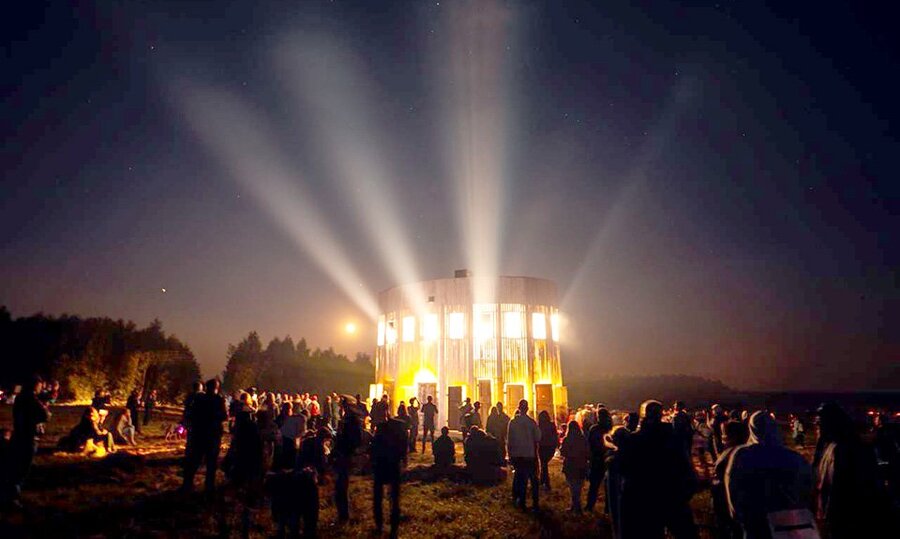
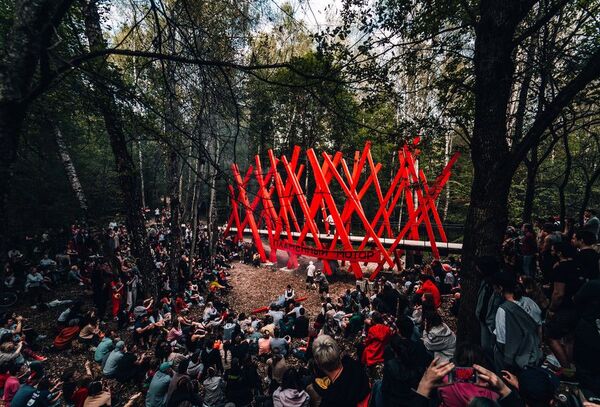
Architectural land art objects in Nikola-Lenivets: «Rotunda» by Alexander Brodsky, 2009 / «Red Forest» by Igor Shelkovsky, 2020
Since its foundation in 2006, the festival has developed from a local artistic initiative into one of Russia’s most influential cultural platforms.
The festival’s growth was supported by a communication strategy combining visual identity, storytelling, participatory practices, and dialogue with audiences. These communication tools helped ARCHSTOYANIE expand beyond its original professional community while maintaining its cultural values and distinct identity.
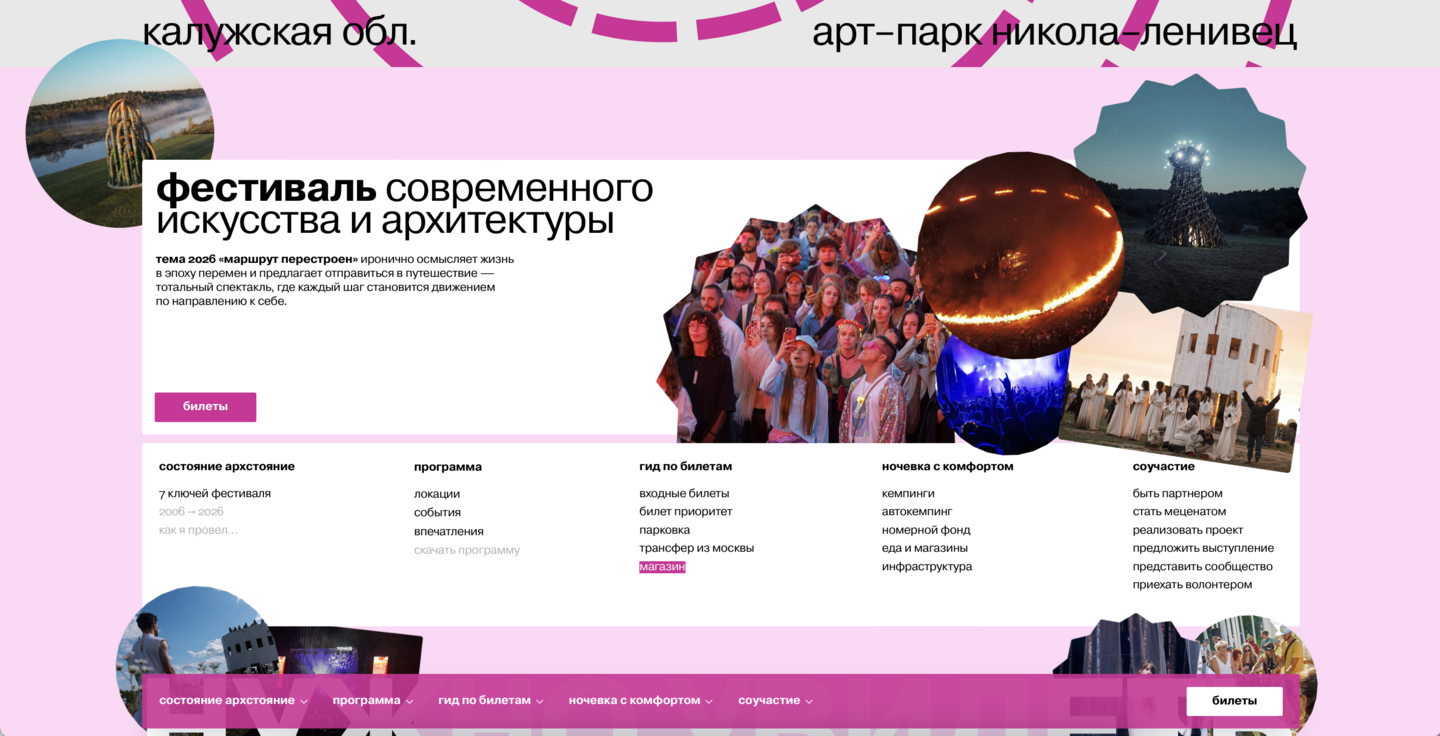
information from the festival’s website
The festival is built around several core values: experimentation, creative freedom, participation, cultural exchange, and dialogue between art and nature. By treating the landscape as an active participant in the artistic process, ARCHSTOYANIE encourages visitors to rethink their relationship with space, environment, and contemporary culture.
Target audience
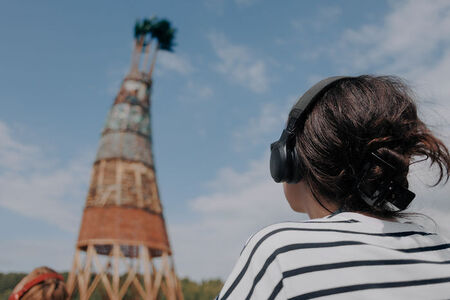
ARCHSTOYANIE addresses multiple audience groups, including artists, architects, curators, cultural tourists, families, students, and creative professionals.
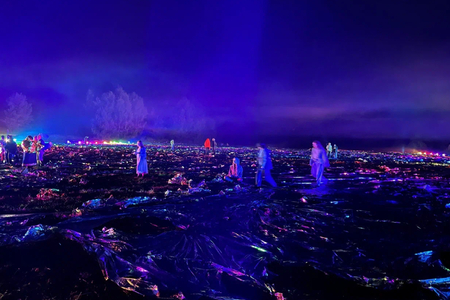
The image on the left shows «Dream Mausoleum» by Totan Kuzembaev, presented at the ARCHSTOYANIE festival in 2022
Audience Transformation
ARCHSTOYANIE has undergone a significant transformation in its audience and communication strategy. Initially oriented toward a relatively narrow professional community of artists, architects, curators, and researchers, the festival has gradually expanded its reach to attract cultural tourists, families, creative professionals, and people seeking new meaningful experiences. While its audience has become broader and more diverse, ARCHSTOYANIE has preserved its core values of experimentation, participation, openness, and engagement with contemporary art. This evolution demonstrates how the festival successfully transformed from an art community into a recognizable cultural brand without losing its original identity.
The evolution of ARCHSTOYANIE’s communication reflects its journey from an obscure art project to a nationally recognized cultural phenomenon. Early social media content relied primarily on documentary photography and informal posts that resembled personal diaries and community archives. In recent years, communication has become more structured and strategic, incorporating consistent visual branding, promotional campaigns, motion graphics, and audience-targeted content. This shift demonstrates how the festival adapted its communication practices to engage broader audiences while maintaining its core values and cultural identity.
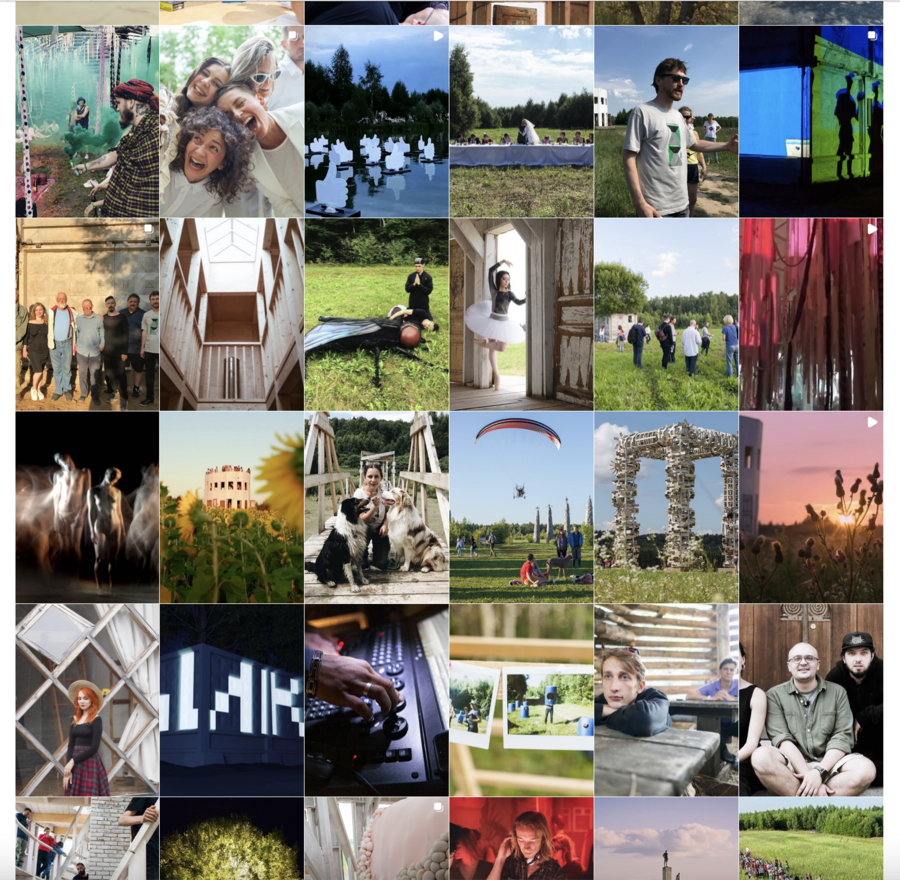
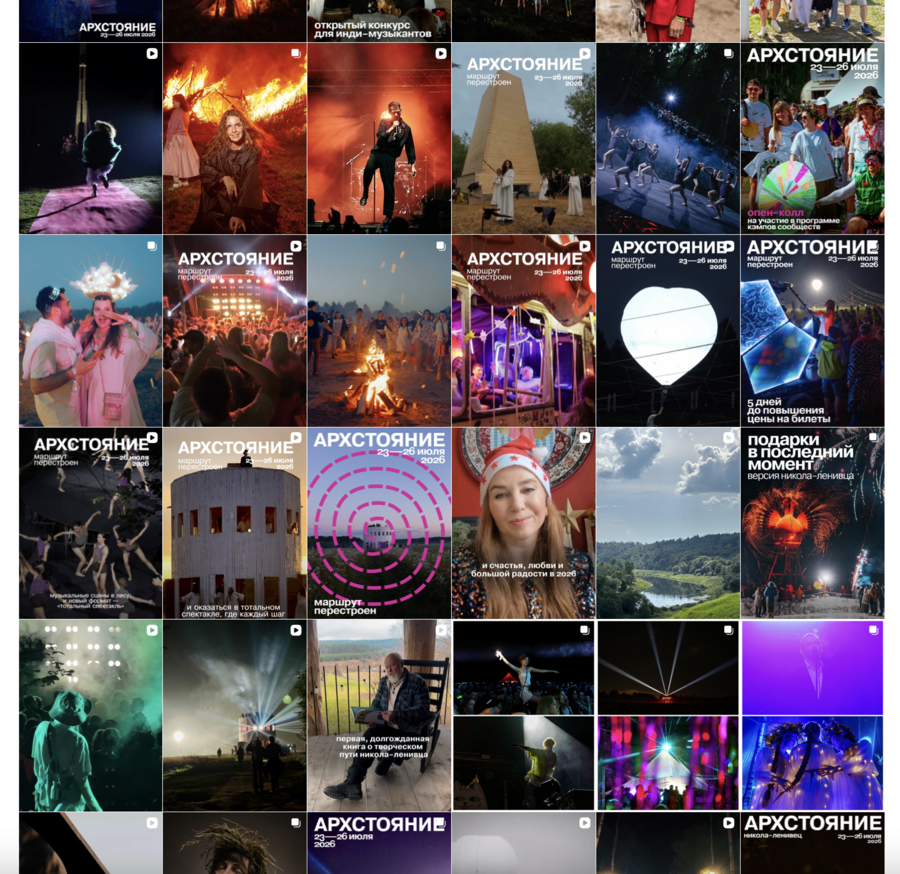
Transformation of ARCHSTOYANIE’s Digital Communication and Audience Positioning (2018–2026). * Instagram (Reels) is recognized as an extremist organization in the Russian Federation
Communication Channels
Digital Communication Channels
Screenshots from the festival’s social media*
ARCHSTOYANIE communicates with its audiences through a combination of digital platforms, each serving a different purpose. The official website functions as the main source of information about the festival, while VK, Telegram*, and Instagram* are used to share announcements, updates, visual content, and community interactions. Together, these channels create a communication ecosystem that supports both information sharing and audience engagement.
*Instagram (Reels) — Meta Platforms Inc. is recognized as an extremist organization in the Russian Federation.
*Telegram — This application has limited access on the territory of the Russian Federation.
Public Relations Strategies
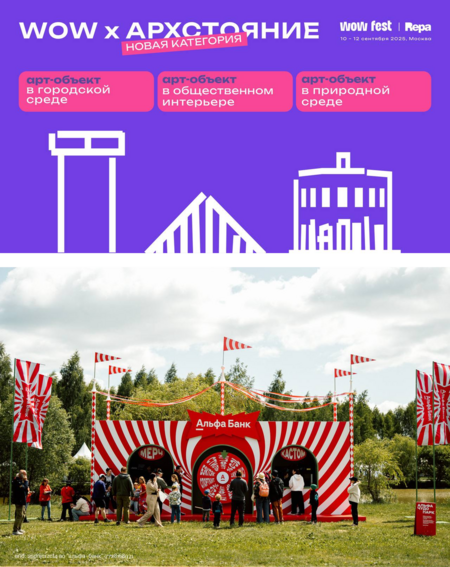
The festival employs a range of public relations strategies to maintain visibility and attract new audiences. These include media relations, press releases, collaborations with cultural institutions, and open calls for artists, musicians, and creative communities. Rather than relying solely on advertising, ARCHSTOYANIE generates public attention through participation, cultural relevance, and ongoing dialogue with professional and public audiences.
Media coverage in cultural publications and collaborations with major media partners further increase the festival’s visibility beyond its immediate community.
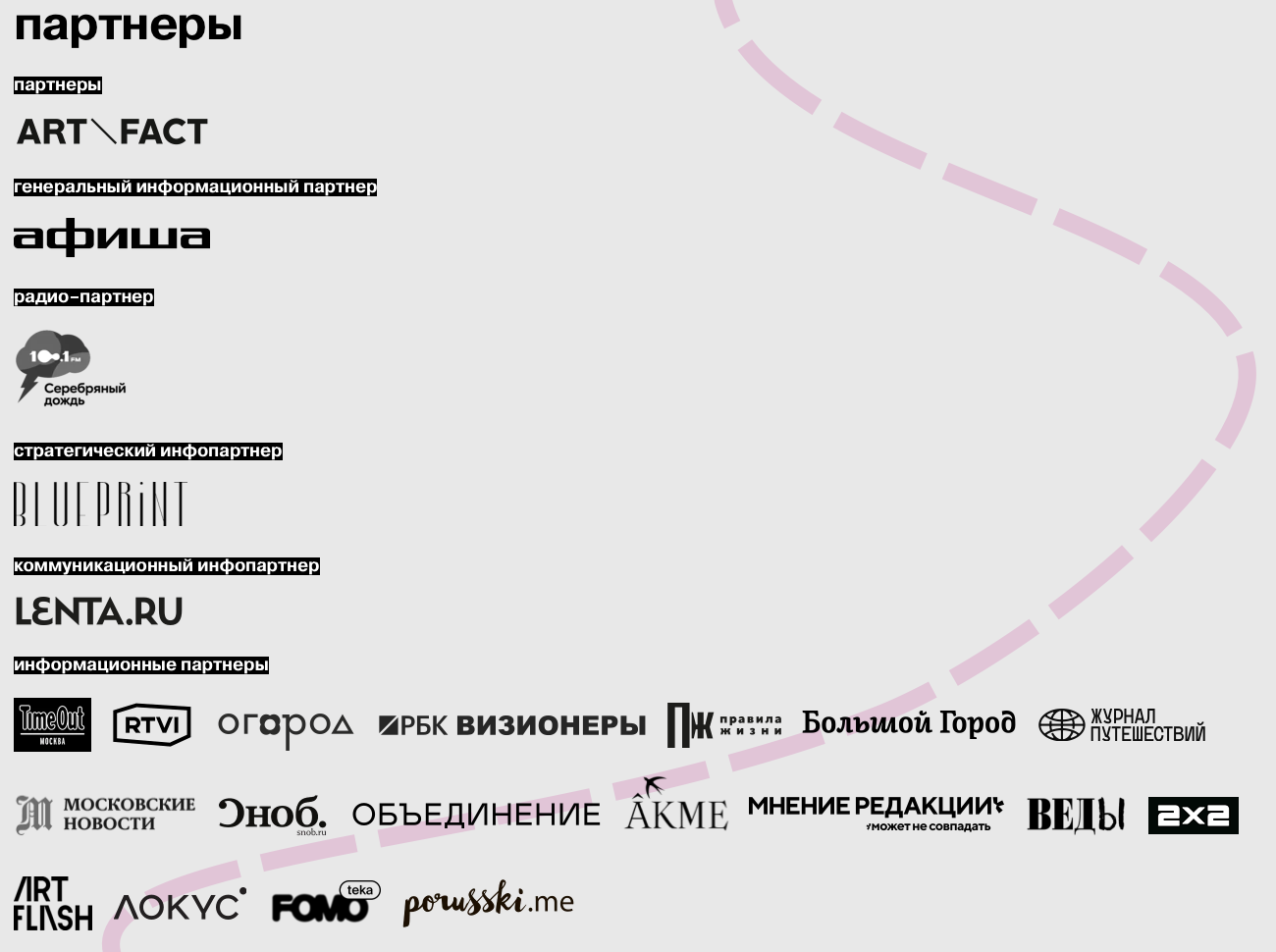
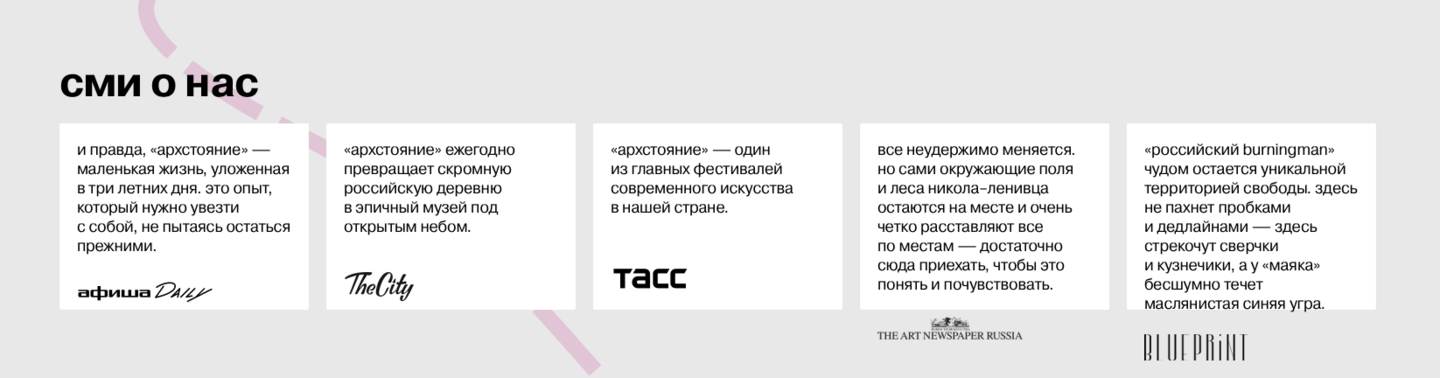
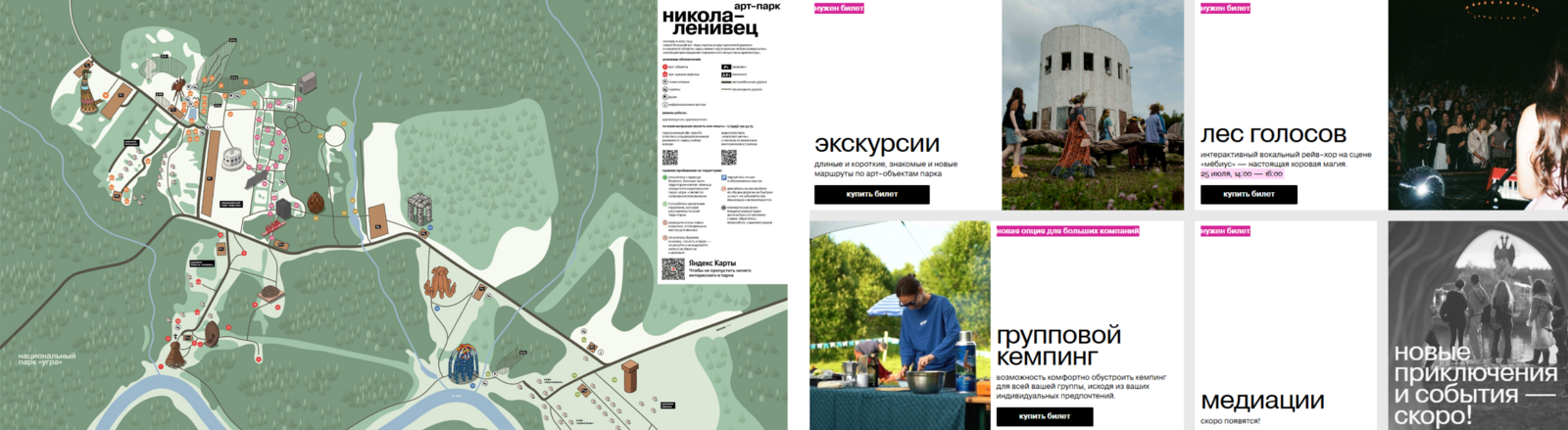
Screenshots from the festival’s website
Partnerships and Community Engagement
Through open calls, ARCHSTOYANIE shifts the audience’s role from passive spectators to active participants, encouraging collaboration, creative contribution, and community building.
Festival collaborates with respected artists, architects, curators, sponsors, and patrons, strengthening its cultural reputation and credibility. Figures such as Nikolay Polissky, Evgeny Ass, and Alexander Brodsky help build trust among both professional and public audiences. Through open calls for artists, musicians, cultural institutions, community camps, partners, and patrons, the festival actively involves different stakeholder groups in the production of cultural experiences.
In addition to open calls and community camps, the festival also boasts an exceptionally large volunteer programme designed specifically for ordinary people — not professional artists or performers.
Rather than treating audiences as passive consumers, ARCHSTOYANIE positions them as contributors and participants, creating a communication model based on collaboration, dialogue, and shared cultural value.
Theoretical Framework and Analysis
Semiotic theory
Semiotic Theory views communication as a process of creating and interpreting meaning through signs and symbols. According to this perspective, visual elements such as color, typography, imagery, composition, and graphic forms function as signs that communicate ideas, values, and cultural meanings. These signs rely on shared cultural codes and audience interpretation. In the context of branding and visual communication, semiotic theory helps explain how visual identities construct meanings, shape audience perceptions, and communicate an organization’s values through design.
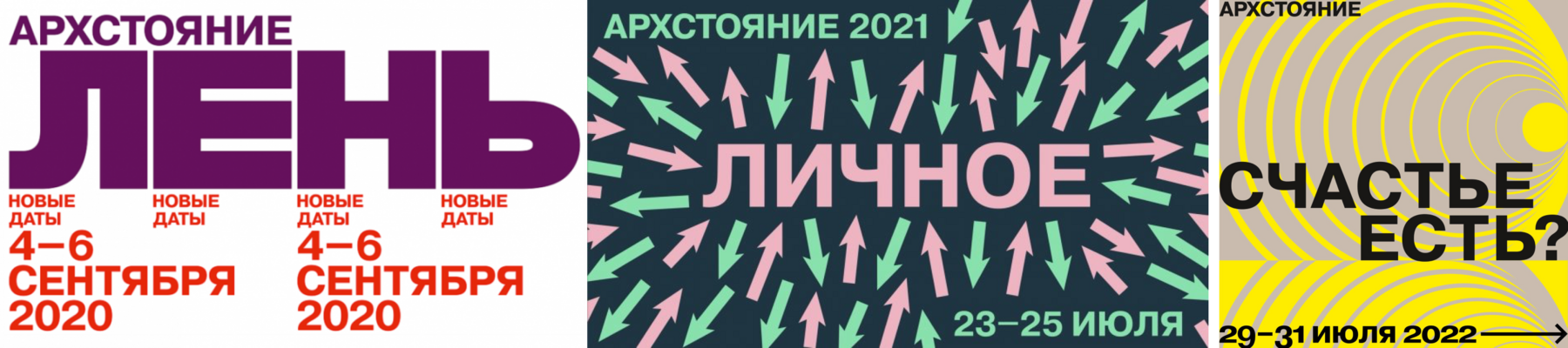
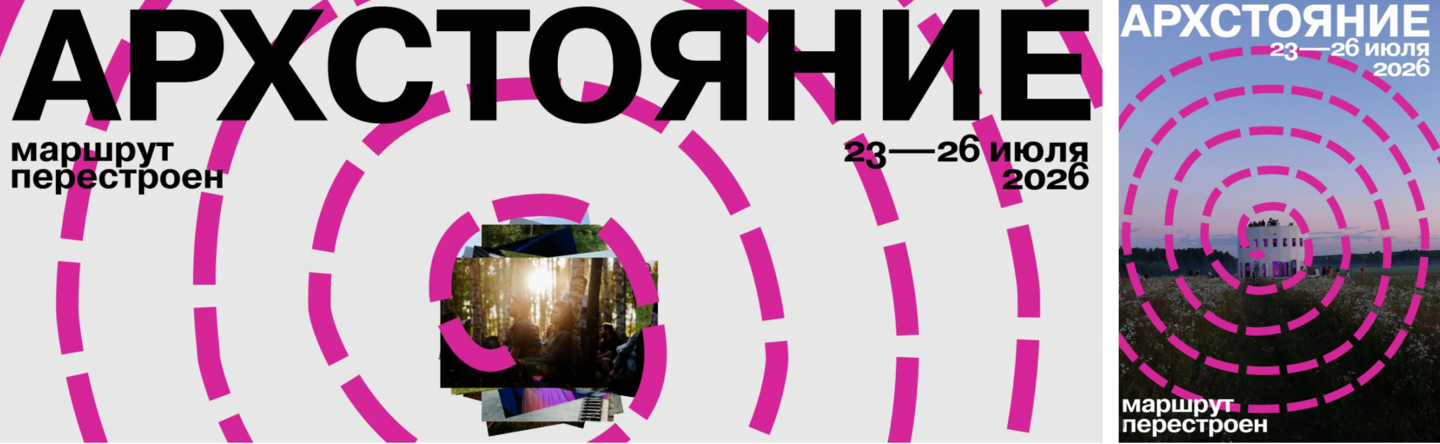
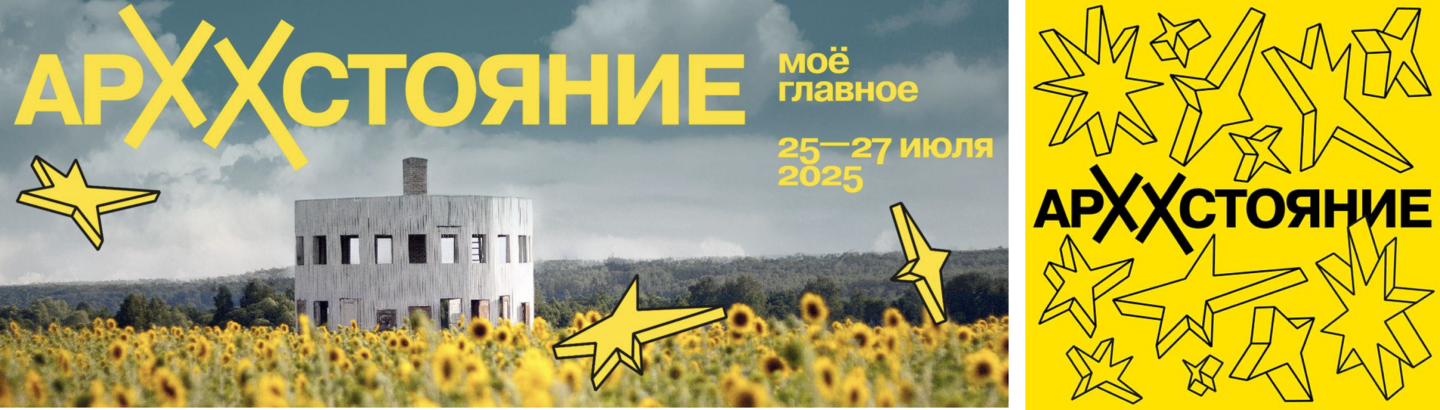
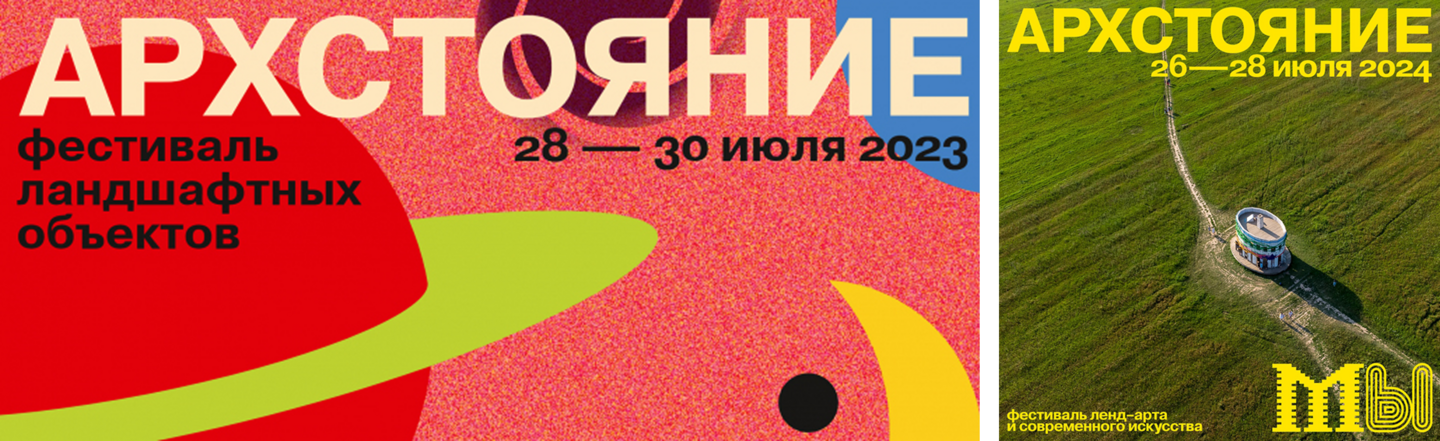
Examples of ARCHSTOYANIE’s visual identity from 2020–2026, reflecting the visual communication approach that has been consistently used since the early 2020s.
From a semiotic perspective, ARCHSTOYANIE’s visual identity functions as a system of signs that communicates the festival’s values and cultural positioning. The recurring use of bold typography, vibrant color palettes, and large graphic forms creates a recognizable visual code that distinguishes the festival from traditional cultural institutions and communicates openness, experimentation, and accessibility.
Although each edition is built around a unique curatorial theme, the visual language remains consistent enough to maintain brand recognition. Annual themes are translated into visual symbols that reflect contemporary cultural, social, or environmental issues, allowing the festival to engage with current contexts while preserving its identity.
These visual elements act as communicative signs that shape audience expectations and influence how the festival is perceived.
ARCHSTOYANIE has several semiotic codes that are manifested in the objects and the atmosphere
Human Against a Vast Space
Photographs and the actual views of the festival constantly contrast a tiny human figure with endless fields, forests, and sky. This sign conveys both humility and grandeur: you are small in front of nature and art, but it is your presence that brings the space to life. The wildness of the landscape (no asphalt, no civilization, no familiar comforts) emphasises the pristine nature of the place and turns a walk into a small adventure.
Standing
The festival’s name and philosophy refer to a long, motionless stay in a space. Unlike urban rushing and schedules, «standing» means thoughtful contemplation, meditation, and even a kind of ritual. This code manifests itself in the deliberately slow pace of moving between objects, the absence of a rigid programme, and the very form of many art installations
Adventure
the visitor receives a map, a tent, and the opportunity to search for objects on their own, sometimes wandering through fields and forests. This code turns a regular event visit into a quest, where the reward is an unexpected encounter with art.
Avant‑garde and Nature
Archstoyanie combines ultra‑modern, often abstract architectural forms with natural, almost peasant materials — wood, hay, earth. This semiotic code dissolves the opposition between «city vs village» and «tradition vs innovation». The laconic geometric objects do not look alien among grass and the river; on the contrary, they emphasise the beauty of the landscape
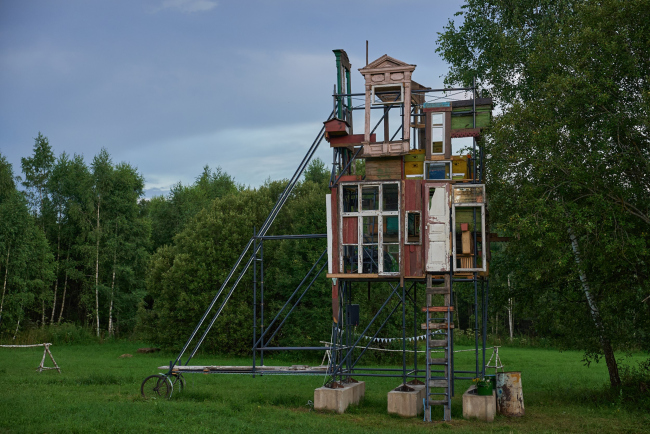
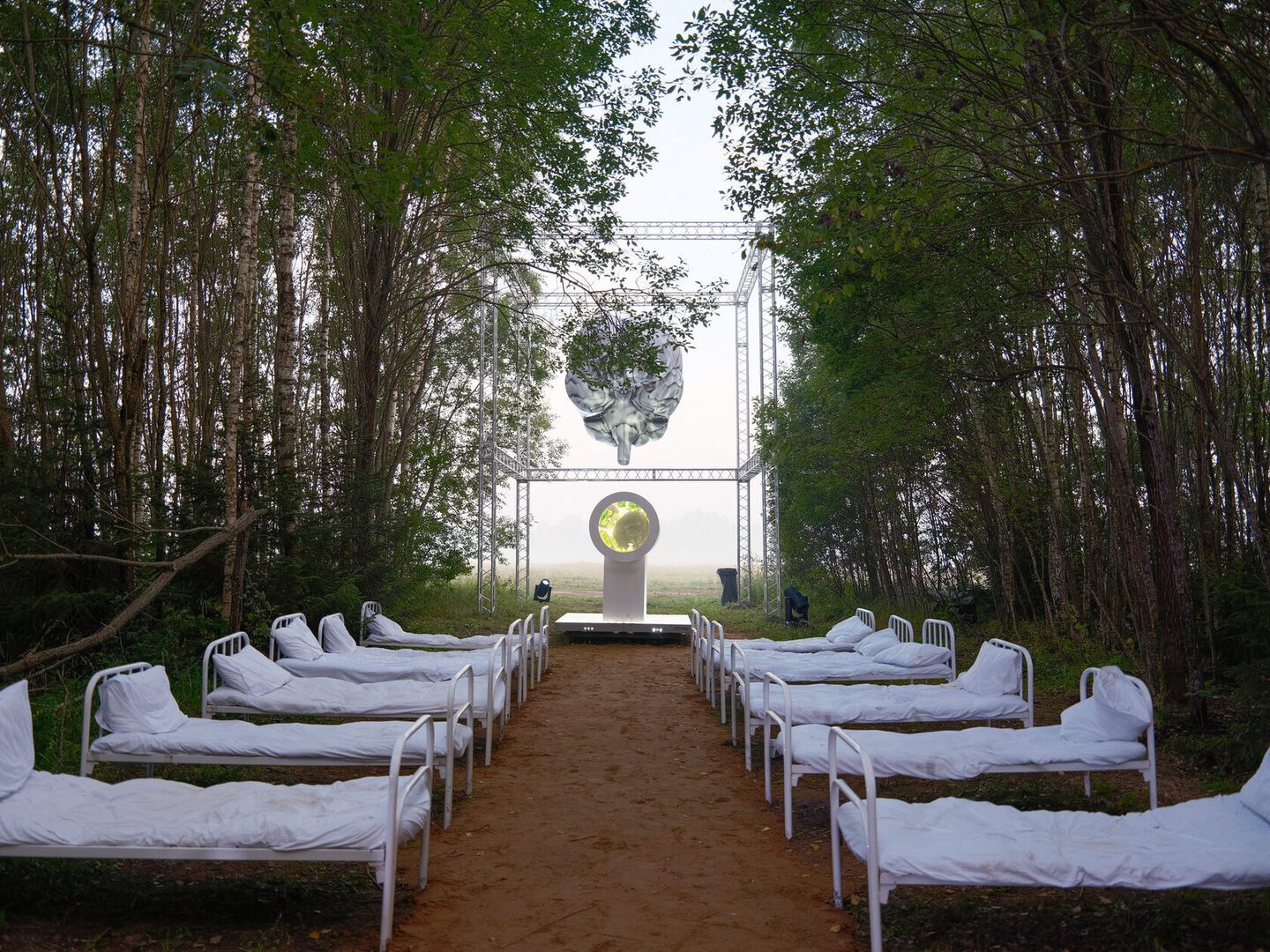
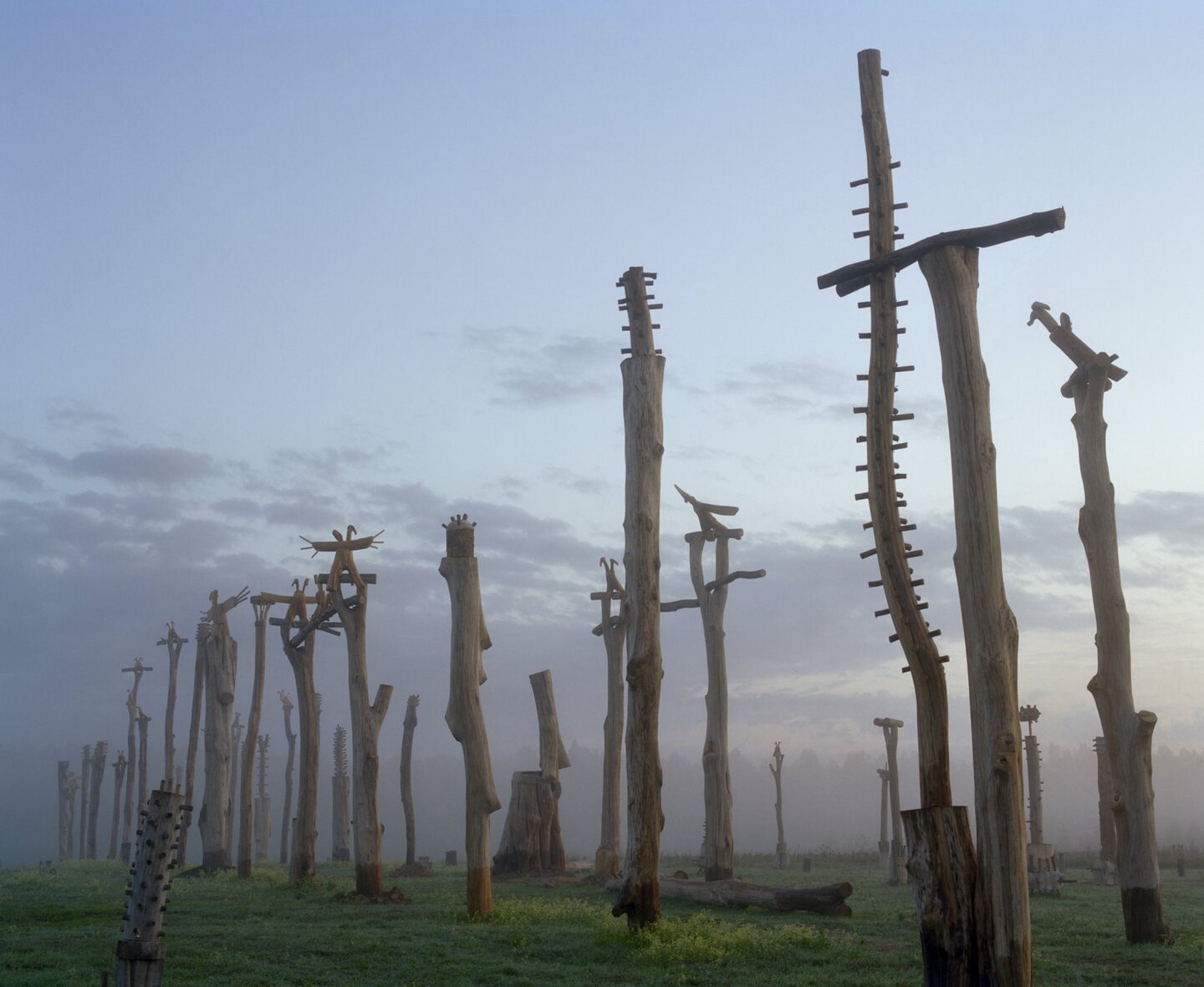
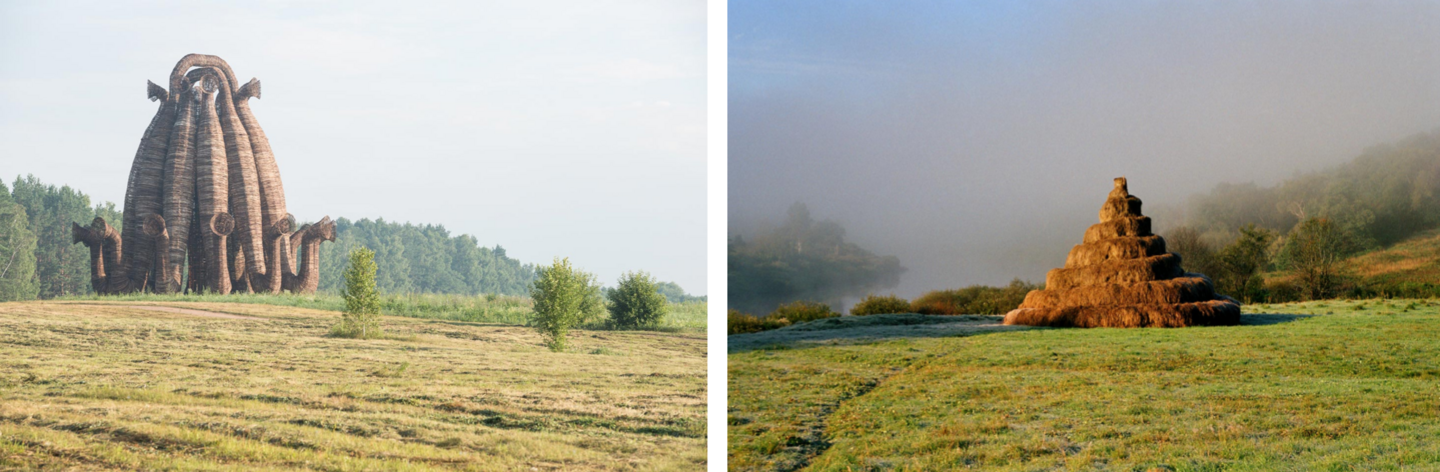
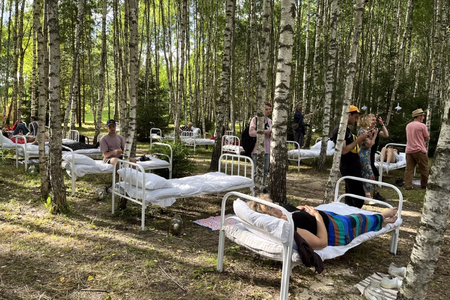
Land art objects: «Sanatorium of Sleep» by Roman Sakin, 2022 / «Borders of the Empire» by Nikolay Polissky, 2007 / «Houses of the Earth» by Andrey Syaylev, 2024
Rhetorical tradition
Rhetorical Tradition explains how organizations persuade audiences through credibility (ethos), rational arguments (logos), and emotional appeal (pathos). In ARCHSTOYANIE’s communication, persuasion is built not through direct advertising but through expert authority, storytelling, and the promise of a unique cultural experience.
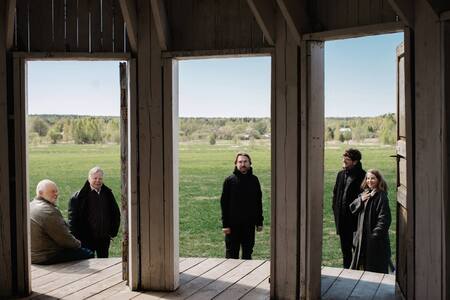
Ethos is the part of persuasion that comes from the character of the speaker. Aristotle considered ethos the most effective means of persuasion: «We believe good men more fully and more readily than others.» Ethos is built on competence (does he know his subject?), goodwill (does he wish us well?), and charisma (does he inspire trust?). The festival was founded by Nikolay Polissky, a world-renowned artist working in the genre of land art. Since the first year, «leading Moscow architects» have been invited: Evgeny Ass, Alexander Brodsky, Yuri Grigoryan. Over the years, a community of recognized masters has formed. The audience trusts the festival because it is created by people whose professional reputation is impeccable.
Logos is reflected in the festival’s clear communication of practical information. The website, maps, schedules, artist descriptions, and navigation systems help visitors plan their experience and understand the festival’s structure. This rational layer makes participation accessible to broader audiences beyond the professional art community.
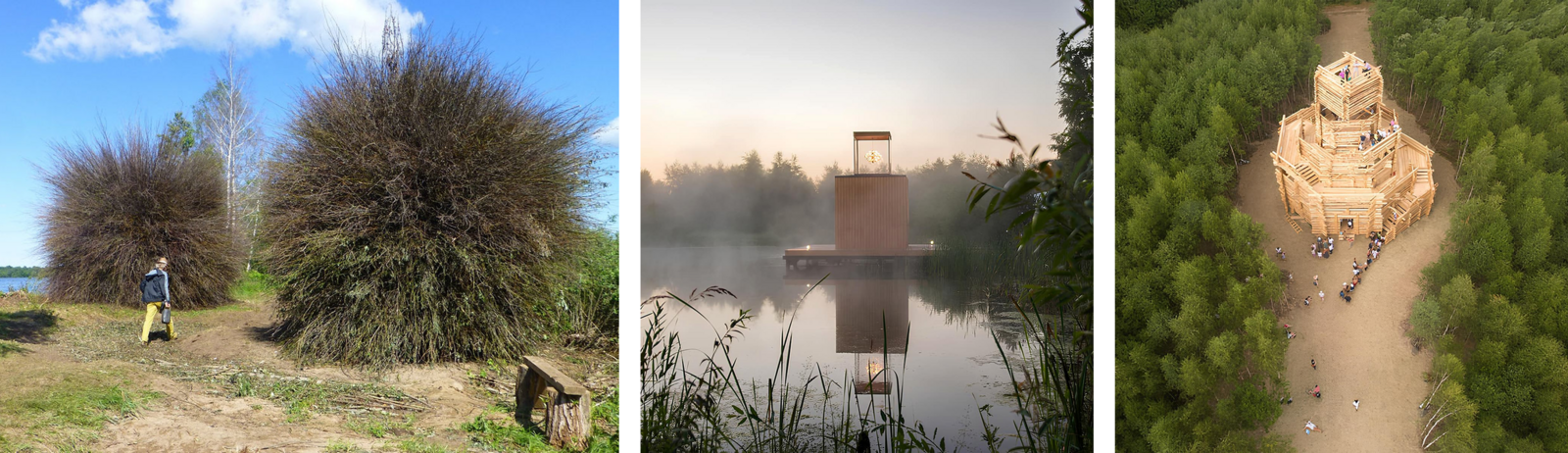
Pathos is created through visual storytelling and immersive experiences. Images of large-scale installations in natural landscapes, stories about exploration, and representations of collective experiences evoke curiosity, wonder, and a sense of discovery. The festival communicates emotions associated with participation and personal transformation.
Narrative Paradigm: The Visitor as the Hero
ARCHSTOYANIE employs storytelling as a key communication strategy, transforming the festival visit into a personal narrative. The festival invites visitors to become protagonists of their own experience. In this sense, the visitor follows a classic «hero’s journey» narrative.
The call to adventure begins online, through photographs, videos, and stories shared on social media. The crossing of the threshold occurs when a visitor decides to leave the city, purchase a ticket, and travel to Nikola-Lenivets. The journey itself involves exploration, uncertainty, and discovery: visitors walk through forests and fields, search for artworks, encounter unexpected situations, and interact with installations and other participants.
Finally, the return with the gift comes in the form of memories, emotions, photographs, and personal stories shared with friends and online communities. Through this narrative structure, ARCHSTOYANIE turns cultural participation into a meaningful personal experience and encourages visitors to become active creators of meaning rather than passive consumers of art.
The image on the left shows the «Magic Blanket» installation by Alexander Shtanyuk, presented at the ARCHSTOYANIE festival in 2025
Examples of communication practices that foster participation, collaboration, and community building at ARCHSTOYANIE from official social media accounts
For public audience ARCHSTOYANIE offers an opportunity to escape everyday routines and experience contemporary art outside traditional museum spaces. Set within the natural landscape of Nikola-Lenivets, the festival invites visitors to explore large-scale installations, attend performances and concerts, participate in workshops, and become part of a temporary creative community.
Festival encourages personal discovery, positioning contemporary art as accessible, engaging, and connected to everyday life.
- Contemporary Art Made Accessible
Unlike traditional museums and galleries, ARCHSTOYANIE presents contemporary art in an open natural environment. Visitors are encouraged to explore installations freely, interact with artworks, and create their own interpretations. This approach makes contemporary art more accessible and reduces the distance between cultural institutions and the public.
- Experience Instead of Observation
The festival is designed as an immersive experience rather than a traditional exhibition. Visitors travel through the landscape, discover art objects, participate in events, and interact with other participants. As a result, the audience becomes an active part of the cultural experience.
- Temporary Community
Beyond art and architecture, ARCHSTOYANIE creates a temporary community that brings together people with different backgrounds and interests. Through camps, workshops, performances, and shared experiences, visitors become part of a collective cultural environment built on participation and exchange.
Information from the festival’s website
Dialogic theory
Screenshots from the festival’s social media *Instagram (Reels) is recognized as an extremist organization in the Russian Federation.
Dialogic theory focuses on the ethical building of quality relationships between an organization and its publics through dialogue.
Mutuality ARCHSTOYANIE treats visitors as active participants. Through open calls, camps, and community initiatives, audiences contribute to the festival experience and influence its development.
Propinquity Dialogue takes place before and during the festival through social media discussions, feedback mechanisms, and ongoing communication with participants.
Empathy The festival encourages multiple interpretations of artworks and welcomes diverse perspectives, creating an inclusive communication environment.
Risk Open participation means that audience reactions cannot be fully controlled. The festival embraces this uncertainty as part of cultural dialogue.
Commitment Long-term engagement is reflected in transparent communication, recurring community programmes, and continuous interaction with audiences.
Conclusion
Opportunities for Future Communication Development
While ARCHSTOYANIE has successfully developed a strong visual identity and an effective social media presence, its communication strategy remains focused primarily on short-form content such as promotional videos, photographs, and event reports. These formats are effective for attracting new visitors and maintaining audience engagement, but they provide limited opportunities for deeper reflection and education.
A potential direction for future development could be the creation of long-form communication formats, including video interviews or podcasts with artists, architects, and curators. Such content could strengthen the festival’s educational mission, provide deeper insight into artistic processes, and create stronger connections between professional communities and broader audiences.
The case of ARCHSTOYANIE demonstrates that communication can play a central role in the transformation of cultural initiatives. Through visual identity, storytelling, participatory practices, and dialogue, the festival expanded its audience while preserving its cultural values. Rather than promoting art as a finished product, ARCHSTOYANIE communicates participation, exploration, and shared cultural experience, turning visitors into active contributors to the brand itself.
Communication Theory: Bridging Academia and Practice https://edu.hse.ru/mod/book/view.php?id=513224 (дата обращения: 13.06.2026)
Communication in the Creative Industries: https://edu.hse.ru/course/view.php?id=133853 (дата обращения: 13.06.2026)
Narrative paradigm; Wikipedia https://en.wikipedia.org/wiki/Narrative_paradigm (дата обращения: 13.06.2026)
https://arch.stoyanie.ru (дата обращения: 13.06.2026)
https://nikola-lenivets.ru (дата обращения: 13.06.2026)