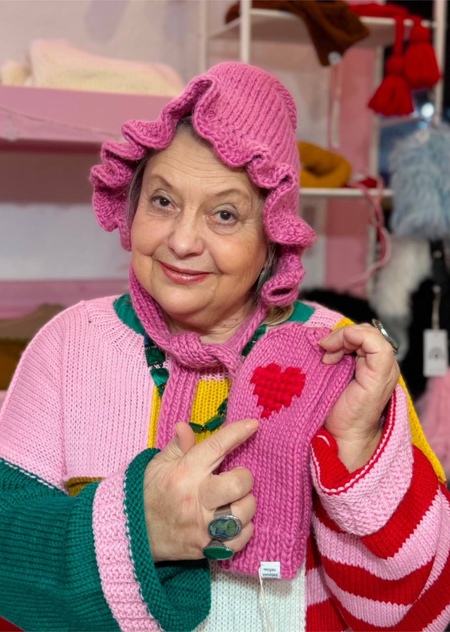

«Murmurizm» is not just a vibrant casual clothing brand, it is a major socio-cultural phenomenon whose philosophy is built on radical openness, accessibility, and empathy. Founded in 2015 and having survived a severe crisis, the brand completely shifted its concept and today functions as a large-scale social project. By abandoning faceless factory production in favour of the manual labor of grandmothers (the «Vnukunuk» project), women in difficult life situations, and residents of psycho-neurological boarding schools, the brand has established the concept of a «soulful economy»
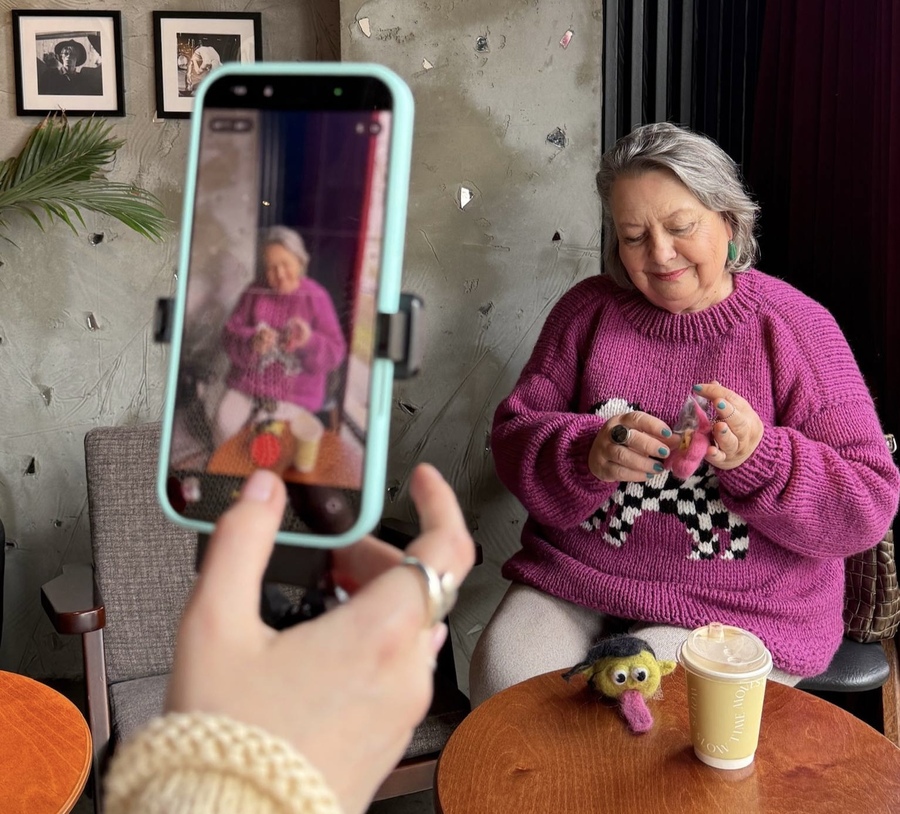
From brand’s VK
Murmurizm fundamentally breaks down the corporate distance (the fourth wall) between the producer and the buyer. They position themselves as maximally open, inclusive, and friendly «kids from the neighborhood.» This is emphasized at all levels of communication, starting from the brand’s name (derived from the Russian word for a cat’s «purr,» which is associated with coziness) down to their specific vocabulary.
In the texts on their website and social media, the brand deliberately avoids a dry marketing tone, universally employing warm and informal markers: «sending hugs», «our grannies,» and «made with love.» They insist on a soulful and tender attitude toward every client and artisan, placing their bet on sincerity—which is currently one of society’s primary demands.

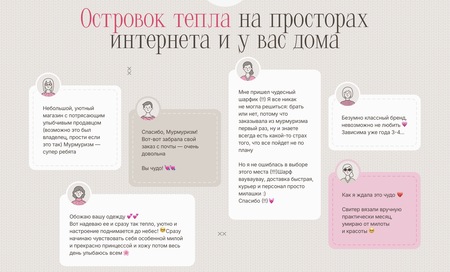
Brand’s website
The core of the audience consists of Generations Y and Z (millennials and zoomers). These are creative, socially active individuals who deeply value conscious consumption, production ethics, and a 100% dog-friendly environment.
Special attention should be paid to how the brand interacts with youth trends and Generation Z’s visual code. Murmurizm doesn’t just sell warm clothes; it sells meanings and cultural codes, masterfully playing with zoomer memes and internet slang.
A striking example of this integration into youth pop culture is the release of sweaters featuring ironic inscriptions, such as «Red Flag» (a popular internet term denoting warning signs in a person’s behavior), «Люблю» («Love»), or exaggeratedly naive patterns. Such a strategy allows the audience to use the brand’s clothing as a tool for self-irony and non-verbal communication, which aligns perfectly with the psychological need for personal identity formation.
Brand’s catalog
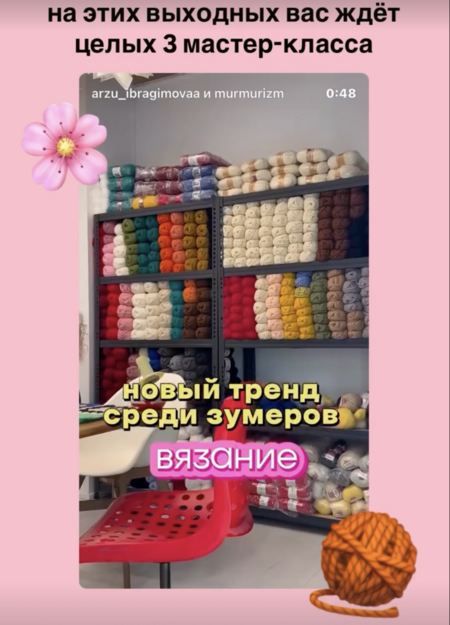
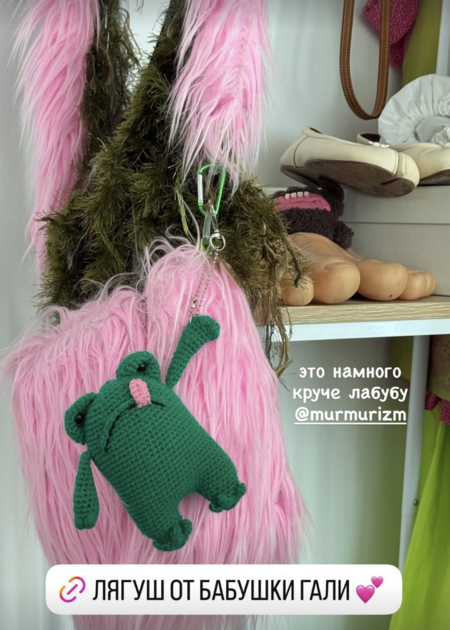
Murmurizm on Instagram*
Communication Channels
To maintain the closest possible connection with its audience, Murmurizm has built a comprehensive, multi-platform media ecosystem. Rather than duplicating the exact same content across all networks, the brand assigns a highly specific psychological and functional role to each platform, creating a seamless omnichannel experience:
01. Social Media
— Instagram* functions as the brand’s aesthetic portfolio. This is where Murmurizm works most actively with modern visual trends, Y2K aesthetics, and youth pop culture. Through highly stylised photoshoots, short engaging Reels, and influencer tags, the brand showcases its items.
— VK is utilised for long-form storytelling. Here, the brand publishes in-depth articles, detailed histories of the «Vnukunuk» project, and deeply emotional biographies of individual artisans. The VK platform serves as a digital archive of the brand’s social mission, providing the rational and emotional foundation that justifies the product’s value.
— Telegram acts as the primary megaphone for the brand’s unpolished, day-to-day voice. Here, the founders use voice messages, share raw, unretouched behind-the-scenes photos, and use natural Gen Z internet slang. Furthermore, Telegram serves as an instant feedback loop: through interactive polls and open comment sections, the brand can rapidly test ideas for new drops, ask for advice, and resolve conflicts in real-time, making subscribers feel like active stakeholders in the company.
Murmurizm on Instagram* / VK / Telegram
02. Website
The website is not merely a digital catalog, it is an educational tool. The User Experience (UX) and microcopy (button texts, pop-ups) are designed to reflect the brand’s warm tone. Importantly, the website actively educates the consumer about «slow fashion.» By explicitly stating the lead times («creation takes 10 to 60 days»), the site resets consumer expectations, explaining that true manual labor cannot be rushed. It anchors the emotional impulses generated on social media with rational transparency about pricing, logistics, and social impact.
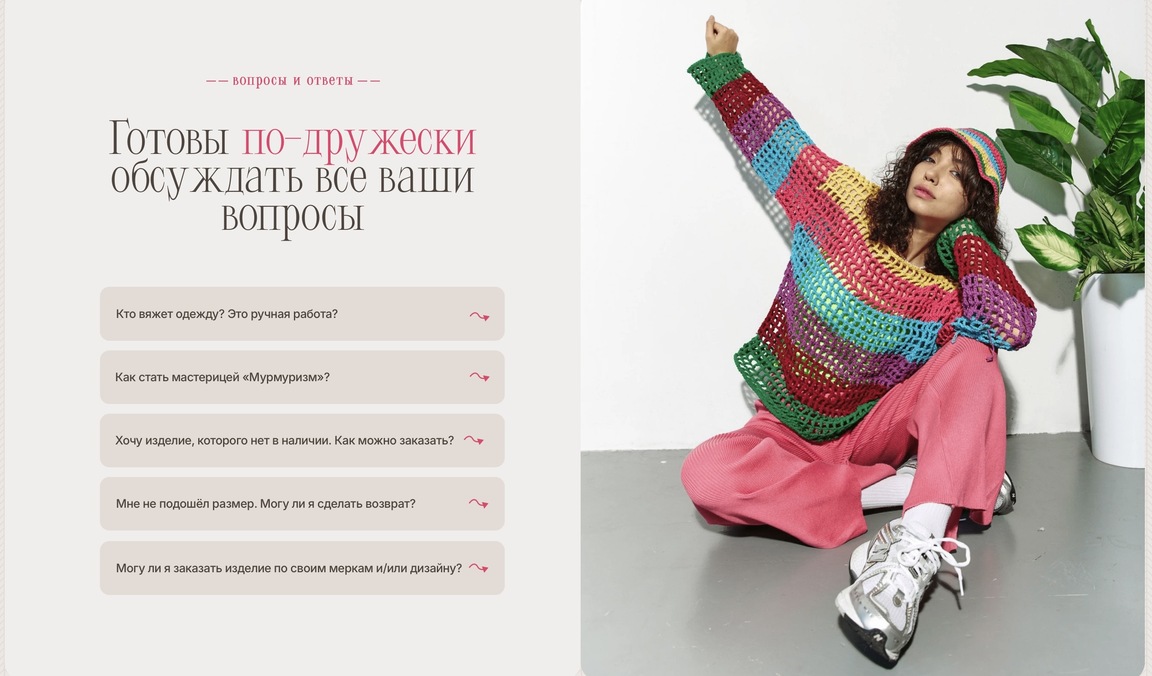
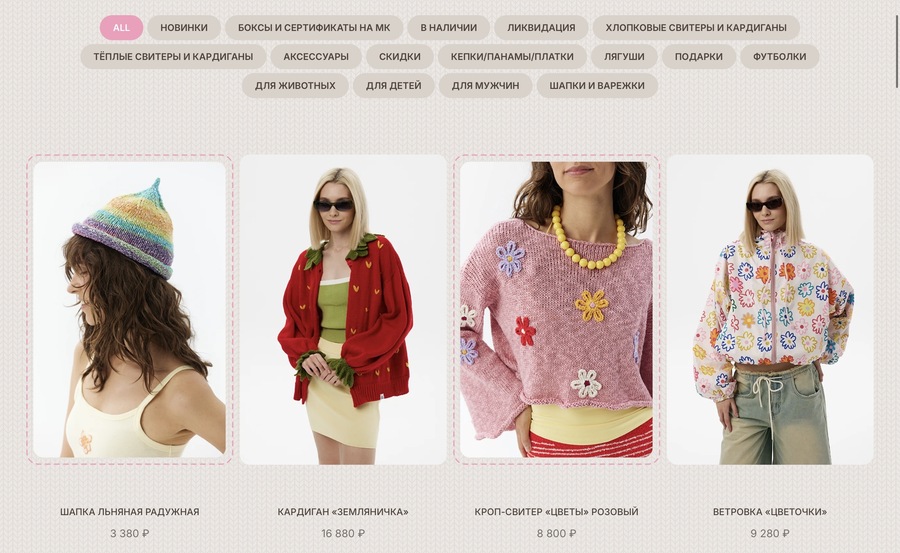
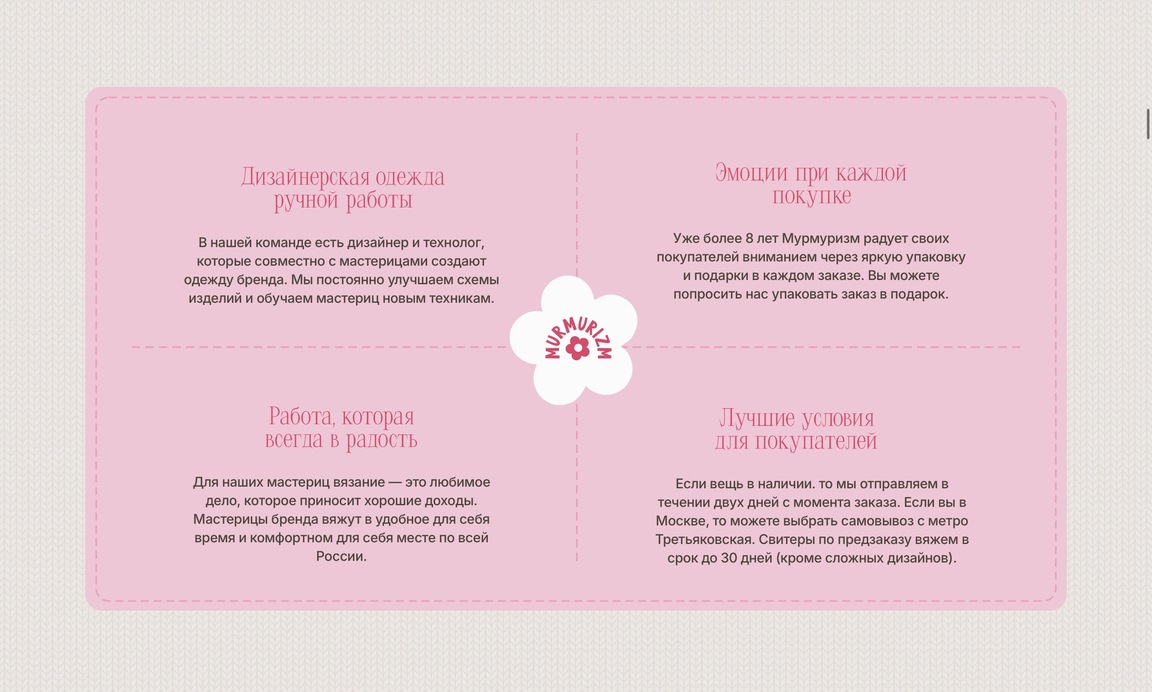
Brand’s website
03. Offline Space
The physical showroom is positioned as a «safe space» rather than a traditional retail store. By welcoming pets (100% dog-friendly) and hosting regular knitting masterclasses, the brand utilizes experiential marketing. When consumers try knitting themselves, they gain a physical, tactile appreciation for the immense labor required to make a single sweater. This offline space blurs the lines between producer, artisan, and consumer, transforming a simple commercial transaction into a shared cultural and communal experience.
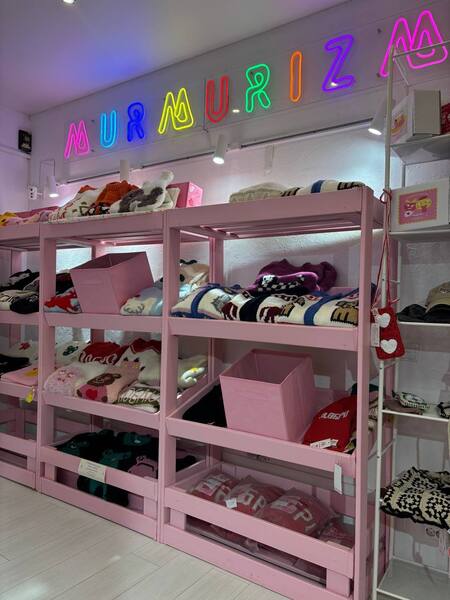
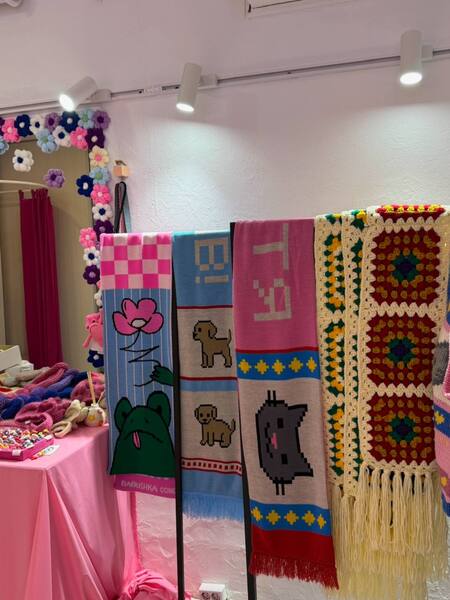
Showroom on Malaya Ordynka
PR Strategies
Murmurizm entirely rejects classic, sterilized corporate PR (press releases, formal apologies, corporate speak). Instead, they employ what can be termed «Anti-PR» — a strategy built on absolute vulnerability. If there is a production delay because an elderly artisan fell ill, or if the brand faces a financial shortfall, the founders openly write about it. Admitting weaknesses and apologising for delays highlights the authenticity of their handmade process; it proves to the buyer that their sweater is being made by a real, living person, turning a logistical flaw into a marketing strength.
Murmurizm on Instagram*
Murmurizm frequently collaborates with massive corporate giants and cultural institutions (Art. Lebedev Studio, Yandex Market, FC Dynamo, Levi’s, GARAGE). For the large corporations, partnering with Murmurizm humanises their brand, injecting much-needed warmth, «soulfulness,» and social responsibility into their corporate image. For Murmurizm, these collaborations provide access to entirely new demographic pools (such as football fans or tech enthusiasts), proving that their philosophy of kindness and inclusivity can successfully integrate into any sphere of modern life.

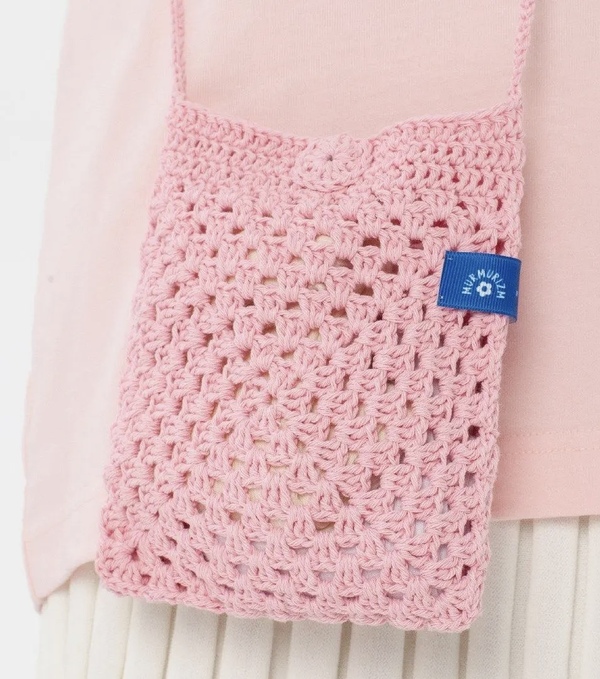
Murmurizm x Art. Lebedev Studio / Murmurizm x FC Dynamo
The integration of charity into the business model is Murmurizm’s core driver. However, their PR strategy carefully avoids «pity marketing.» They do not sell clothes by making the audience feel guilty. Instead, they focus on empowerment and aesthetics. The product must first appeal to Gen Z on a purely visual and trendy level (e.g., ironic meme-sweaters). The social mission (helping vulnerable groups) acts as the decisive ethical bonus.
This strategy resolves the modern consumer’s internal conflict: it allows young people to buy trendy, cool items while simultaneously feeling that they are making a positive, ethical contribution to society.
Communication theories
— Elaboration Likelihood Model (ELM): Developed by Petty and Cacioppo, this theory explains the cognitive processes of persuasion. It states that communication can take either a central route (through deep, rational analysis of arguments, requiring high cognitive effort) or a peripheral route (through superficial, emotional, and visual cues, utilising mental shortcuts or heuristics). The route taken depends on the audience’s motivation and ability to process the information.
— Uses and Gratifications Theory: A paradigm formulated by Katz, Blumler, and Gurevitch that rejects the idea of a «passive audience.» Instead of asking «What do media do to people?», it asks «What do people do with media?» It examines which specific internal needs (emotional, social, cognitive, and identity-related) motivate people to actively choose a particular medium or interact with a brand.
Applying Theories to the Brand’s Strategy
A. Analysis via the Elaboration Likelihood Model (ELM)