
Project Introduction
Data: Analysis of university student mental health (Student Mental Health dataset from Kaggle, ~100 entries). The dataset comprises surveys on depression, anxiety, panic attacks, academic performance (CGPA), year of study, and help-seeking behavior.
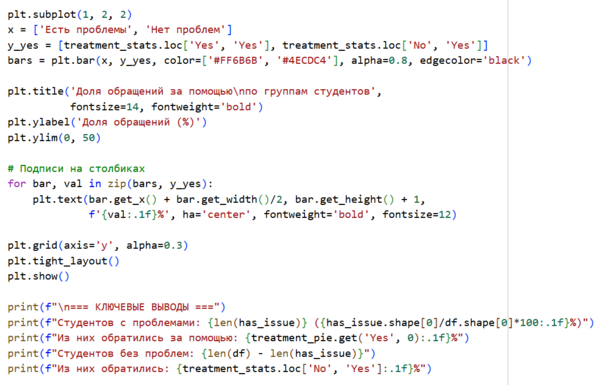
Why it’s interesting: College years represent a peak period of stress, yet statistics on psychological support utilization are extremely low. The analysis reveals correlations between field of study, academic standing, and mental health challenges, highlighting a critical issue—fewer than 10% of symptomatic students seek professional help.
Visualization Goal: To illustrate the true scope of student stress and uncover why those who need support are not receiving it. Statistical Methods: cross-tabulation tables, group proportions (normalize='index'), descriptive statistics (mean, proportions).
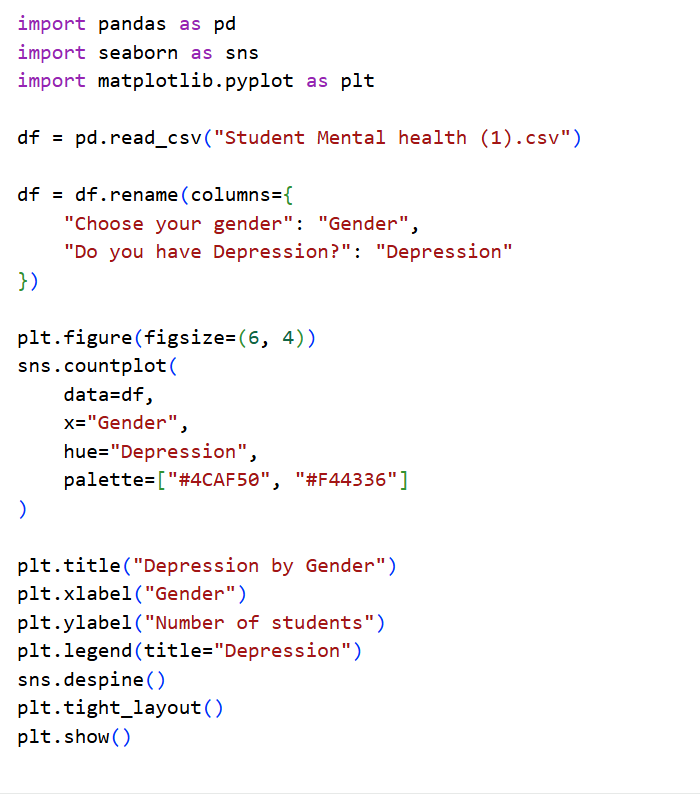
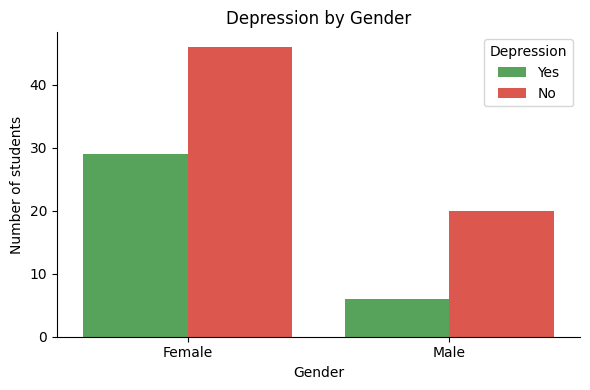
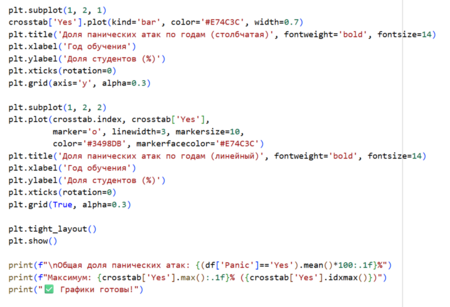
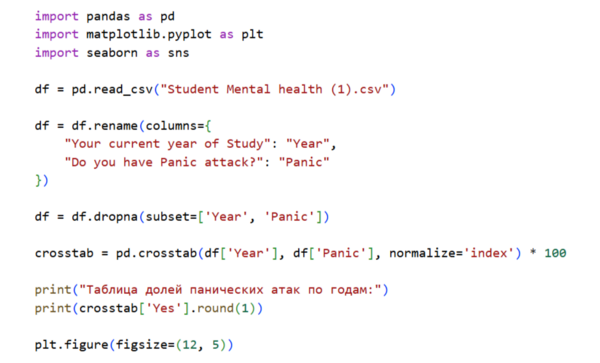
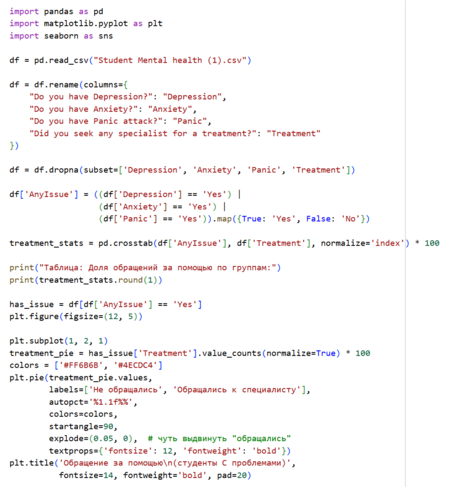
Data analysis revealed a high level of mental health issues among students: 25–35% suffer from depression, anxiety, or panic attacks, depending on their year and major.
Key Trends:
Women report depression more frequently (15% higher than men)
Anxiety increases when academic performance drops (CGPA < 3.0 — up to 40%)
The peak for panic attacks occurs in the 2nd–3rd Year (up to 30%), then declines
Most stressful majors: Engineering, BIT, BCS (30–45% reporting issues)
Critical Problem: Less than 10% of students with symptoms seek help
Recommendations: The University needs to strengthen psychological support for 2nd and 3rd Year students in technical majors and implement mental health screening for students with a low CGPA.
Conclusion: Student stress is a systemic issue requiring immediate intervention. The data confirms the necessity of preventative programs.