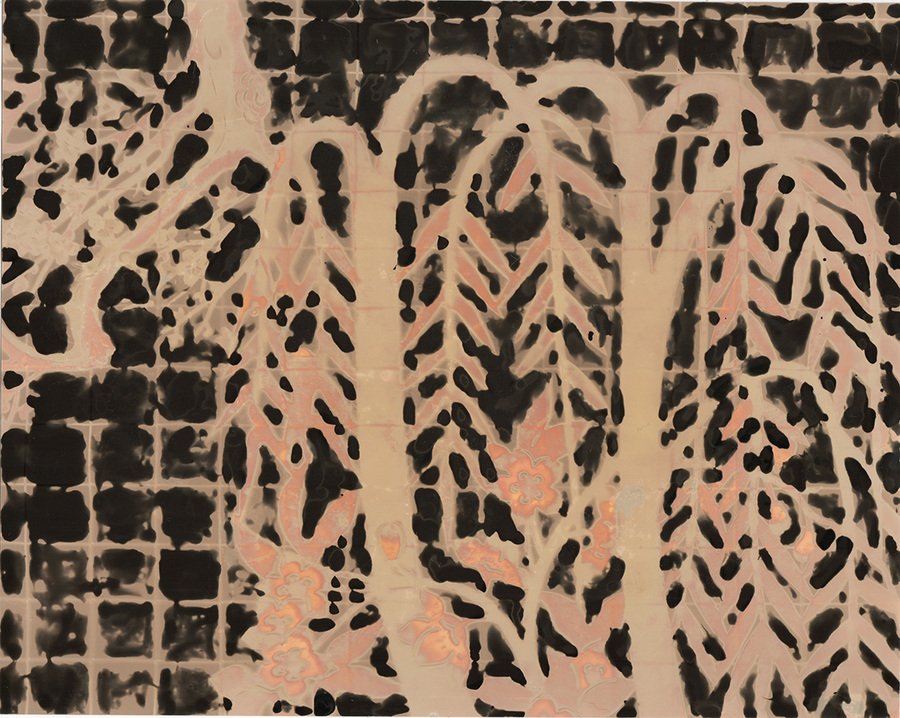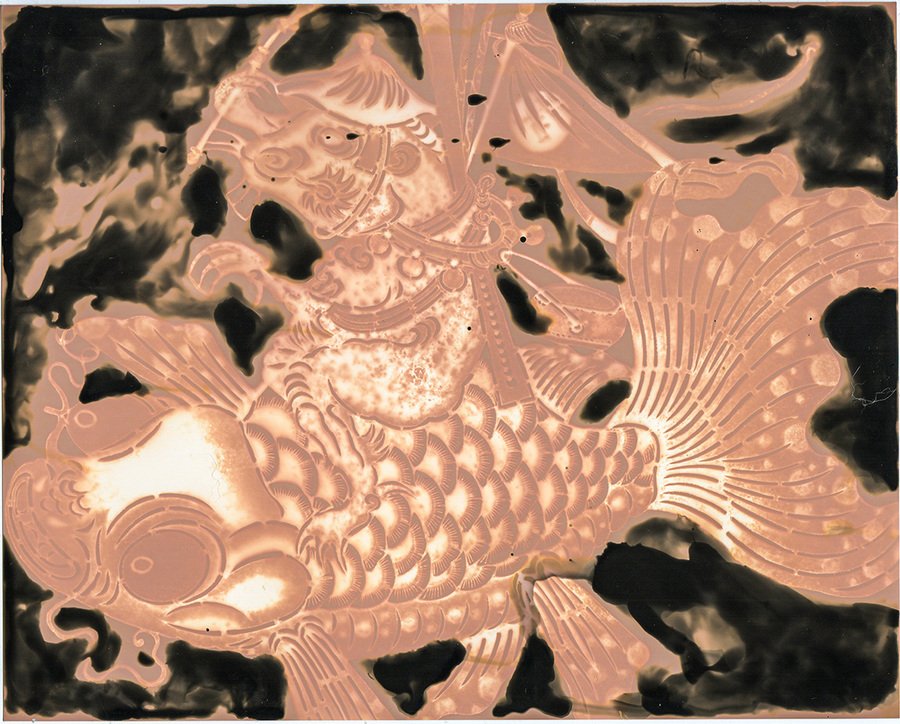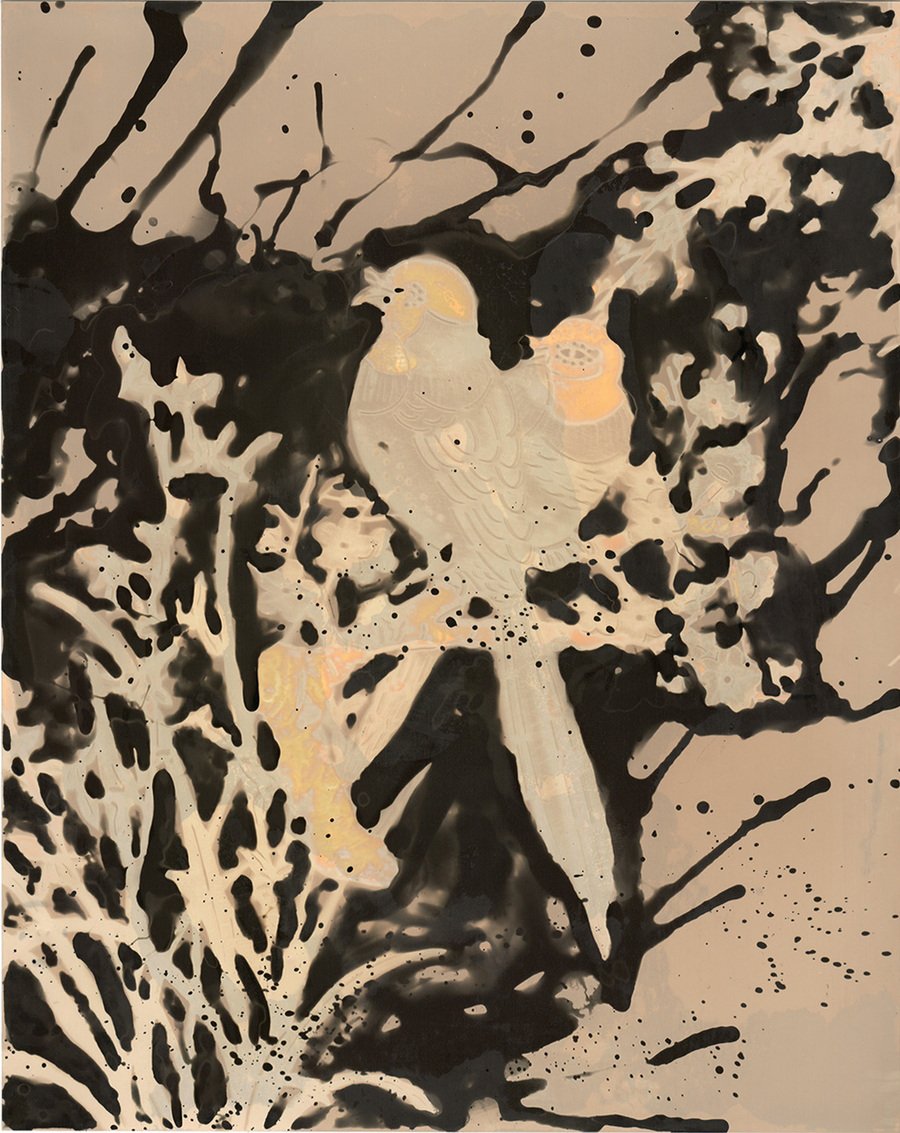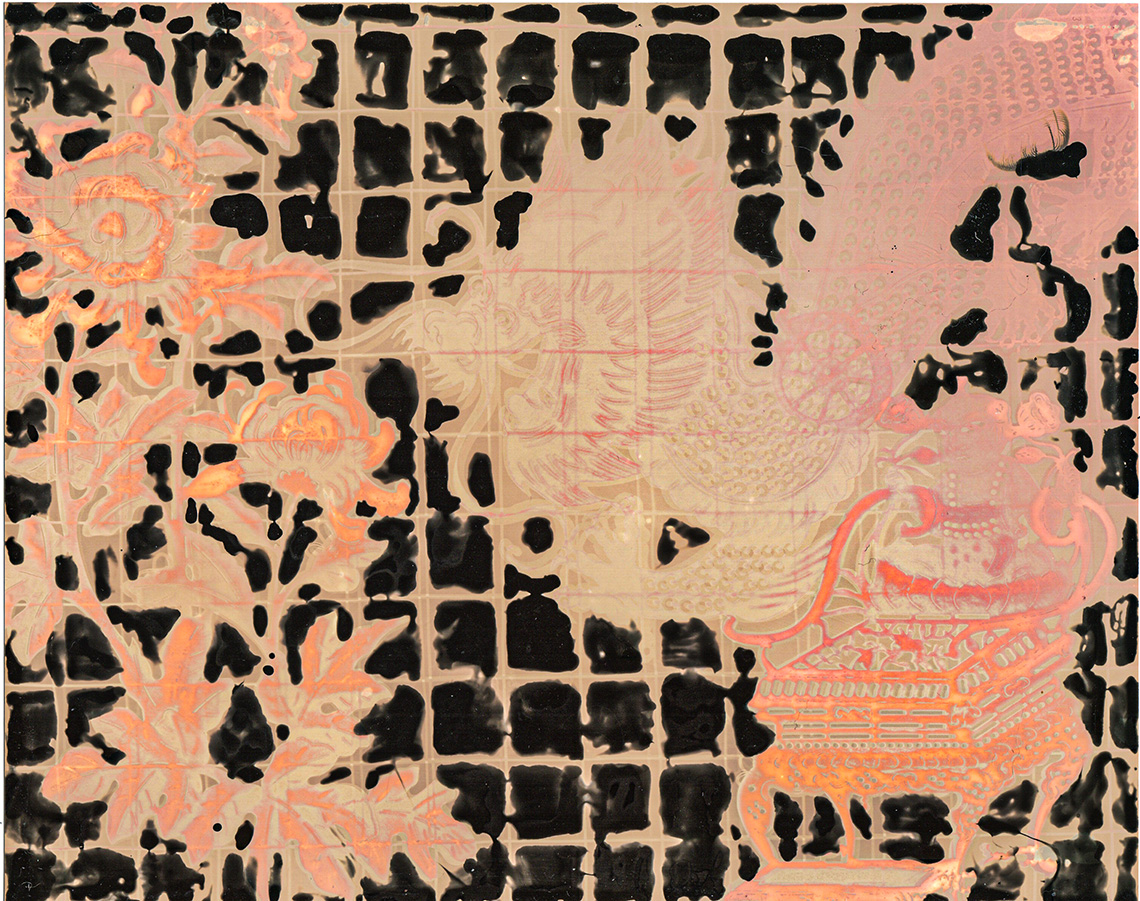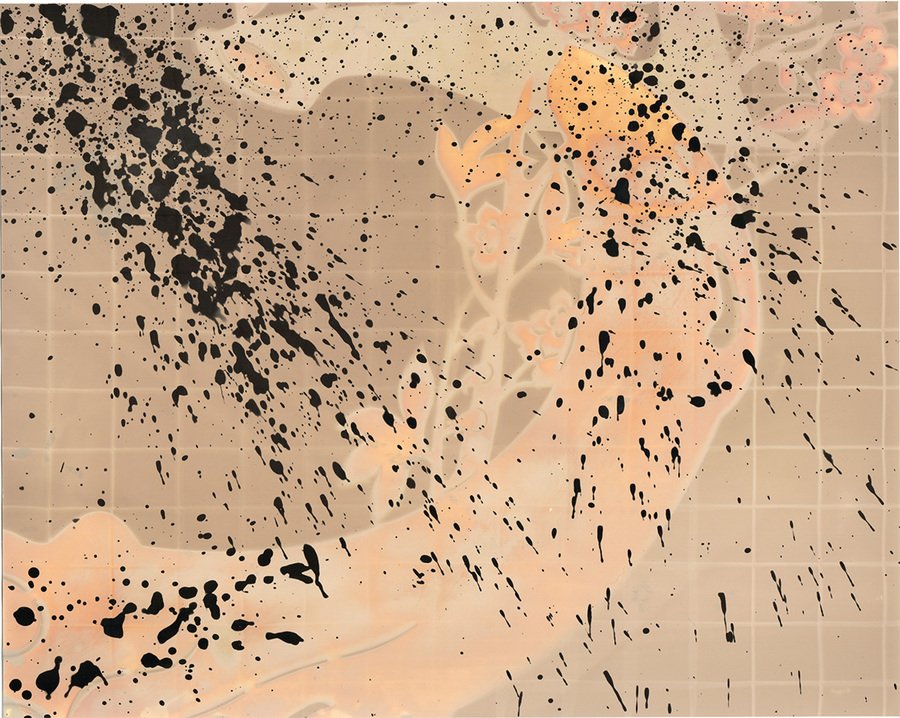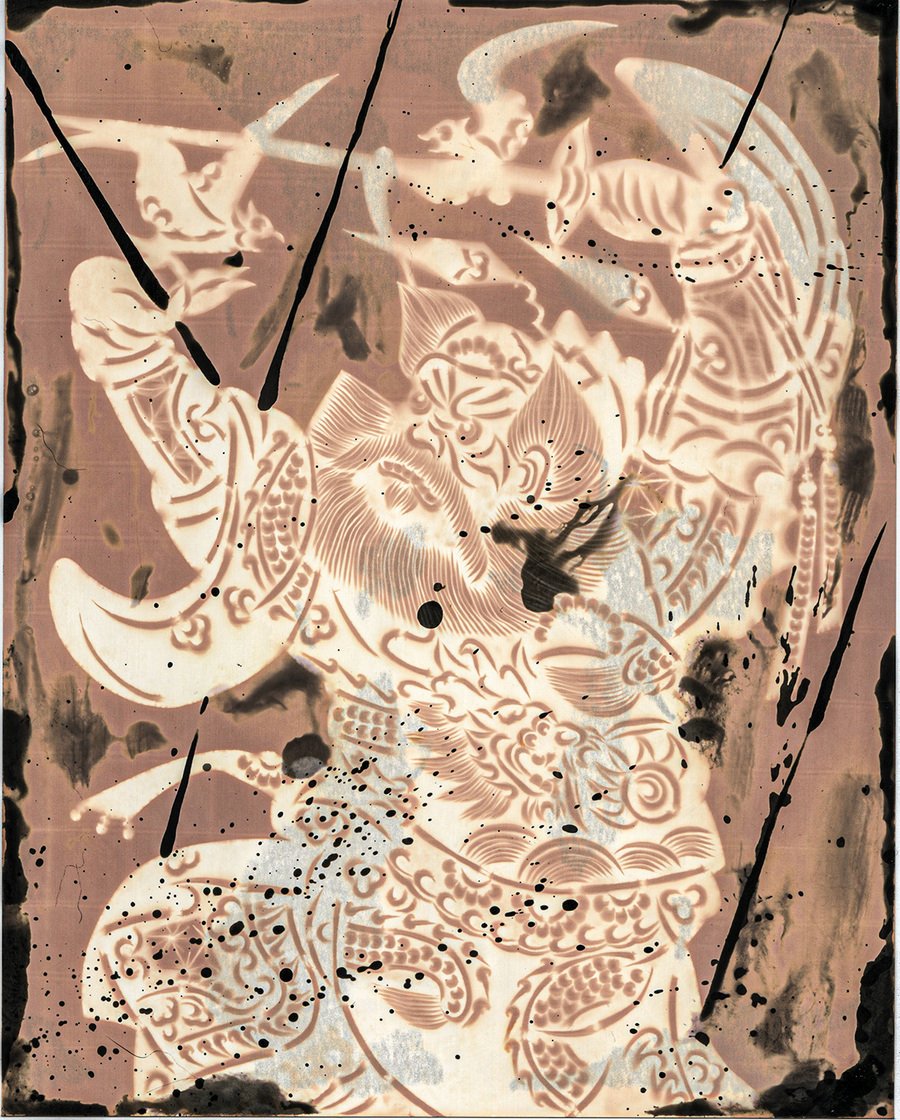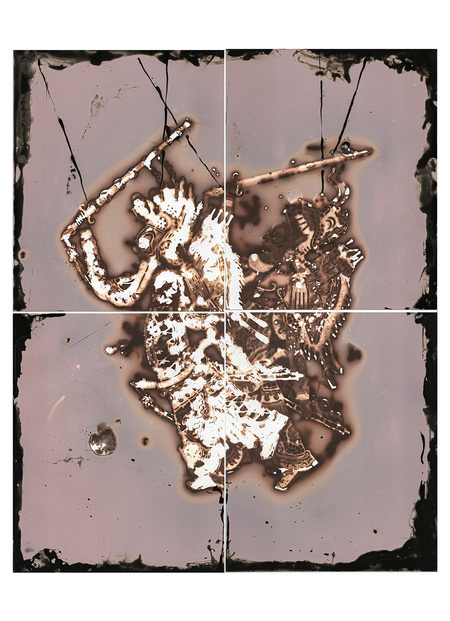
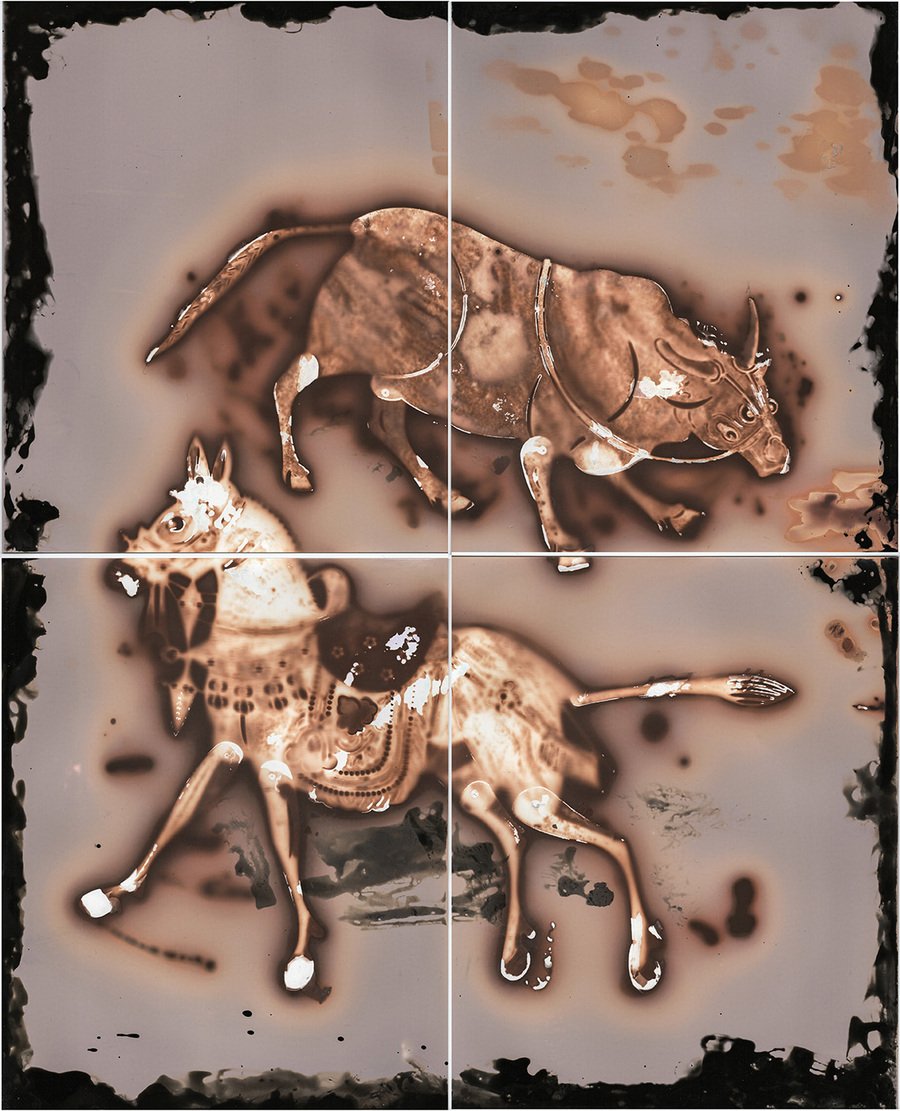
The Shadow Play series is grounded in China’s traditional intangible cultural heritage—shadow puppetry—reimagined through the lens of experimental photographic processes. Departing from conventional camera-based methods, this body of work employs direct ultraviolet exposure and developer solution painting on photographic paper to explore alternative modes of image generation. Shadow puppets are repurposed as «negatives,» their movements imprinted onto light-sensitive surfaces in real time. The developer, functioning as both chemical agent and painterly medium, further intervenes in the image-making process, creating a dynamic interplay between control and chance.
Rather than treating shadow puppetry as a mere instrument, the project emphasizes its role as a generative visual medium—one whose linguistic system aligns more with imagery than objecthood. By foregrounding the performative and material qualities of both shadow puppetry and analog photography, the work interrogates the epistemology of image construction and expression.
Through a contemporary re-articulation of a traditional folk art form, Shadow Play attempts to dissolve the dichotomy between the past and the present, excavating new potentials within the photographic medium. The resulting images inhabit a hybrid narrative space—where light, shadow, gesture, and time converge—forming an alternative visual language that challenges the ontological boundaries of photography itself.
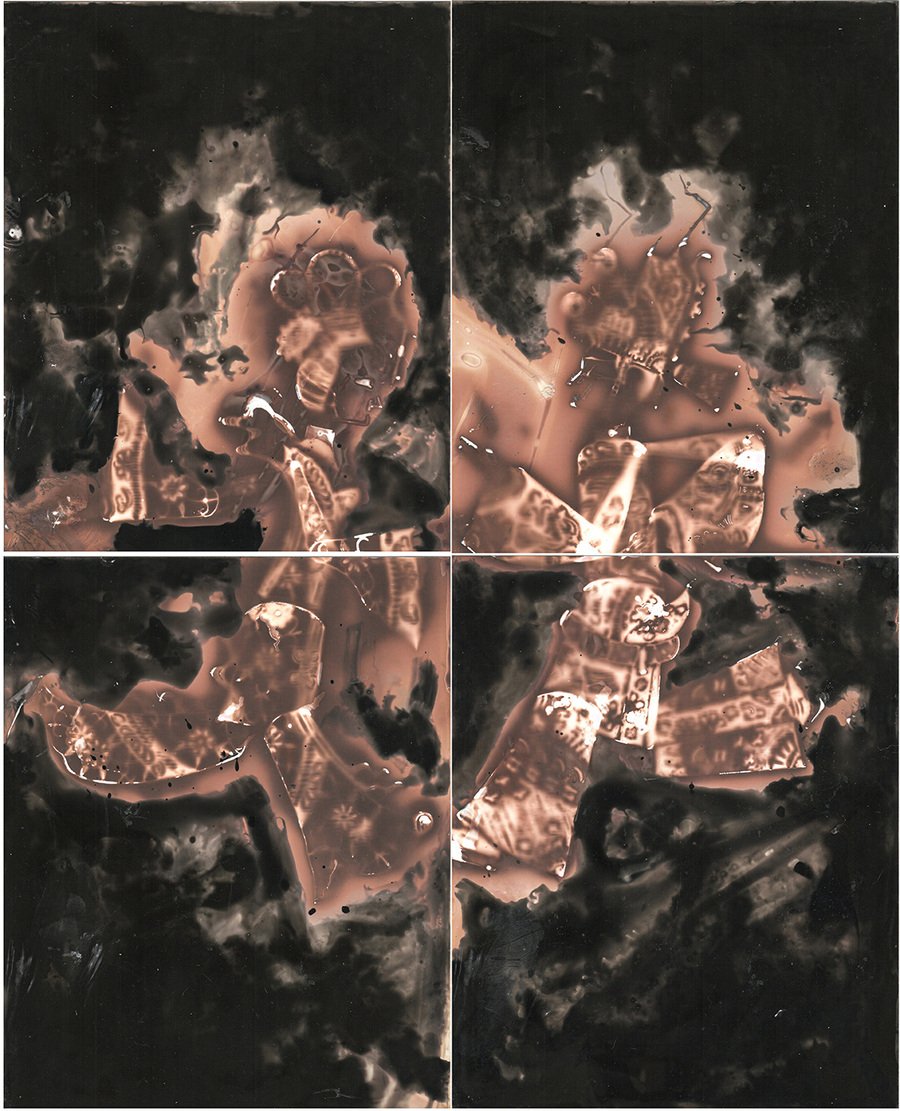
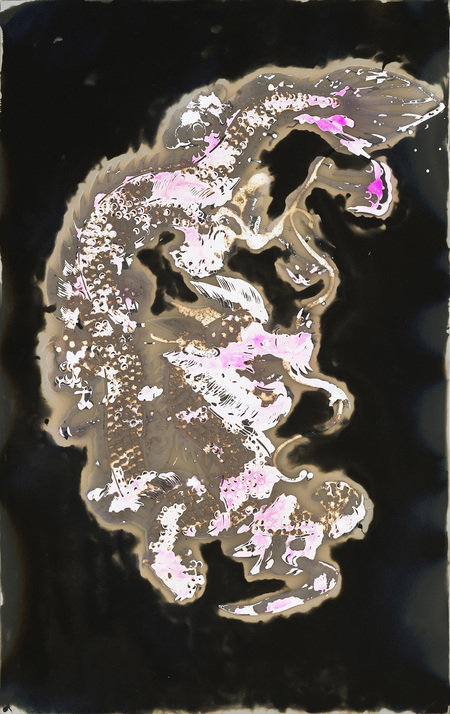
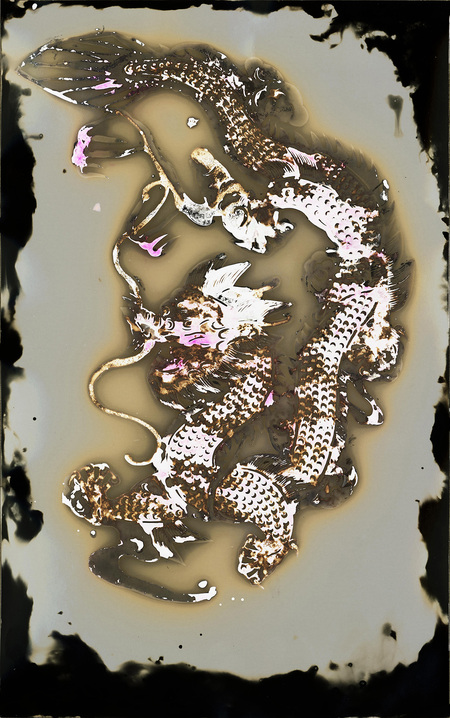
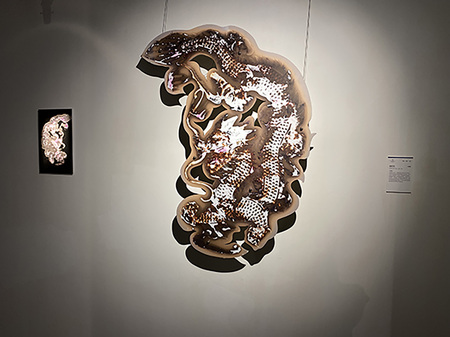
The «Chinese dragon», for contemporary viewers, exists less as a tangible creature and more as an illusion—an emblem of spiritual symbolism often associated with mystery, the supernatural, and the fantastical. In this work, the dragon is introduced not directly, but through the mediated form of shadow puppetry, a traditional folk art. During the light-sensitive exposure process, the dragon’s ephemeral presence—its status as a visual phantom—is further heightened by the interplay of light and shadow. The aged texture of the leather puppet and the residual pigments of its hand-dyed surface are transferred and preserved on photographic paper, leaving behind a spectral yet tactile imprint.
This experimental practice not only revives the visual language of folk traditions, but also probes the intersection between cultural myth, material medium, and contemporary image production. By rendering a centuries-old symbol through photographic processes, the work opens up a critical dialogue between illusion and inscription, ritual and representation, tradition and technical reproduction.